How to Grind Coffee: A Complete Guide
If you have ever wondered why the same bag of beans can taste bright and balanced one morning and flat or bitter the next, the answer often lies in how you grind coffee. Grinding is the step that quietly decides how quickly water can pull flavor out of the beans, and getting it right matters at least as much as the beans, the water, or the brewer you choose. The good news is that learning how to grind coffee is far easier than most people expect, and you do not need expensive equipment to notice a real improvement in your cup.
In this guide you will learn why grind size matters, which setting suits each popular brewing method, how the main types of coffee grinders compare, and how to grind beans step by step at home. We will also look at the most common mistakes, a simple way to dial in your grind by taste, and an interactive quiz that points you toward the grinder that fits your routine and budget.
Quick answer
To grind coffee properly, grind whole beans right before brewing and match the particle size to your brewing method: coarse for French press and cold brew, medium for drip machines, medium-fine for pour-over and AeroPress, and fine for espresso. A burr grinder gives the most consistent results, while a blade grinder is an affordable starting point if you pulse it carefully.
Why Grinding Coffee Matters So Much
Whole coffee beans protect their flavor remarkably well, because most of the aromatic compounds are locked inside the dense structure of the bean. The moment you grind, you break that structure into thousands of tiny pieces and expose a much larger surface area to oxygen. This is why pre-ground coffee goes stale much faster than whole beans, and why even a modest grinder can make a noticeable difference. Many of the delicate aromas that make a fresh bag smell so inviting begin fading within minutes of grinding, so grinding just before you brew is the single most effective habit you can adopt.
Grind size also controls extraction, which is the process of dissolving flavor compounds from the coffee into water. Smaller particles have more surface area and give up their flavor quickly, while larger particles release it slowly. If the grind is too fine for your brew method, water extracts too much and the cup turns bitter, harsh, or dry. If the grind is too coarse, water passes through before it has dissolved enough, and the result is sour, thin, and underdeveloped. The goal is balance, which is why every brewing method has its own ideal range.
Equally important is consistency. Even if you aim for a medium grind, a machine that produces a mix of large chunks and fine powder will over-extract the powder while under-extracting the chunks, giving you a cup that tastes sour and bitter at the same time. This is the main reason coffee enthusiasts talk so much about grinder quality, and it will come up again when we compare the different grinder types below.
Coffee Grind Size Chart: Matching the Grind to Your Brew Method
Grind size is usually described with familiar comparisons, such as sea salt or table salt, because the human eye and fingertips are surprisingly good at judging texture. The chart below lists the most common brewing methods and a sensible starting point for each one. Every grinder labels its settings differently, so treat these descriptions as a guide and fine-tune from there.
| Brew method | Grind size | What it looks like |
|---|---|---|
| Cold brew, French press, percolator | Coarse | Coarse sea salt or breadcrumbs |
| Chemex, large cone pour-over | Medium-coarse | Rough sand |
| Automatic drip, flat-bottom filter | Medium | Regular beach sand |
| V60, AeroPress, moka pot | Medium-fine | Table salt |
| Espresso machine | Fine | Slightly coarser than powdered sugar |
| Turkish coffee (cezve) | Extra fine | Soft powder, similar to flour |
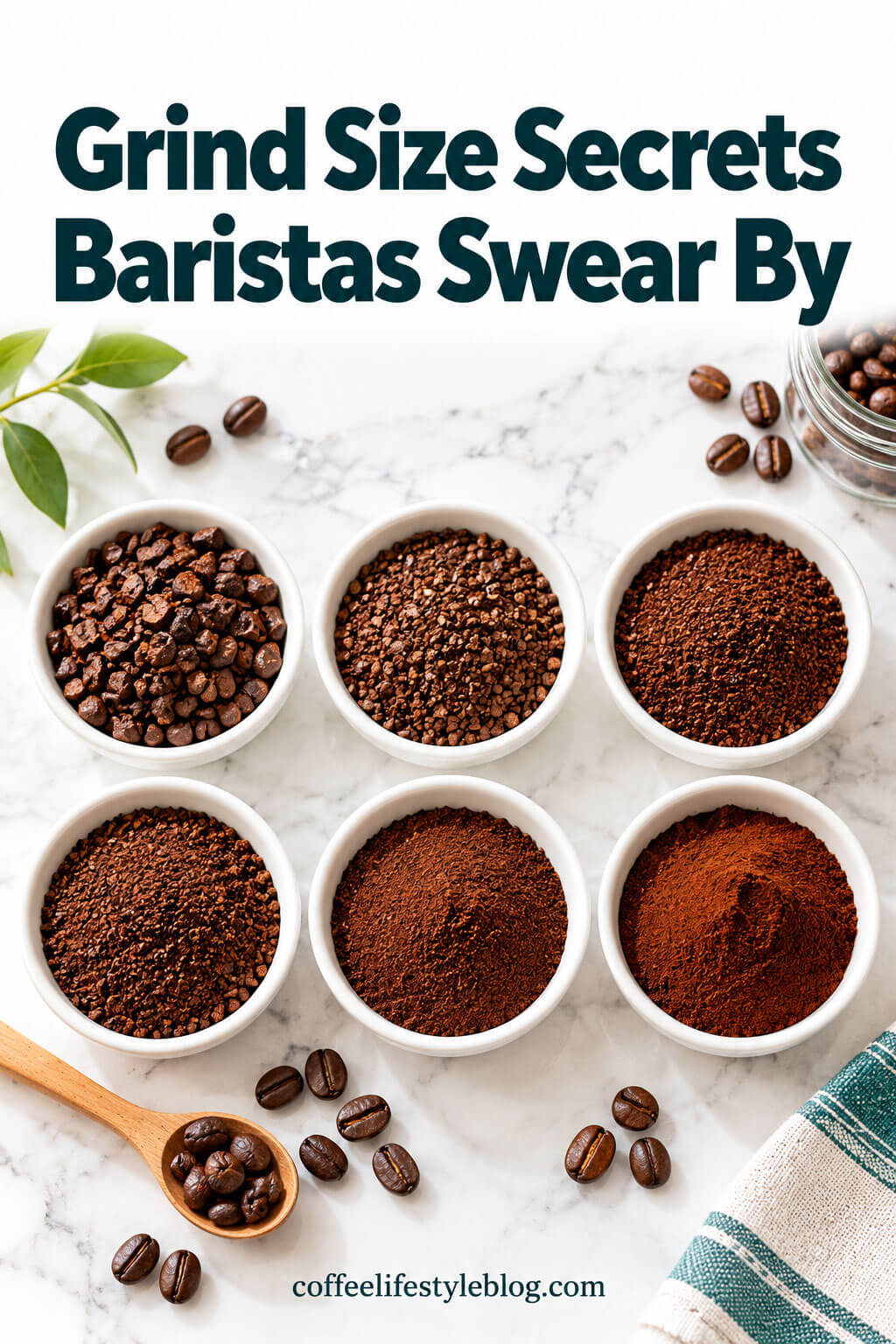
Immersion methods such as the French press and cold brew keep the coffee in contact with water for a long time, anywhere from four minutes to eighteen hours, so a coarse grind prevents over-extraction and keeps the cup clean rather than muddy. Filter methods like pour-over and drip move water through the grounds in about three to five minutes, which calls for a medium to medium-fine grind that slows the water just enough to extract sweetness without bitterness.
Espresso sits at the other end of the spectrum. Hot water is forced through a tightly packed puck of coffee in roughly 25 to 30 seconds, so the grounds must be fine and very uniform to create the resistance the machine needs. The AeroPress is wonderfully flexible and works with nearly any grind from fine to medium-coarse as long as you adjust the steeping time to match, which makes it a great tool for experimenting.
Pro tip: Rub a pinch of your grounds between your fingers. Coarse grounds feel distinctly gritty, medium grounds feel like sand, and fine grounds begin to feel smooth and slightly clumpy. This quick touch test helps you spot drift when you change beans or grinders.
Types of Coffee Grinders Explained
All coffee grinders do the same basic job, but they do it in very different ways. The two main families are blade grinders and burr grinders, and burr grinders are further divided into manual and electric models, with several burr shapes to choose from. Understanding the differences will help you spend your money where it matters most.
Blade Grinders: The Budget-Friendly Starter
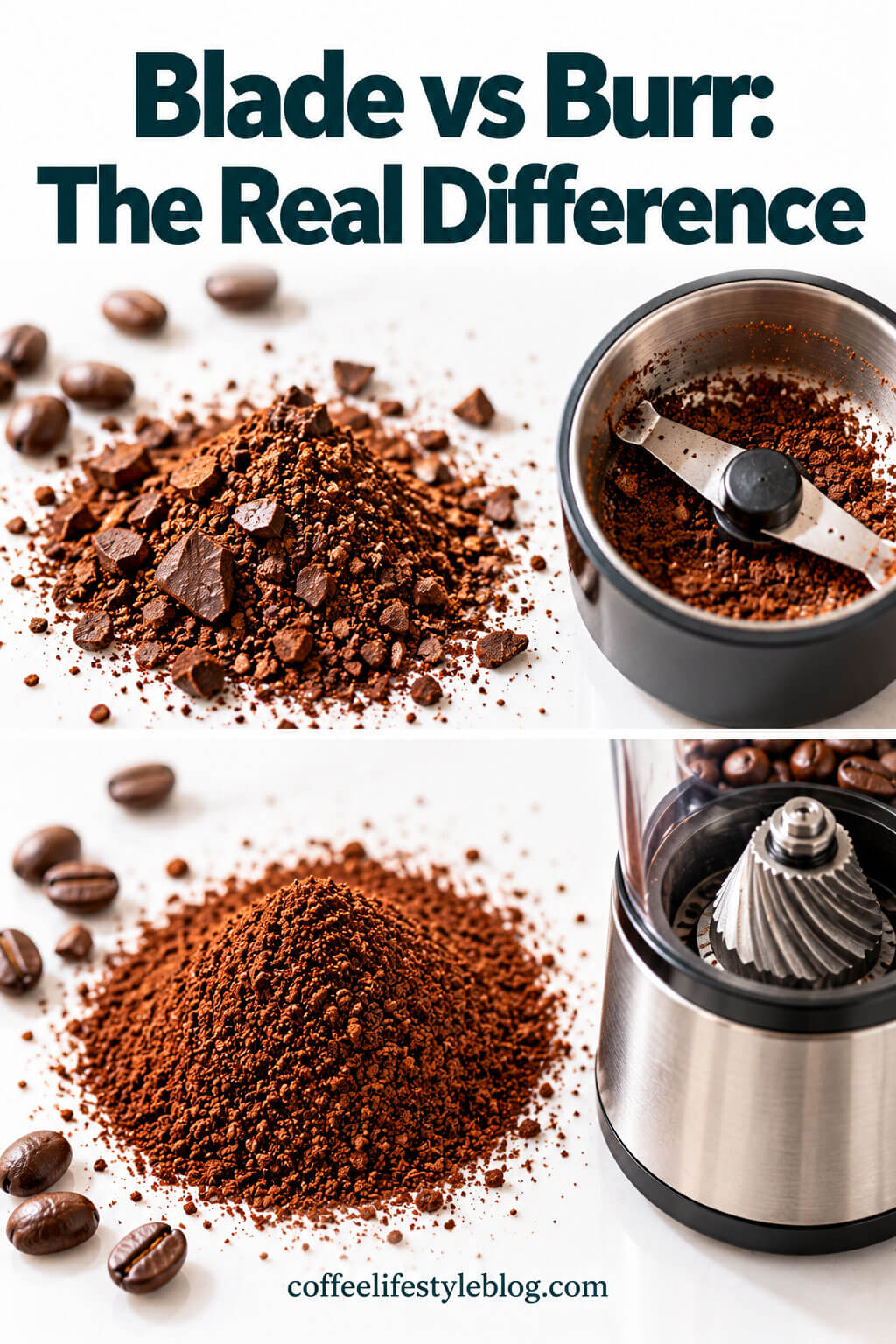
A blade coffee grinder works much like a tiny blender, with a spinning propeller-shaped blade that chops the beans into smaller and smaller pieces. These grinders are inexpensive, compact, and easy to find, which makes them a popular first step beyond pre-ground coffee. Their main weakness is that you cannot control the particle size directly; the longer you grind, the finer the result, but the pieces always come out uneven, with a mix of boulders and dust. The motor can also warm the grounds slightly, which dulls some of the aroma. For a French press or a casual morning pot, a blade grinder is perfectly serviceable, but it will struggle to produce the precision that pour-over or espresso demands.
Manual Burr Grinders: Quiet, Portable, and Great Value
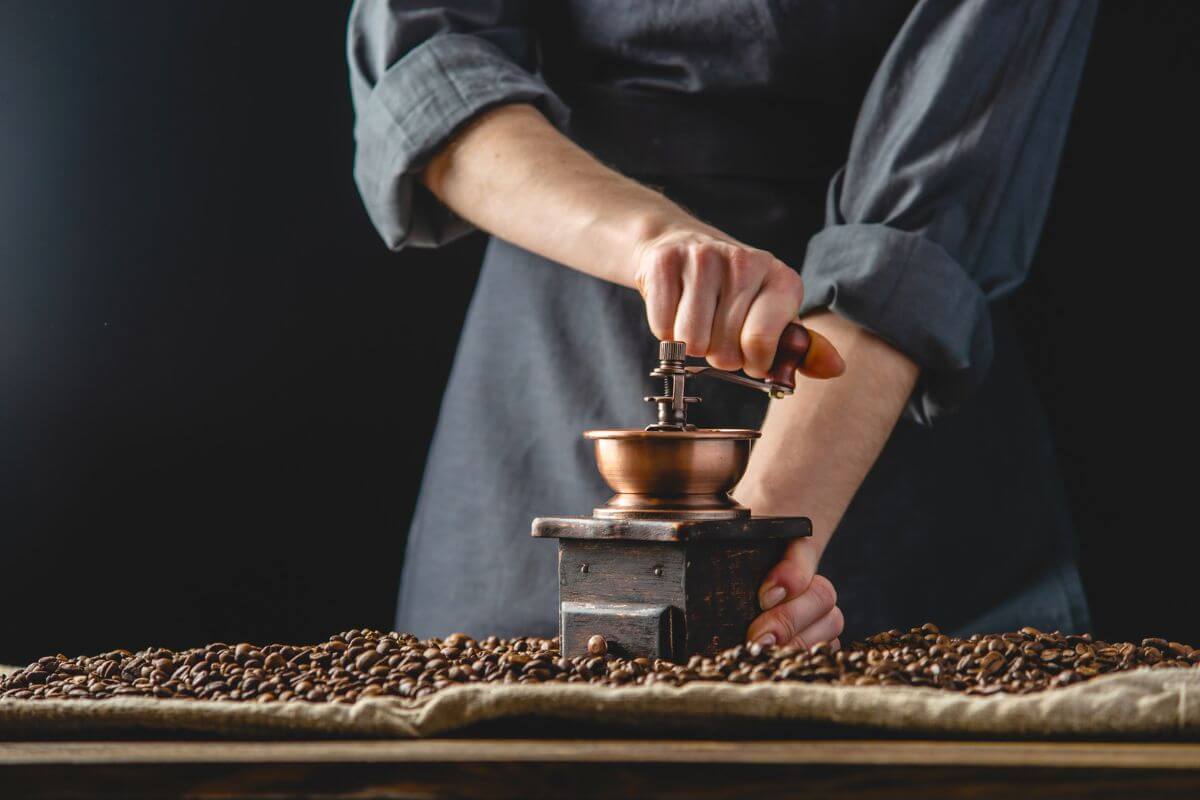
A manual burr coffee grinder uses a hand crank to turn two abrasive surfaces, called burrs, that crush the beans to a uniform size as they pass between them. Because the distance between the burrs is adjustable, you decide exactly how coarse or fine the grounds will be. Manual grinders are surprisingly affordable for the quality they deliver, they run silently, and they travel well, so they are favorites for camping, offices, and small kitchens. The trade-off is effort: grinding enough coffee for one or two cups usually takes a minute or two of steady cranking, which is pleasant for some people and tiresome for others. Burrs are made from either stainless steel, which cuts quickly, or ceramic, which stays sharp for a long time but can chip if dropped.
Electric Burr Grinders: Convenience and Consistency
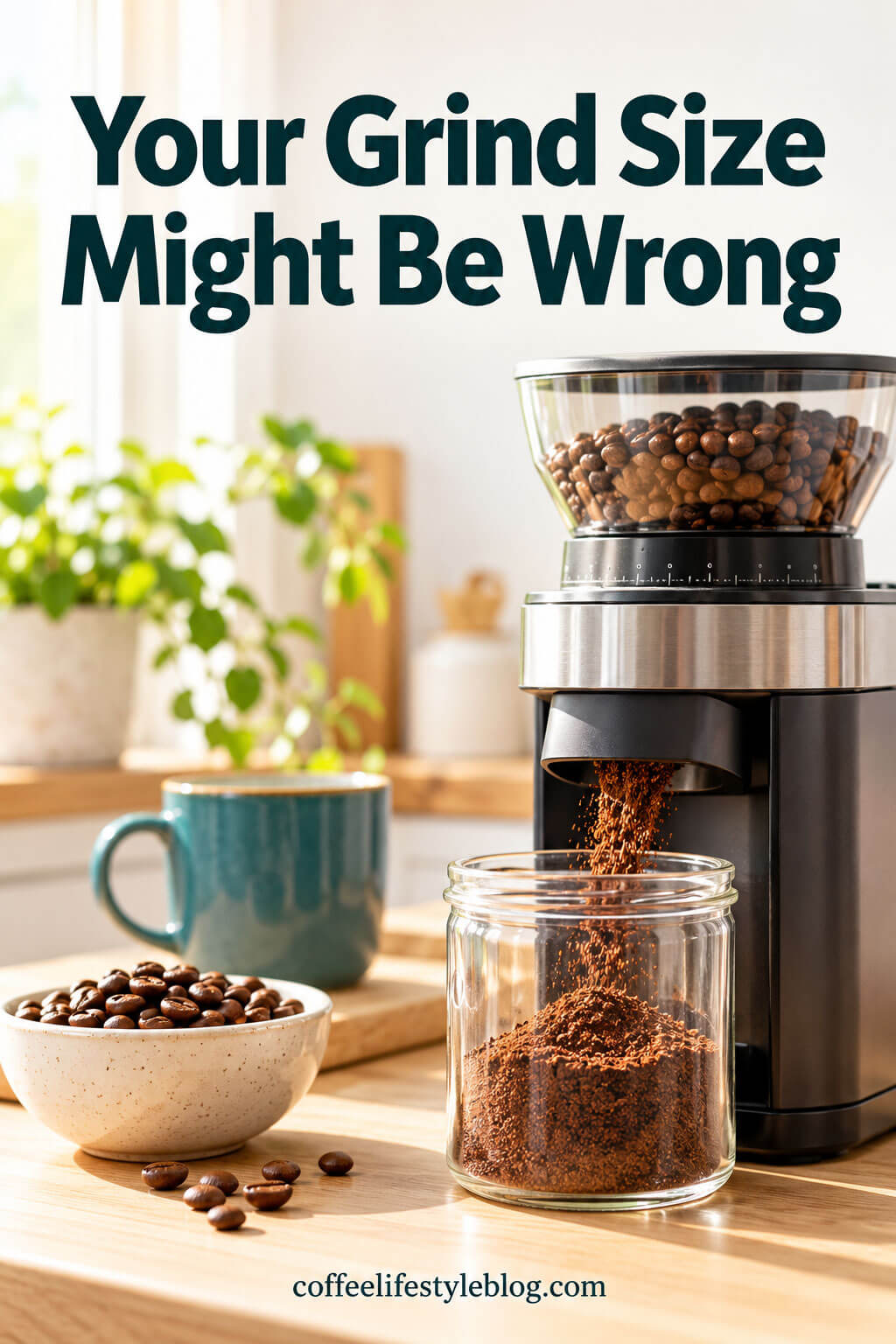
An electric burr coffee grinder adds a motor to the same burr principle, so you press a button and get consistent grounds in seconds. This is the type most home brewers eventually settle on, because it combines precision, speed, and repeatability in one machine. Inside, the burrs come in two main shapes. Conical burrs have a cone-shaped center burr nested inside a ring, and they tend to run cooler, quieter, and slower, producing a slightly varied particle mix that many people describe as full-bodied and forgiving. Flat burrs consist of two parallel discs, and they typically yield a more uniform particle size, which can translate into greater clarity and sweetness in the cup. Neither design is universally better, so your taste and budget should guide the choice.
You will also see the terms stepped and stepless. A stepped grinder offers a fixed number of click settings, which makes it easy to return to a favorite setting, while a stepless grinder lets you make infinitely small adjustments, which is especially valuable for espresso.
Espresso Grinders: Where Precision Matters Most
Espresso is the most demanding brewing method when it comes to grinding, because a tiny change in particle size can shift a shot from 20 seconds to 40. A dedicated espresso grinder offers fine, repeatable adjustment, a sturdy build that handles very fine settings without slipping, and often features such as a built-in timer or dosing control. Many general-purpose burr grinders can reach espresso territory, but their coarsest-to-finest range is stretched thin, so the steps between settings may be too large to dial in a shot properly. If espresso is your main passion, it is wise to invest more in the grinder than in the espresso machine, since the grinder has the greater influence on taste.
How to Grind Coffee Beans Step by Step
Whichever grinder you own, the basic process is the same, and following a consistent routine makes every other adjustment easier. Here is a simple method that works for almost any brewing style:
- Weigh your beans. A digital coffee scale removes the guesswork. A good starting ratio is about one part coffee to sixteen parts water, so 20 grams of beans pairs with roughly 320 grams of water.
- Choose a starting grind setting. Use the chart above to pick the right size for your method, and write down the number or click count so you can repeat it later.
- Grind right before brewing. Grind only what you need for the current brew, and move the grounds into your brewer immediately to preserve aroma.
- Check the texture. Look for even, similarly sized particles with minimal powder, and use the fingertip test if you are unsure.
- Brew, taste, and adjust. Change only the grind setting, and only by one step at a time, so you can tell what each adjustment does.
If you are using a blade grinder, pulse the beans in short bursts of one to two seconds and give the grinder a gentle shake between pulses so that larger pieces fall back toward the blade. A total of about 10 to 20 seconds usually suits a drip-style grind, while a French press needs less time. With a manual grinder, keep a steady rhythm, brace the grinder against your body or a table, and avoid pressing down hard on the handle, since the burrs do the work on their own.
Common Coffee Grinding Mistakes to Avoid
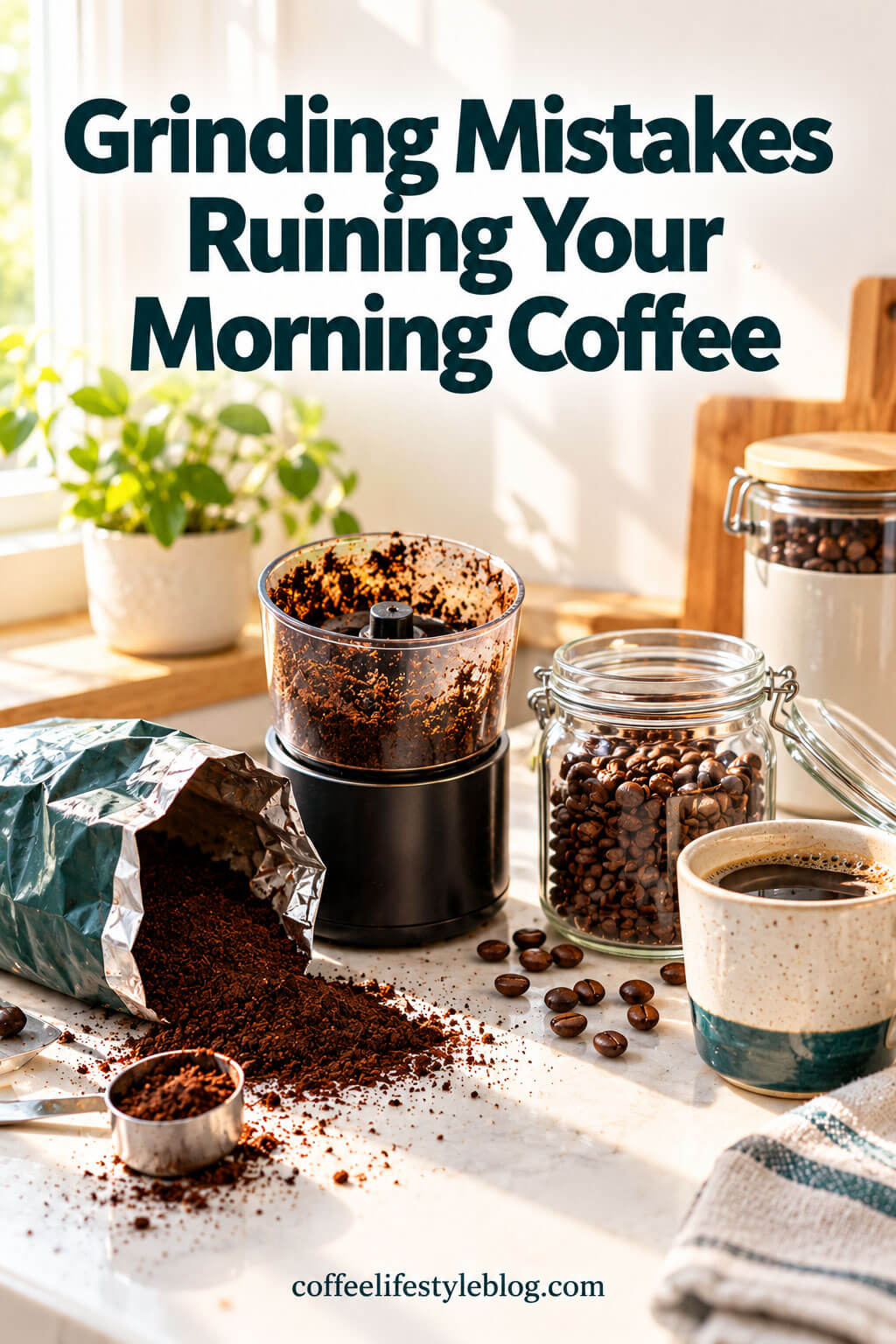
Even experienced home baristas fall into a few predictable traps, and fixing them often improves your coffee more than buying new gear. These are the ones worth watching for:
- Buying pre-ground coffee for every brew. Convenience comes at the cost of freshness, so starting with fresh whole bean coffee and grinding at home is the easiest upgrade available.
- Grinding in advance. Grinding a week’s worth on Sunday evening defeats the purpose, because most of the aroma will be gone by Wednesday.
- Using one grind size for everything. A setting that makes a lovely drip coffee will taste watery in an espresso machine and silty in a French press.
- Changing several variables at once. If you alter the grind, the dose, and the water temperature together, you will never know which change helped.
- Skipping cleaning. Old oils and fine particles build up and turn rancid, adding a stale flavor to every new batch.
- Over-grinding in a blade grinder. Running the blade continuously creates too much fine dust, which clogs filters and leads to bitterness.
- Storing beans poorly. Light, heat, and air are the enemies of flavor, so keep beans in an airtight, opaque coffee canister in a cool cupboard rather than in a clear jar on the counter.
How to Dial In Your Grind by Taste
Dialing in simply means adjusting your grind until the coffee tastes the way you like it, and it is far less intimidating than it sounds. Your tongue is the best instrument you have, and a few reliable clues will point you in the right direction. If your coffee tastes sour, sharp, salty, or thin, the water has not extracted enough, so move to a finer setting. If it tastes bitter, harsh, or dry and astringent, the water has extracted too much, so move to a coarser setting. A cup that is balanced, sweet, and pleasantly rounded means you are close to the sweet spot.
For espresso, add timing to the picture. A standard shot of about 18 grams of coffee yielding roughly 36 grams of liquid in 25 to 30 seconds is a widely used target. If the shot runs much faster, grind finer, and if it crawls or chokes the machine, grind coarser.
Pro tip: Keep a small notebook or a note on your phone with the bean name, grind setting, dose, and tasting notes. After a few brews, you will have a personal reference that makes switching to a new bag almost effortless.
Which Coffee Grinder Is Right for You? Take the Quiz
Choosing a grinder depends on how you brew, how much you want to spend, and how much effort you are willing to put in. Answer four quick questions below, and the quiz will suggest the grinder type that fits you best.
Caring for Your Coffee Grinder
A little maintenance keeps any grinder performing well and protects the flavor of your coffee. Every week or two, brush out the grinding chamber and burrs with a small brush to remove loose grounds, and wipe the exterior with a dry cloth. Every month or two, open the grinder and clean the burrs more thoroughly, following the manufacturer’s instructions, and consider using grinder cleaning tablets to lift stubborn oils. Avoid washing burrs with water unless the manual specifically allows it, because moisture can cause rust on steel parts.
If static makes grounds cling to the container and scatter across your counter, a tiny spritz of water on the beans before grinding, sometimes called the Ross droplet technique, usually calms it down. Burrs eventually wear and dull, so if your grinder starts producing more dust, takes noticeably longer, or needs ever-finer settings for the same result, it may be time to replace them.
No Grinder Yet? Practical Alternatives
If you do not own a grinder, you still have options. Many grocery stores and coffee shops will grind whole beans for you in-store, and asking them to set the machine for your specific brewer is the best way to get a decent result. In a pinch, you can crush beans with a mortar and pestle or pulse them in a blender, but these methods produce very uneven particles and work best with forgiving brewers such as a French press. Think of them as temporary solutions rather than long-term substitutes for a proper grinder.
Frequently Asked Questions
Is it better to grind coffee beans right before brewing?
Yes, it is. Grinding exposes far more surface area to oxygen, so the aromatic compounds begin fading within minutes. Grinding whole beans just before brewing preserves the sweetness and complexity that make good coffee enjoyable.
What is the best grind size for a drip coffee maker?
A medium grind, similar to regular sand, suits most automatic drip machines with flat-bottom filters. If your machine uses a cone-shaped filter, a slightly finer setting often gives a sweeter, more balanced cup.
Is a burr grinder really worth it?
For most people the answer is yes. A burr grinder creates far more uniform particles than a blade grinder, which leads to even extraction and a cleaner taste. Entry-level manual burr grinders offer an inexpensive way to experience that difference.
Can I grind coffee beans in a blender or food processor?
You can in an emergency by pulsing in short bursts, but the particles will be very uneven. The results are acceptable for a French press and disappointing for espresso or precise pour-over brewing.
How long does ground coffee stay fresh?
Ground coffee loses aroma quickly and tastes noticeably flat after a week or two, even when sealed. Whole beans stay pleasant for several weeks after roasting, which is why buying whole beans and grinding as needed is the better habit.
Can I use one grinder for both espresso and French press?
Yes, provided the grinder has a wide adjustment range. Many budget burr grinders handle coarse settings nicely but lack the fine, precise steps espresso requires, so check the specifications before you buy.
How often should I clean my coffee grinder?
A quick brush-out every week or two and a deeper clean every month or two is a sensible routine. If you drink a lot of coffee or use very oily dark roasts, cleaning more often helps keep flavors fresh.
Final Thoughts
Learning how to grind coffee is one of the most rewarding skills you can develop as a home brewer, because a few small changes produce an immediate and delicious payoff. Remember the essentials: grind fresh, match the grind size to your brew method, and choose a burr grinder when you can. Start with the recommended settings, adjust one step at a time, and trust your taste buds to guide you. Whether you choose a simple hand grinder or a precision electric model, every cup you brew will teach you something new about your favorite beans, and that is half the fun.