
What Is a Milk Frother Used For?
In previous posts, I’ve already talked about the benefits of a knock box and the usefulness of a coffee tamper. Today, let’s take a closer look at one of the most essential barista tools — the milk frother — and explore the art and technique of milk frothing.
What Is a Milk Frother?
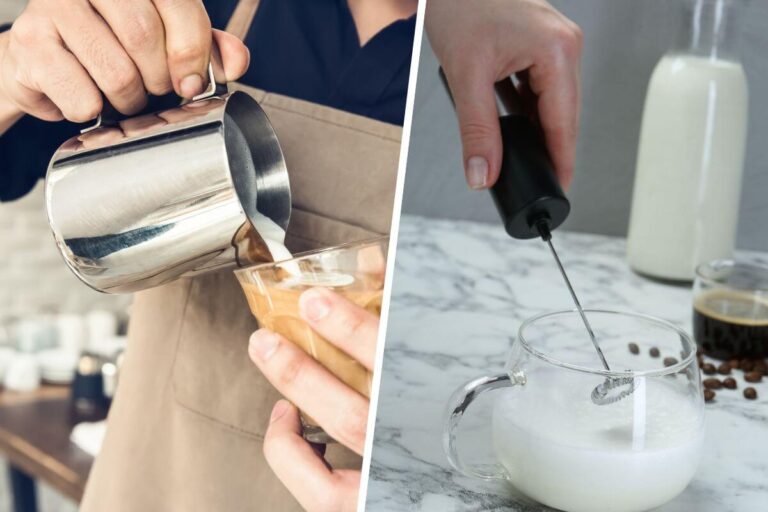
A milk frother is an essential piece of barista equipment that transforms ordinary milk into a light, foamy texture. During frothing, air is incorporated into the milk, increasing its volume and creating a creamy, velvety foam. This frothed milk forms the perfect base for drinks like cappuccinos, lattes, and flat whites.
Those beautiful, café-style cups of coffee decorated with artistic milk patterns wouldn’t exist without a milk frother. Latte art relies on perfectly frothed milk with just the right texture and consistency.
The Secret to Great Coffee Foam: Milk Quality Matters
Perfect froth isn’t just about technique — it also depends on the milk itself. Not all types of milk foam equally well, so it’s worth experimenting to find which works best for your taste and preferred drink.
If you’re unsure which milk to use, reading a few milk frothing tests or reviews can help you decide.
The Best Milk for Frothing
- Whole Milk (3.5%)
Whole milk is usually the best choice for frothing. It contains the right balance of protein and fat to create stable, silky foam. - Lactose-Free Milk
If you need a lactose-free option, go for one with the highest fat content you can find. While 3.5% lactose-free milk can be hard to come by, 2.8% versions work fairly well — just don’t expect identical results to whole milk. - Plant-Based Milk
When it comes to plant-based options, look for barista editions of almond, soy, oat, or coconut milk. These are formulated with stabilizers that help the foam hold longer. Keep in mind that the quality and texture can vary depending on the brand.
How to Froth Milk: Technique Basics
There are several ways to froth milk, and the technique depends largely on the type of milk frother you use. Whether manual or electric, a few golden rules apply:
- Don’t boil the milk — 140–150°F (60–65°C) is ideal.
- Make sure to introduce air gradually for a creamy texture, not large bubbles.
- Don’t over-froth — too much agitation can separate the foam from the milk.
How to Use a Milk Frother
I came across a great video that demonstrates the technique for creating perfectly textured foam using a manual milk frother. With the right motion, you can achieve professional results at home.
Of course, there are other types of milk frothers too, each with its own benefits.
Types of Milk Frothers
1. Manual Milk Frother
Manual milk frothers are affordable and simple to use — you can find a good-quality one for under $10–$15.
Pros:
- Full control over frothing.
- Less risk of milk overflowing.
- Simple design and less prone to malfunction.
- Compact and easy to store.
Cons:
- You’ll need to heat the milk separately.
- Getting the texture right requires a bit of practice.
How to use:
Heat your milk first, pour it into a tall container, then pump or whisk until you reach the desired consistency.
2. Electric Milk Frother / Milk Frothing Machine
Electric milk frothers are convenient and easy to use. Most have a built-in heating function, so you don’t need to warm the milk separately. Some even offer cold frothing or adjustable foam density options.
Pros:
- Effortless operation — just pour, press, and wait.
- Consistent results with minimal effort.
Cons:
- If milk overflows, it can burn onto the surface and be hard to clean.
- Usually more expensive than manual options.
To avoid these issues, choose a model with a transparent lid or a non-stick interior, which prevents milk from scorching if it overflows.
Price range:
- Budget models: $25–$40
- Mid-range: $50–$80
- Premium: $100+
Steam Wand Frothing (Espresso Machine)
Professional espresso machines often come with a steam wand, which is the standard method for creating café-quality foam.
Pros:
- Fast and efficient frothing.
- Ideal for latte art.
Cons:
- Requires a high-end espresso machine.
- Needs some practice to master.
Tips for Perfect Milk Foam
- Always use fresh milk — older milk won’t froth as well.
- Keep your tools clean — leftover fat or water can ruin the texture.
- Don’t fill the container to the top — milk expands as it froths.
- Don’t over-whip — overdone foam becomes dry and separates easily.
Where to Buy a Milk Frother
You can buy milk frothers in barista shops, appliance stores, or online. For the widest selection, check large online retailers like:
- Amazon
- Walmart
- Target
- Best Buy
Before buying, it’s worth reading customer reviews to see how a particular model performs in real-world use.
Final Thoughts
A good milk frother is a small investment that makes a big difference in your daily coffee ritual. Whether you prefer a manual frother for more control or an electric one for convenience, mastering the art of milk frothing can elevate your homemade coffee to café-level perfection.
So next time you prepare your latte or cappuccino, remember — the secret is in the foam.