Hidden Coffee Bar Ideas: The Ultimate Guide to a Sleek, Secret Brew Station
Transform any corner of your home into a stunning — yet completely concealed — coffee sanctuary.
There’s something undeniably satisfying about a kitchen that looks pristine and clutter-free, yet hides everything you need to start your morning right. That’s exactly the appeal of the hidden coffee bar trend that’s been sweeping interior design communities over the past few years. Whether you’re working with a sprawling open-plan kitchen or a compact city apartment, building a concealed coffee station isn’t just about aesthetics — it’s about carving out a personal ritual space that disappears when you don’t need it.
This guide covers everything: from clever cabinet configurations and hidden coffee machine setups to multi-purpose coffee tables with hidden storage that work double duty in your living room. Let’s dive in.
Why a Hidden Coffee Bar Makes Perfect Sense
Let’s be honest: espresso machines, grinders, tampers, milk frothers, and a collection of single-origin beans take up a lot of space. And while barista-grade equipment looks gorgeous on a countertop, it doesn’t always match the vibe of a minimalist, Scandinavian, or farmhouse-style kitchen.
A hidden coffee bar in the kitchen solves this beautifully. When guests come over, they see a seamless kitchen. When it’s 6:30 a.m. and you’re craving a cortado, you open a door, flip up a panel, or slide out a shelf — and your personal café is right there.
Beyond looks, there are practical benefits: reduced visual clutter, protected equipment (no dust or grease splatter), and a dedicated zone that keeps your workflow organized.
Hidden Coffee Bar Ideas by Space Type
1. The Cabinet Conversion: Hidden Coffee Bar in Kitchen
One of the most popular approaches is converting an existing upper or lower cabinet into a fully functioning hidden coffee bar in the kitchen. Here’s how to execute it well:
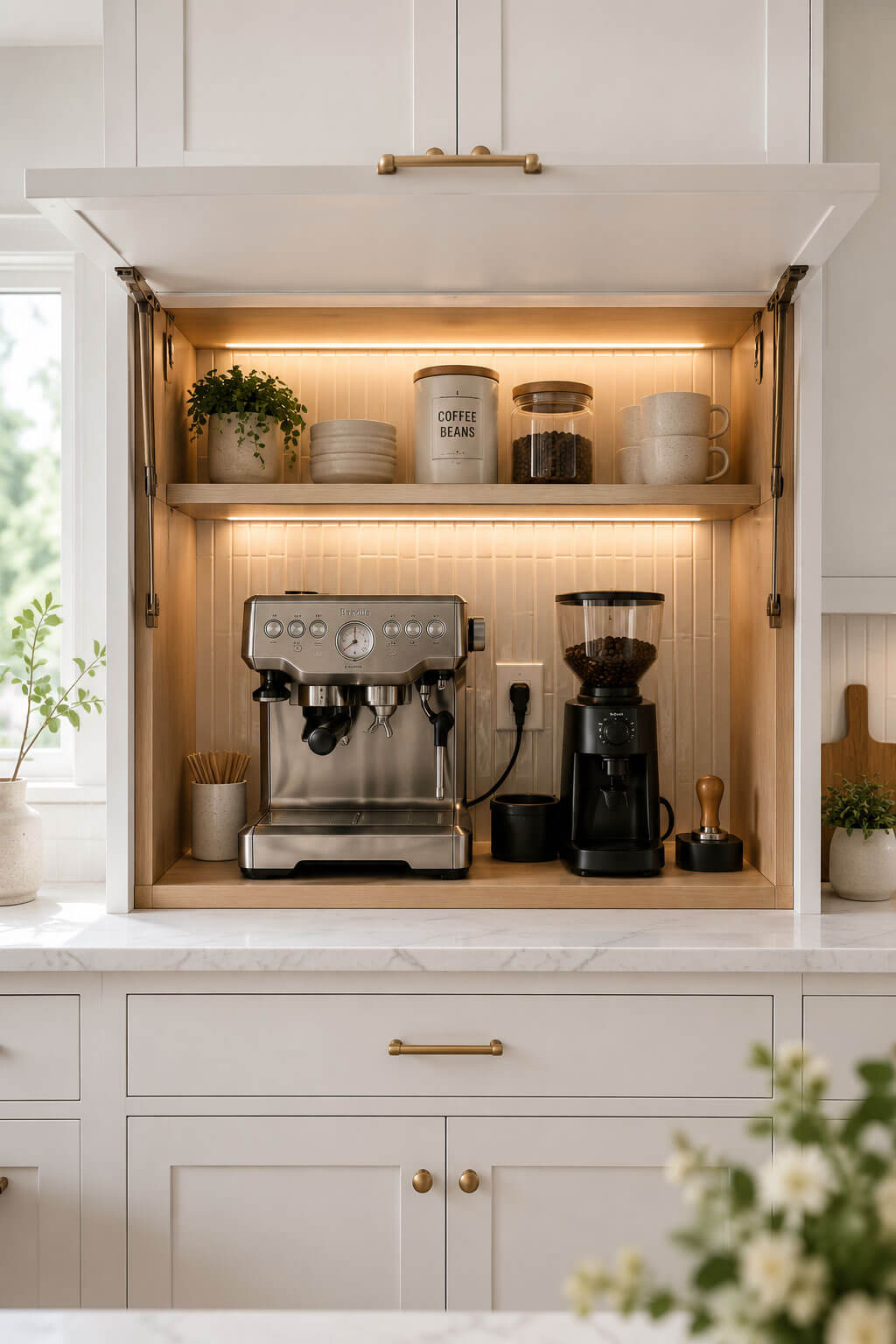
Upper cabinet approach: Remove the cabinet doors and replace them with lift-up or bi-fold panels that tuck away neatly. Line the interior with a water-resistant tile or peel-and-stick backsplash for a polished look. Add a built-in outlet inside the cabinet for your machine, and install LED strip lighting under the shelf above.
Lower cabinet approach: Pull-out drawer systems work brilliantly here. A deep lower cabinet can house a full-size espresso machine on a pull-out tray, with drawers below for cups, beans, and accessories. Add a butcher block or marble pull-out shelf at counter height for prep space.
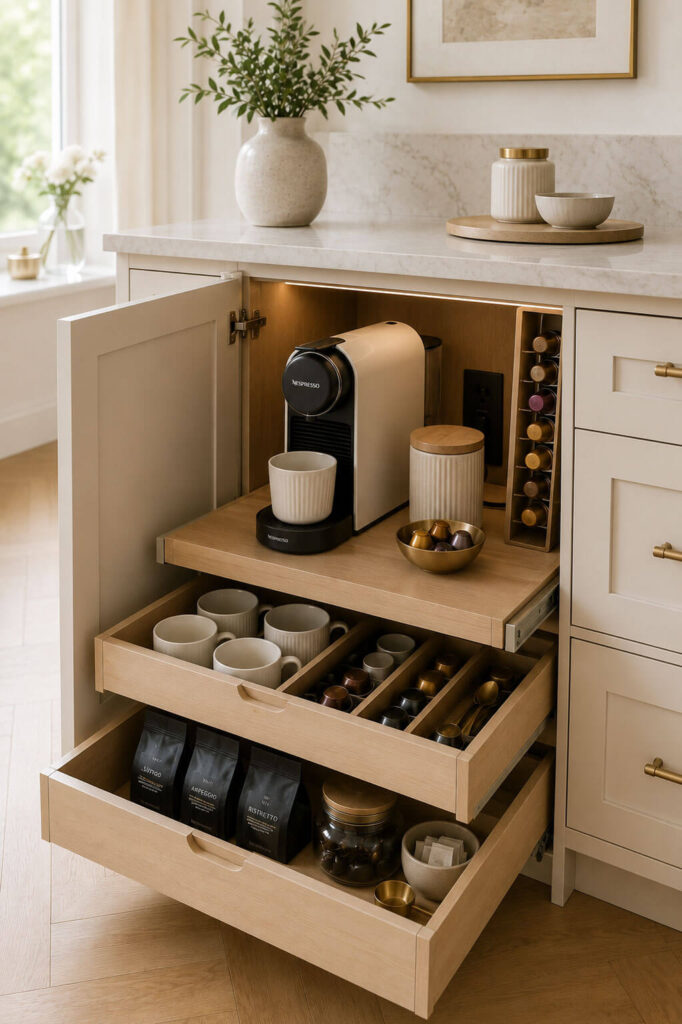
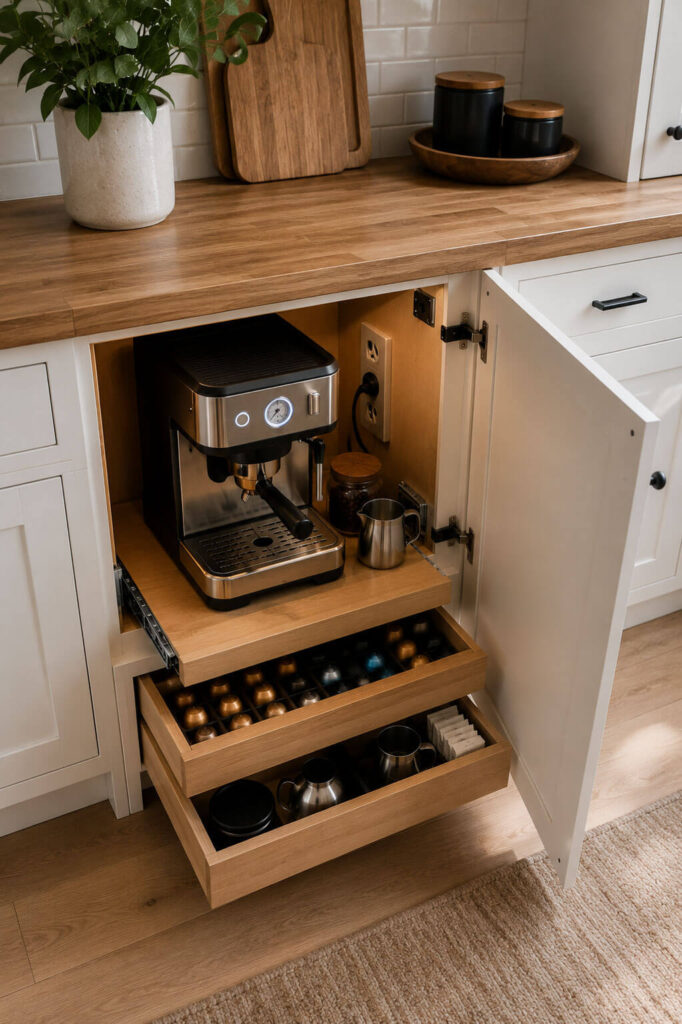
Pro tip: Hire an electrician to run a dedicated outlet inside the cabinet. Running a cord through a drilled hole looks clean and eliminates the messy wire situation on the countertop.
2. The Hidden Coffee Cabinet: A Stand-Alone Statement Piece
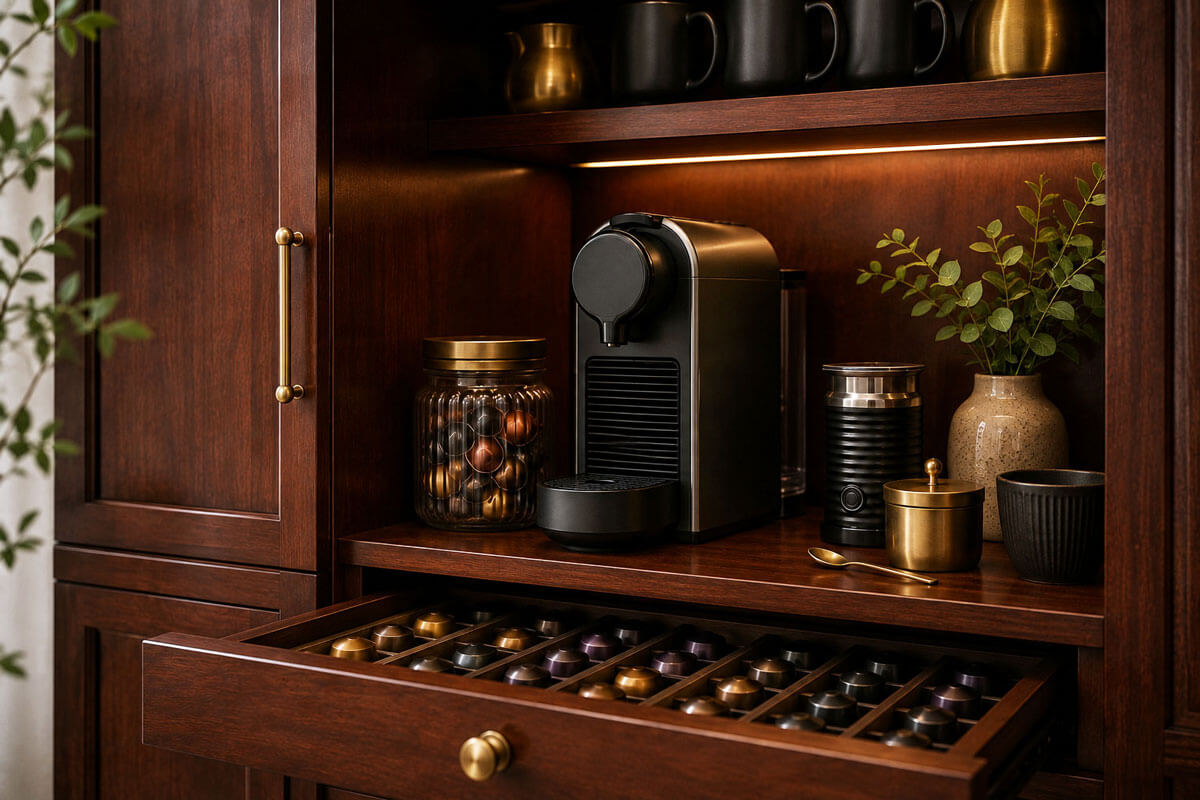
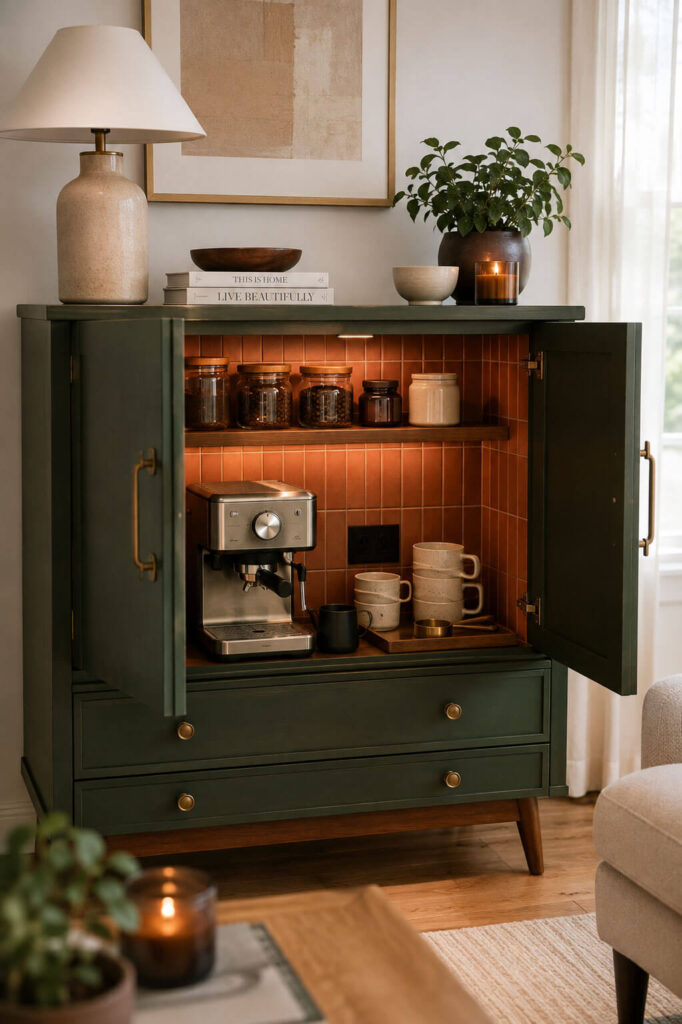
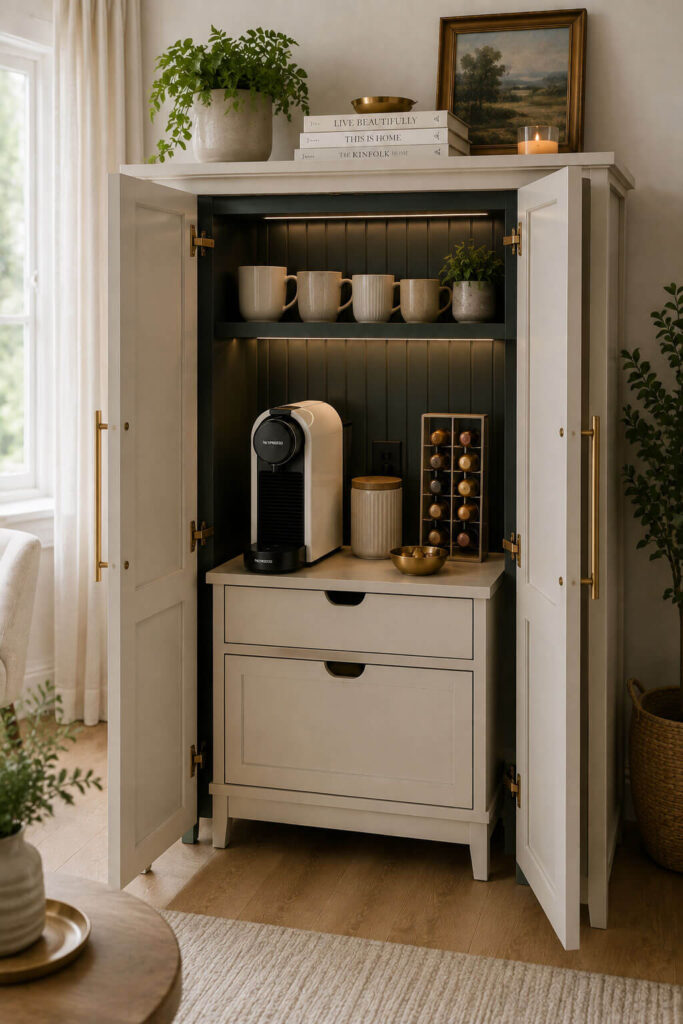
A hidden coffee cabinet is essentially a self-contained unit — think of it as a bar cabinet, but for coffee. This is ideal if you’re renting (no permanent modifications) or if you want flexibility to move your station around.
Look for vintage hutches or sideboards at thrift stores and antique markets. Many mid-century pieces have the perfect proportions to house a compact espresso machine, a small drawer for pods or beans, and shelving for mugs. Paint it a bold color, add brass hardware, and you have a showpiece that guests will never suspect hides your entire morning routine.
For a custom build, a shaker-style cabinet with inset doors and interior outlet access is the gold standard. Keep the interior in a contrasting color — a dark navy or forest green inside a white cabinet creates a delightful reveal every morning.
3. The Hidden Coffee Machine: Built-In and Bespoke
If you’re doing a kitchen renovation, this is the moment to plan a hidden coffee machine nook into your cabinetry. Several high-end built-in espresso machines — from brands like Miele, Gaggenau, and Wolf — are designed specifically to be integrated into cabinetry with flush doors.
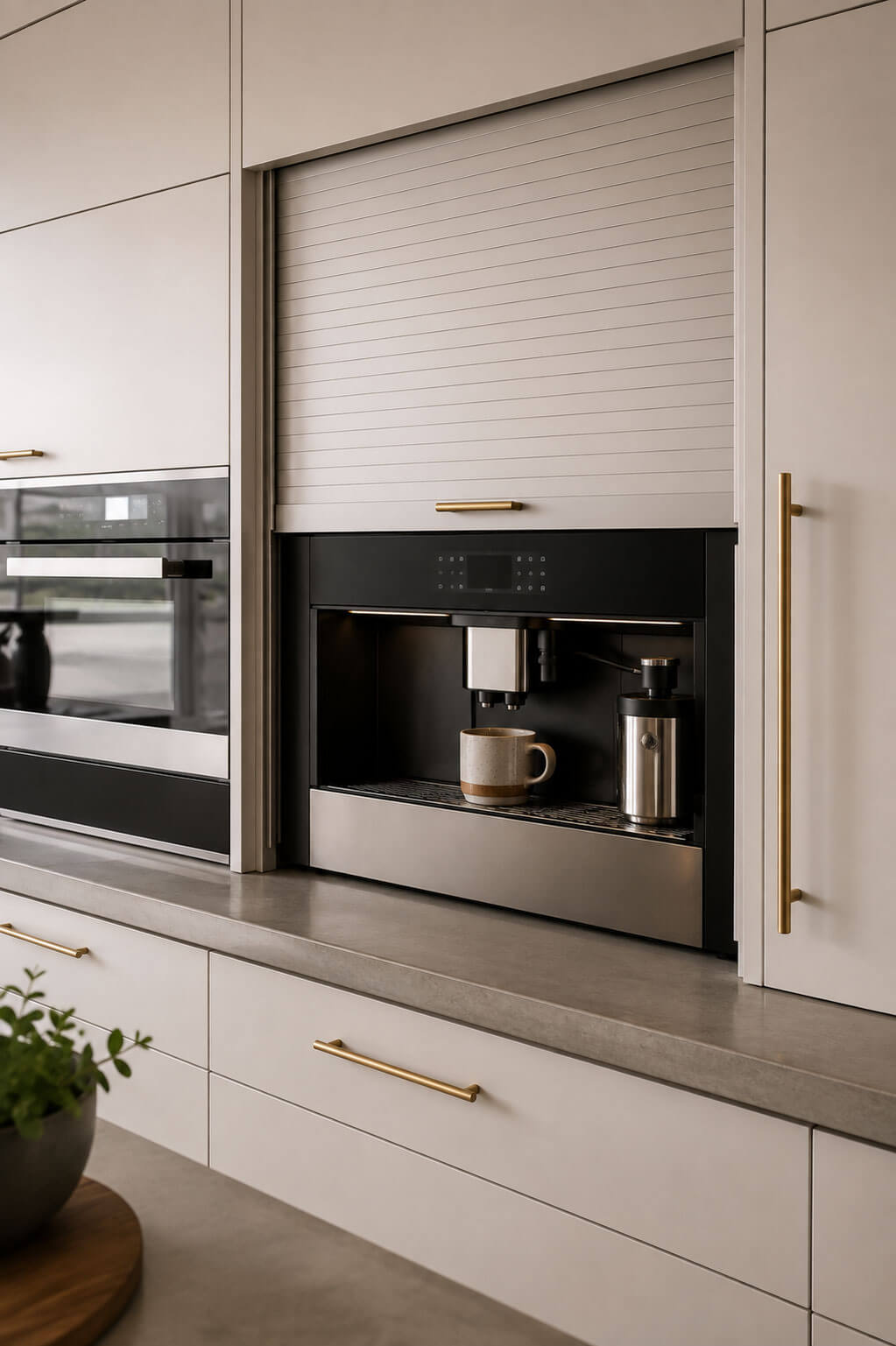
Even if you’re not going full renovation, you can retrofit a “garage door” style appliance panel in front of your existing machine. These are tambour doors (think: a rolling shutter) that slide up or back to reveal the machine underneath. They’re available from kitchen specialty retailers and can be installed with minimal modifications.
For capsule machine lovers, a built-in pod drawer below the machine keeps everything organized and out of sight. A shallow pull-out tray stores Nespresso or K-Cup pods in neat rows — much more satisfying than a chaotic jar on the counter.
4. The Coffee Table with Hidden Storage
Not everyone wants their coffee station in the kitchen. For those who love brewing in the living room — or who work from home and need caffeine close to the couch — a coffee table with hidden storage is a game-changer.
The concept is simple: a coffee table with a lift-top mechanism or deep drawer system conceals a compact coffee setup. Think a Nespresso Vertuo, a few pods, a pair of favorite mugs, and a small milk frother — all hidden beneath a beautiful tabletop that serves as both a work surface and a coffee bar when lifted.
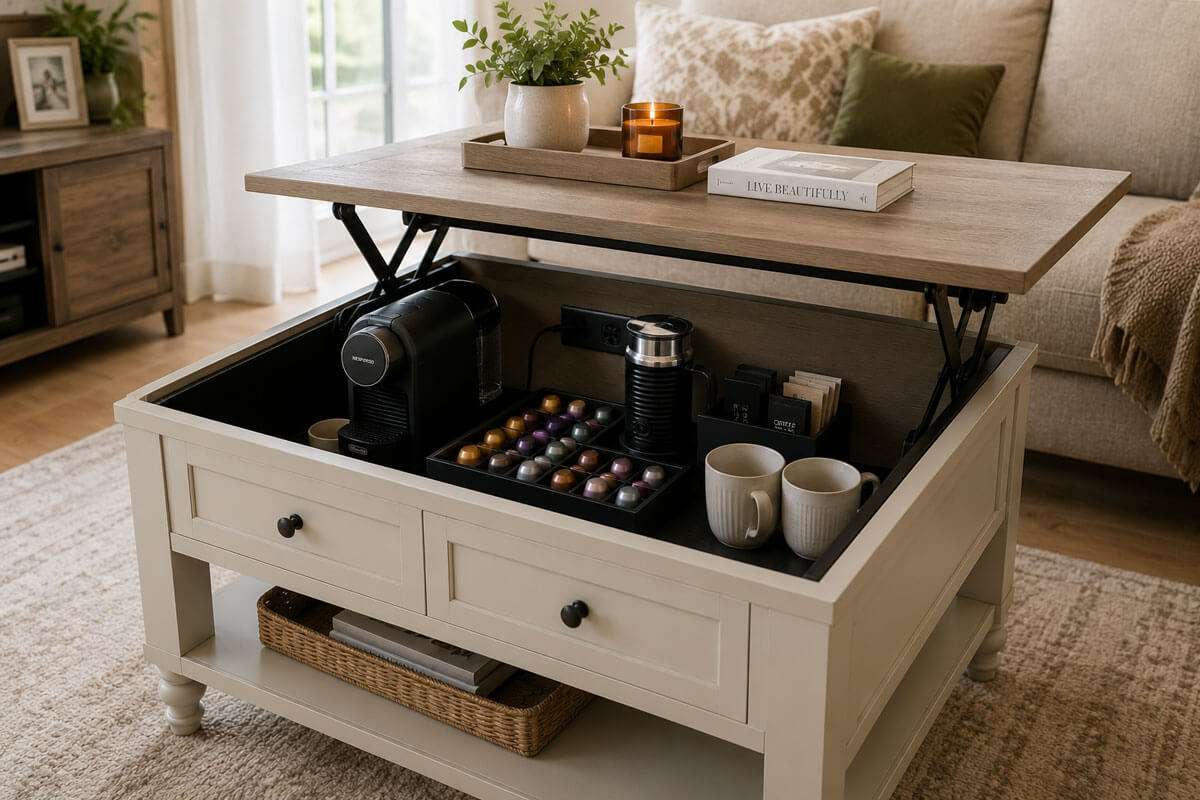
When shopping for or building this type of piece, look for:
- Lift-top coffee tables with at least 6 inches of interior depth
- Ottoman-style storage units with removable trays (great for trays that hold your setup)
- DIY built-ins using IKEA hacks with custom-cut tops and interior organization
Add a small, low-wattage outlet via a discreet surge protector tucked inside, and you have a fully functional living room coffee nook.
Summary Table: Hidden Coffee Bar Options at a Glance
| Setup Type | Best For | Avg. Cost Range | Difficulty | Key Consideration |
|---|---|---|---|---|
| Cabinet conversion (upper) | Homeowners with existing cabinetry | $200–$800 | Medium | Needs interior outlet |
| Cabinet conversion (lower) | Larger machines, more storage | $300–$1,200 | Medium–High | Pull-out tray hardware |
| Hidden coffee cabinet (freestanding) | Renters, flexible spaces | $150–$600 | Low | Ventilation for machine heat |
| Built-in hidden coffee machine | Full kitchen renovations | $2,000–$8,000+ | High | Professional installation |
| Coffee table with hidden storage | Living rooms, home offices | $100–$500 | Low | Weight limit of table |
| Pantry closet conversion | Homes with butler’s pantry | $500–$2,500 | Medium–High | Plumbing if adding a sink |
Design Tips for a Seamless Look
Match your materials. The biggest giveaway of a retrofitted coffee nook is mismatched hardware or finishes. Use the same cabinet pulls, same wood tone, and same paint finish as your surrounding cabinetry.
Lighting is everything. Install warm LED strip lights inside the cabinet or nook. The warm glow makes even a small station feel like a boutique café moment every morning.
Organize vertically. Use tiered shelving, wall-mounted magnetic strips for tools, and stackable containers for beans and pods. The more organized the interior, the easier it is to close the doors and restore the clean look.
Consider ventilation. Espresso machines and super-automatic machines generate heat. Make sure there’s at least a small gap or vent in your cabinet design — otherwise you risk damage to both the machine and the cabinet finish over time.
Common Mistakes to Avoid
Even the most enthusiastic DIY decorator can stumble when setting up a hidden coffee bar. Here are the pitfalls that trip people up most often:
1. Forgetting about power access. This is by far the most common mistake. People design beautiful cabinet interiors and then realize there’s no outlet inside — and running a cord under the door completely defeats the “hidden” effect. Always plan your electrical before you commit to a design.
2. Choosing a machine that’s too large. Standard espresso machines can be surprisingly deep (often 14–18 inches). Many standard upper cabinets are only 12 inches deep. Measure your machine before you measure your cabinet — not the other way around.
3. Skimping on interior organization. A hidden coffee bar with a messy interior still feels chaotic every time you open the doors. Invest in proper organization: a drawer divider for accessories, a dedicated canister for beans, and a spot for every item. The reveal should feel good.
4. Ignoring plumbing possibilities. If your hidden coffee bar is near a sink, consider adding a small water line to your setup. A plumbed-in machine eliminates the need to refill a water tank daily — a convenience that makes your coffee ritual genuinely effortless.
5. Using the wrong paint or finish inside the cabinet. Humidity and steam from an espresso machine can cause standard paint to peel. Use a satin or semi-gloss finish on the cabinet interior, or line it with a water-resistant material like tile or laminate.
6. Overlooking noise. Grinders and machines are loud. If your hidden coffee bar shares a wall with a bedroom or a nursery, think carefully about placement — or opt for a quieter machine model (many modern super-automatics run significantly quieter than traditional grinders).
Frequently Asked Questions
Q: Can I build a hidden coffee bar in a small kitchen? Yes — in fact, small kitchens often benefit most from this concept because every inch of counter space matters. A small cabinet conversion, even just 18 inches wide, can house a compact machine and still dramatically reduce visual clutter.
Q: What’s the best machine for a hidden coffee bar setup? It depends on your space. For very tight cabinets, super-slim pod machines (like the Nespresso Essenza Mini or De’Longhi Dedica) are ideal. For built-in setups, a fully integrated bean-to-cup machine offers the best long-term experience. For coffee table setups, stick with pod machines for simplicity and low mess.
Q: Do I need to hire a professional for a hidden coffee bar in kitchen? Not necessarily. A freestanding hidden coffee cabinet requires zero professional help. A cabinet conversion with an existing outlet nearby is a solid DIY project. However, if you need a new outlet installed inside a cabinet, hire a licensed electrician — it’s a safety issue and often required by building code.
Q: How do I keep the inside of my coffee cabinet from smelling like old coffee? Good organization and regular cleaning go a long way. Use airtight containers for beans, clean your machine weekly, and add a small pack of activated charcoal to absorb odors. Leave the door slightly ajar occasionally to allow ventilation.
Q: Can I add a mini fridge to my hidden coffee bar? Absolutely — and it’s a great idea if you’re a latte or cold brew fan. Compact “cube” mini fridges (1.7–2.5 cubic feet) can fit inside a lower cabinet. Just make sure there’s proper ventilation at the back or sides, as mini fridges generate heat from their compressor.
Q: What’s the most budget-friendly hidden coffee bar idea? A freestanding thrifted cabinet or sideboard, painted and fitted with interior outlets via a power strip, can be done for under $200 if you score a good piece secondhand. It requires zero construction knowledge and can be taken with you if you move.
The Bottom Line
A hidden coffee bar isn’t just a design trend — it’s a lifestyle upgrade that respects your space, your morning routine, and your sanity. Whether you opt for a full hidden coffee machine built into your kitchen cabinetry, a beautifully repurposed hidden coffee cabinet in your dining room, or a clever coffee table with hidden storage in your living space, the result is the same: a home that feels intentional, put-together, and deeply personal.
Start small if you need to. Even converting a single cabinet into a tidy, well-lit coffee nook with proper organization can transform how you feel about your kitchen every single morning. And that, really, is what good design is all about.