How to Style a Fall Coffee Table Like a Designer
A great fall coffee table doesn’t happen by accident. It’s built layer by layer, using the same tricks interior designers rely on to make a simple tabletop feel curated instead of cluttered. Here’s exactly how to do it, plus the mistakes to avoid and a quick quiz to find your personal style.
Walk into any beautifully styled home in October and there’s a good chance your eyes land on the same spot first: the coffee table. It’s the visual anchor of the living room, and it’s also one of the easiest surfaces to get wrong. Too much, and it looks like a pumpkin patch exploded. Too little, and the room feels unfinished the moment the leaves start turning.
The good news is that fall coffee table decor follows a handful of repeatable rules that designers use over and over, on every project, in every style of home. Once you understand the logic behind them, you can style (and restyle) your table in ten minutes flat, using pieces you probably already own. This guide walks through the exact process, from choosing a color story to layering height and texture, along with the most common styling mistakes and a short interactive quiz to help you land on the right look for your space.
Why Coffee Table Styling Matters More in Fall
Coffee tables get more visual traffic than almost any other surface in the house. They sit at eye level when you’re seated on the sofa, they show up in the background of every photo taken in the living room, and they’re usually the first thing guests set a drink or a hand on. In fall, that surface also becomes a stand-in for the season itself — it’s often the one spot in an otherwise neutral home where warm color, texture, and scent are allowed to take over.
That’s exactly why coffee table styling is such a favorite trick among designers: it delivers a seasonal refresh without requiring a full room redo. A well-styled fall coffee table can shift the entire mood of a living room, while a poorly styled one can make even a beautifully furnished space feel like it’s trying too hard.
The Designer Framework: 5 Principles Behind Every Great Fall Coffee Table
Before getting into specific coffee table decor ideas, it helps to understand the underlying framework. Every well-styled table, fall or otherwise, is built on the same five principles.
1. Anchor With a Tray
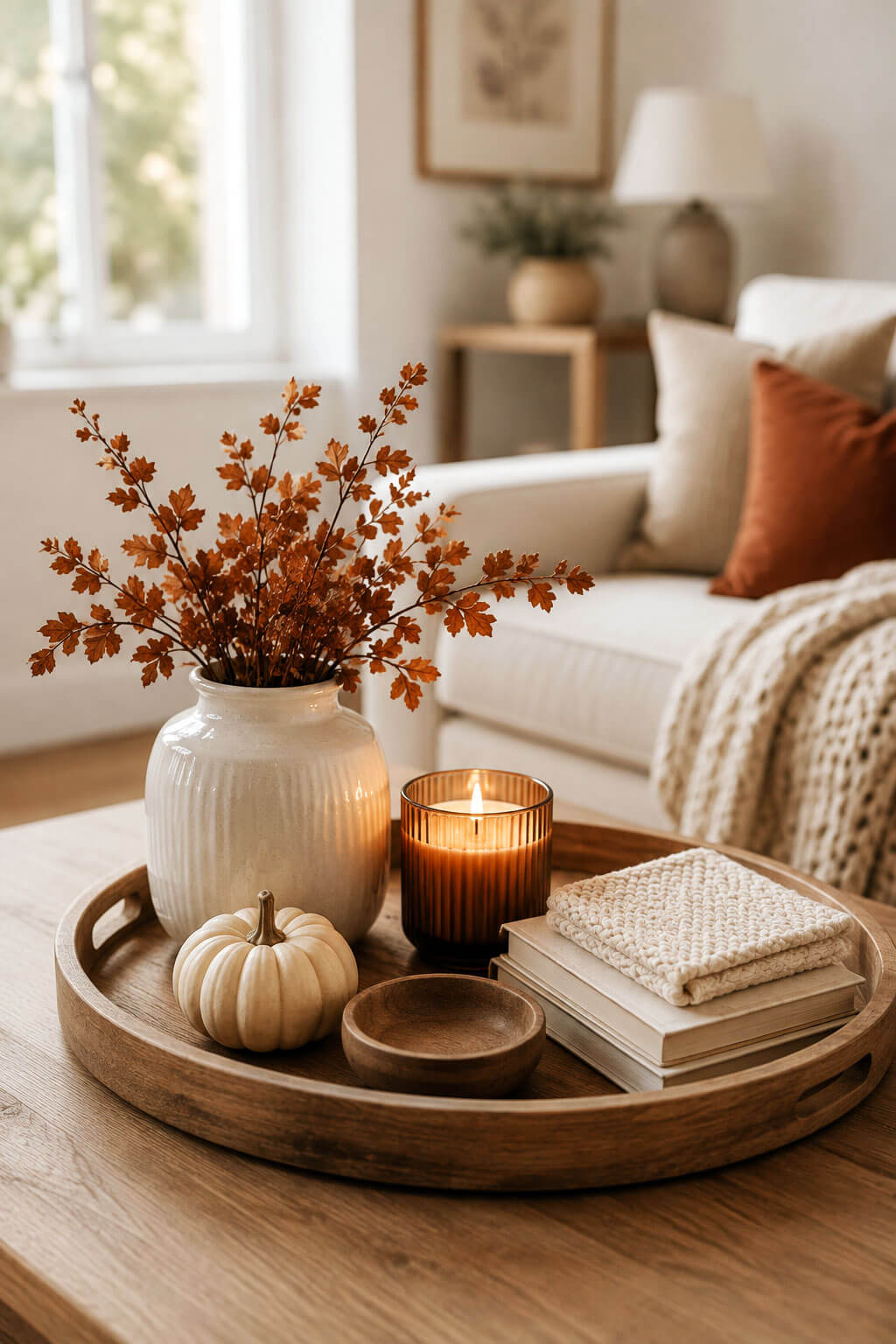
Almost every designer starts the same way: with a tray. A tray does two important jobs. First, it visually “contains” a grouping of smaller objects so they read as one intentional vignette instead of scattered clutter. Second, it protects your table surface from candle wax, water rings, and crumbs, which matters even more once cozy drinks and cooler evenings are involved.
For fall, look for a tray in a warm, natural material — wood, rattan, or aged brass all work beautifully against a neutral tabletop. A round or oval tray softens the hard edges of a rectangular table, while a long rectangular tray suits a narrow coffee table nicely.
🛒 Browse tray options: wooden decorative trays for coffee tables
2. Build in Odd Numbers
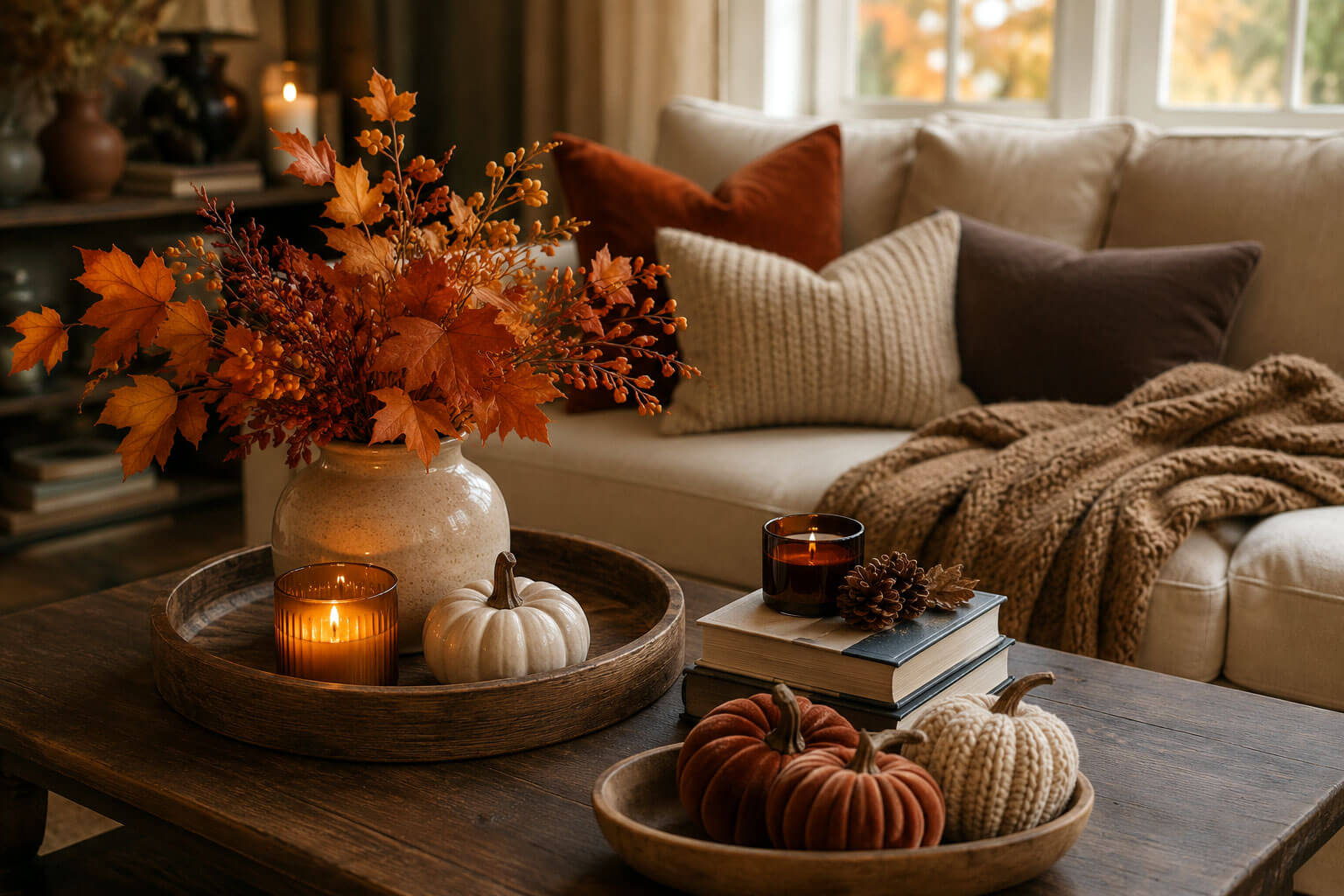
This is a rule borrowed straight from professional stylists: group objects in odd numbers, usually three or five. Odd-numbered groupings feel more natural and less rigid to the eye than pairs, which tend to look overly matched and static. A classic fall coffee table decor grouping might be a stack of books, a candle, and a small vase — three elements, three different heights, one cohesive story.
3. Vary the Height
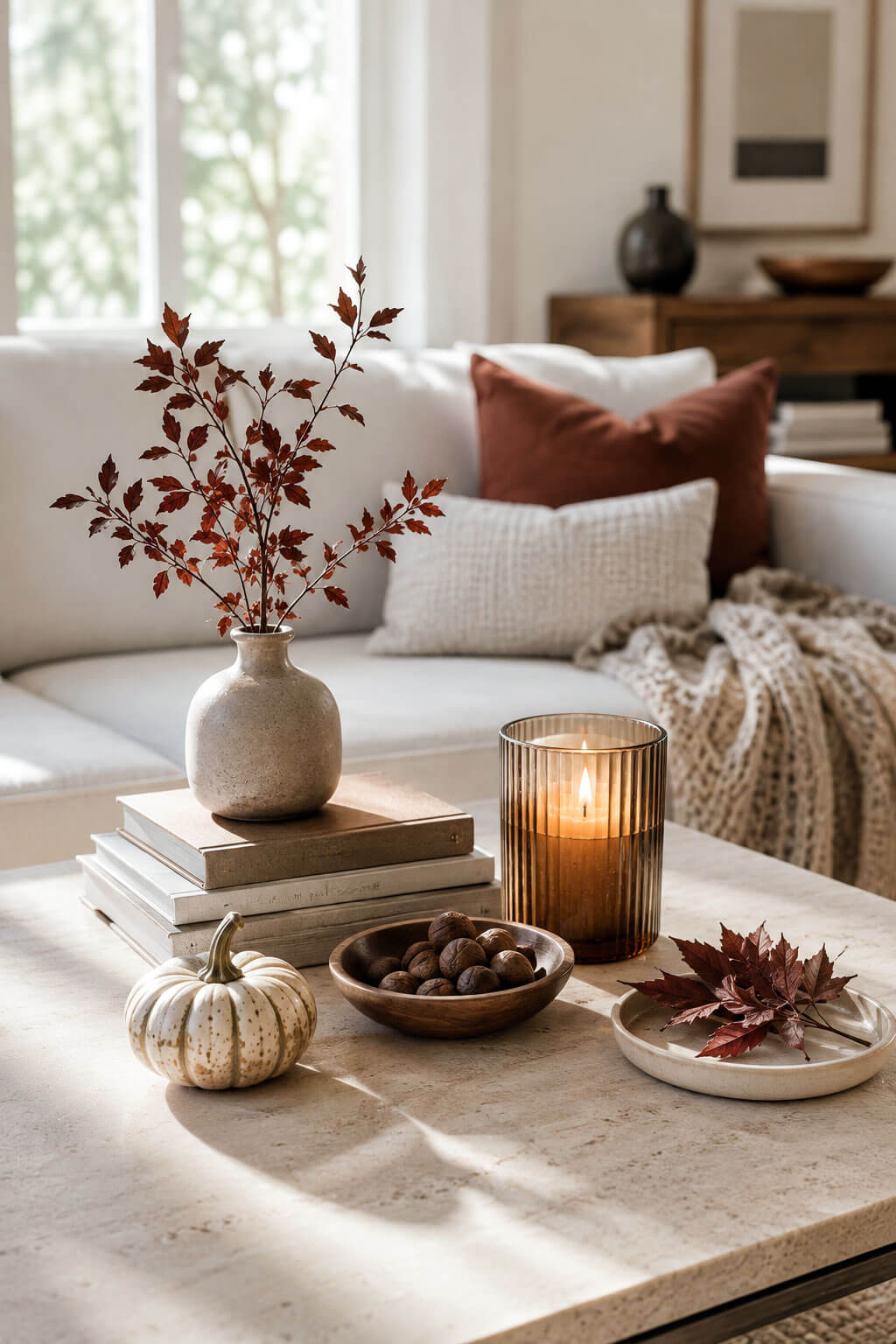
Flat, same-height arrangements are one of the fastest ways to make a table look unfinished. Designers build height in tiers: a tall element (a vase, a stack of books, a sculptural branch), a medium element (a candle, a small pumpkin), and a low element (a dish of acorns, a coaster stack, a piece of dried fruit or flora). This creates a natural triangle shape that the eye reads as balanced, even if nothing on the table is symmetrical.
🛒 Add height with: ceramic vases in neutral fall tones
4. Layer at Least Three Textures
Texture is what separates a table that looks styled from one that looks staged. A great fall coffee table usually mixes at least three tactile surfaces: something matte (linen, wood, ceramic), something glossy (glazed pottery, glass, lacquer), and something organic (dried grasses, pampas, a wool throw, natural fiber). This is also where fall really gets to shine, since the season is full of natural textures — bark, wheat, dried florals, chunky knits — that instantly read as cozy.

5. Choose a Restrained Color Story
The biggest difference between a designer table and a big-box store display is restraint. Rather than reaching for every fall color at once, the most sophisticated fall coffee table decor ideas pull from just two or three tones: perhaps a warm mustard yellow, a soft cream, and a deep olive or walnut brown. Sticking to a tight palette is what makes a table feel intentional rather than themed.
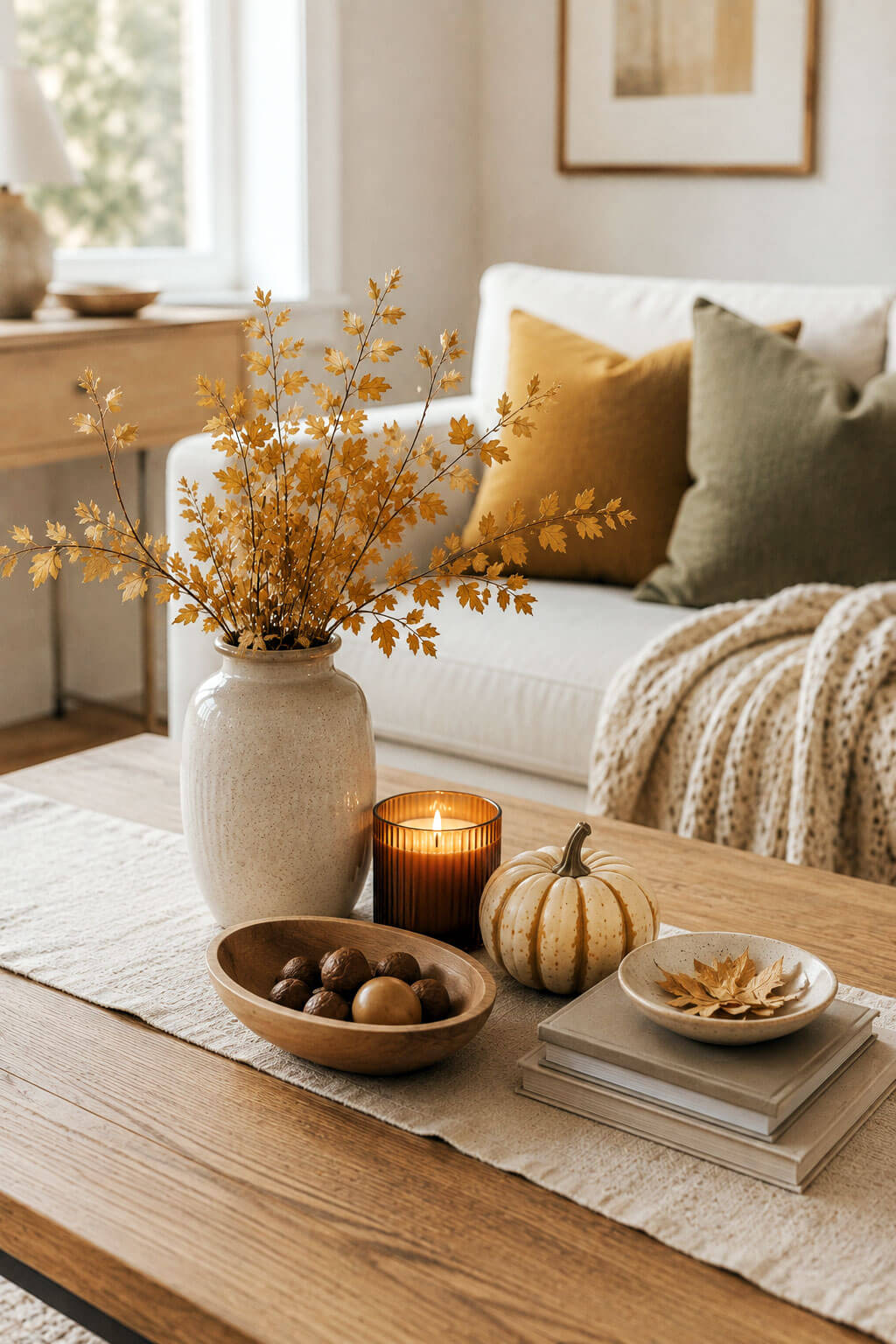
Designer shortcut: If you only remember one rule, remember this one: tray, odd numbers, varied height, mixed texture, tight color palette. Every step below is really just this framework applied in order.
Step-by-Step: How to Style Your Fall Coffee Table
Step 1: Clear the Table Completely
Start from zero. Remove the remote controls, the mail, the half-used candle from summer — everything. Styling on top of leftover clutter is the number one reason a fall coffee table ends up looking busy instead of curated. A clean slate lets you see the actual surface area you’re working with.
Step 2: Place the Tray Off-Center
Rather than centering your tray perfectly, push it slightly to one side or corner of the table. This leaves open “negative space” on the other side, which is one of the simplest ways to make a small vignette feel more expensive and less crowded. That open space is doing just as much work as the objects themselves.
Step 3: Add Your Tallest Element First
Place a vase, a small stack of hardcover books, or a sculptural dried branch arrangement toward the back or side of the tray. This becomes the anchor that everything else builds around. Books, in particular, are a designer favorite for coffee table styling because they add both height and a sense of a well-read, well-lived-in home.
🛒 Anchor pieces: decorative coffee table book sets · dried pampas grass arrangements
Step 4: Layer In a Medium Element
Next to your tall piece, add something at mid-height — a pillar candle, a small pumpkin (real, ceramic, or faux), or a low bowl with a lid. This is the piece that usually carries the most seasonal color, whether that’s a deep rust candle or a mottled heirloom pumpkin in muted cream and green.
🛒 Seasonal accents: neutral-toned faux pumpkins · warm fall-scented candles
Step 5: Finish With a Low, Textural Detail
Close the composition with something low and tactile: a small dish of dried orange slices or acorns, a stack of linen coasters, or a mini bud vase. This is the detail people notice second, but it’s what makes the whole grouping feel finished rather than sparse.
🛒 Finishing touches: linen coaster sets · dried orange slice decor
Step 6: Add Softness Beside (Not On) the Table
A chunky knit or boucle throw draped over the arm of the sofa nearby, spilling slightly toward the table, ties the whole vignette into the room instead of leaving it isolated on the tabletop. This is a favorite trick for making fall coffee table decor feel connected to the rest of the space rather than staged in isolation.
🛒 Cozy layer: chunky knit throw blankets
Step 7: Step Back and Edit
This is the step most people skip, and it’s the one that separates amateur styling from designer styling. Once everything is placed, physically step back ten feet, or take a photo on your phone. Photos flatten a table and reveal awkward gaps or crowding instantly. If anything feels busy, remove one item — designers almost always edit down, never up.
Fall Coffee Table Decor Ideas by Style
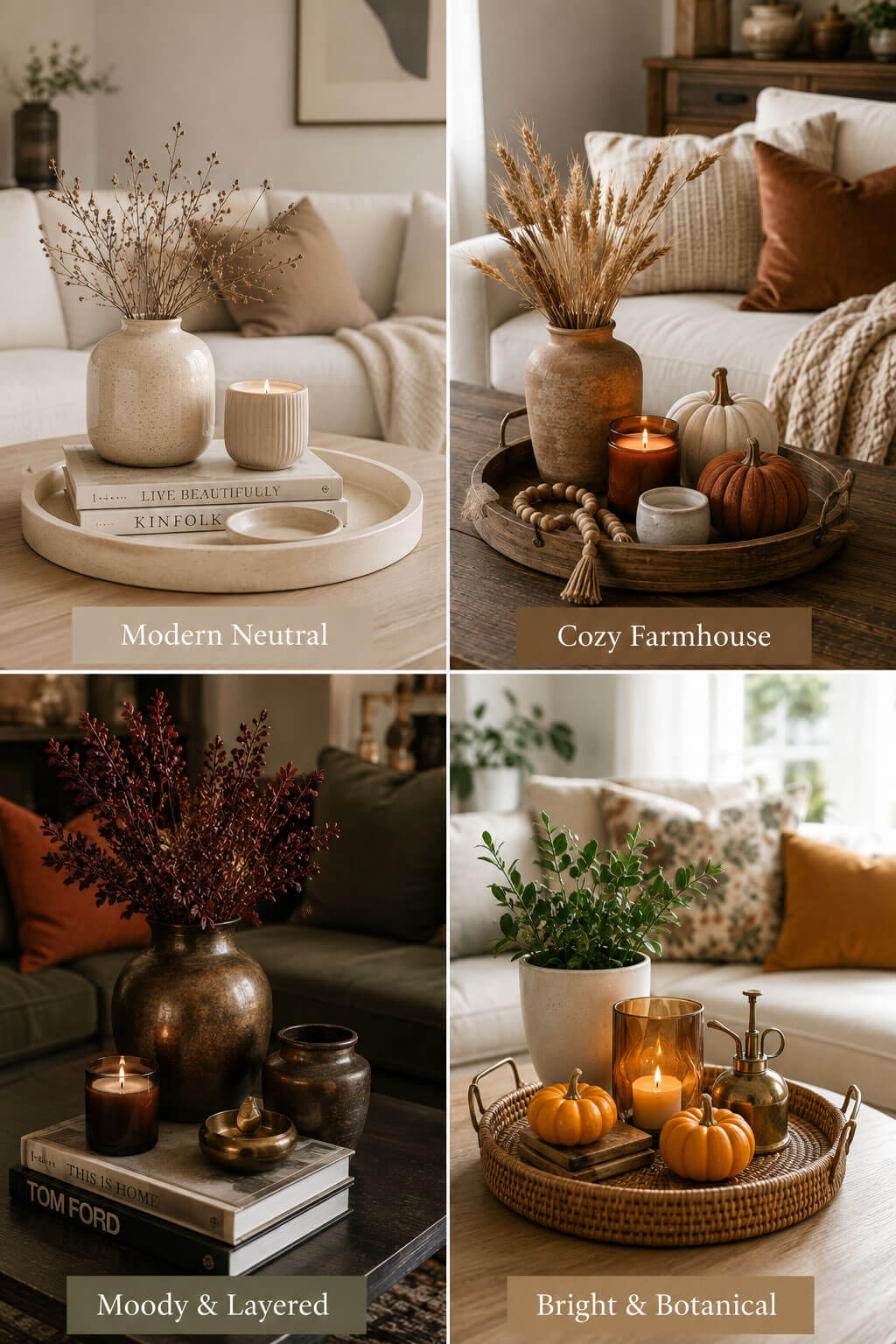
Not every home wants the same look, and that’s part of what makes coffee table decor ideas for fall so flexible. Here are four approachable directions, each still built on the same five-principle framework above.
- Modern Neutral: Cream, taupe, and walnut tones; a single ceramic vase, one stack of matte-cover books, one unscented candle in a stone vessel. Almost no orange at all — the “fall” reads through texture, not color.
- Cozy Farmhouse: Wood tray, dried wheat or wheat-colored pampas, a small stack of galvanized or clay pumpkins, a linen runner underneath the tray instead of directly on the wood.
- Moody & Layered: Deep olive, rust, and charcoal; a dark glass or bronze vase, a thick candle in a smoky glass holder, dried florals in burgundy and brown, a dark leather-bound book stack.
- Bright & Botanical: Amber and marigold tones, real mini pumpkins mixed with fresh eucalyptus or preserved leaves, a light rattan tray, brass candle holders for shine.
What’s Your Fall Coffee Table Style?
Answer four quick questions and we’ll match you to a styling direction, plus a shopping starting point.
Common Mistakes to Avoid
Even with the right pieces, a few small missteps can throw off an entire fall coffee table arrangement. Here’s what to watch for.
Buying every fall item at once
Filling a cart with pumpkins, gourds, leaf garlands, and mugs all at the same time is the fastest route to a table that looks like a seasonal display rather than a home. Pick two or three seasonal pieces and let everything else stay neutral.
Skipping the tray
Objects placed directly on the table surface, without a tray to unify them, almost always read as clutter rather than a styled vignette — even if the individual pieces are beautiful.
Centering everything symmetrically
Perfectly centered, mirror-image arrangements can feel stiff and store-display-like. Off-center, asymmetrical groupings feel more natural and more like a real home.
Ignoring scale
A tiny bud vase on a large table (or an oversized arrangement on a small one) throws off the whole composition. Take a moment to measure your table and choose pieces sized to it — as a rule of thumb, decor should take up no more than a third to a half of the tabletop.
Forgetting the functional side
A coffee table still needs to function as a coffee table. Leave room for at least one drink or a stack of coasters, or the styling will get shoved aside within a day.
Using scented candles that clash
Mixing a pumpkin spice candle with a cinnamon one, or several competing scents at once, can overwhelm a room. Stick to one signature fall scent per space.
Overdoing the orange
Orange is a fall shortcut, but too much of it can tip a table from “seasonal” into “costume aisle.” Balance it with neutrals, browns, and greens so the color reads as sophisticated rather than literal.
Quick-Reference Checklist
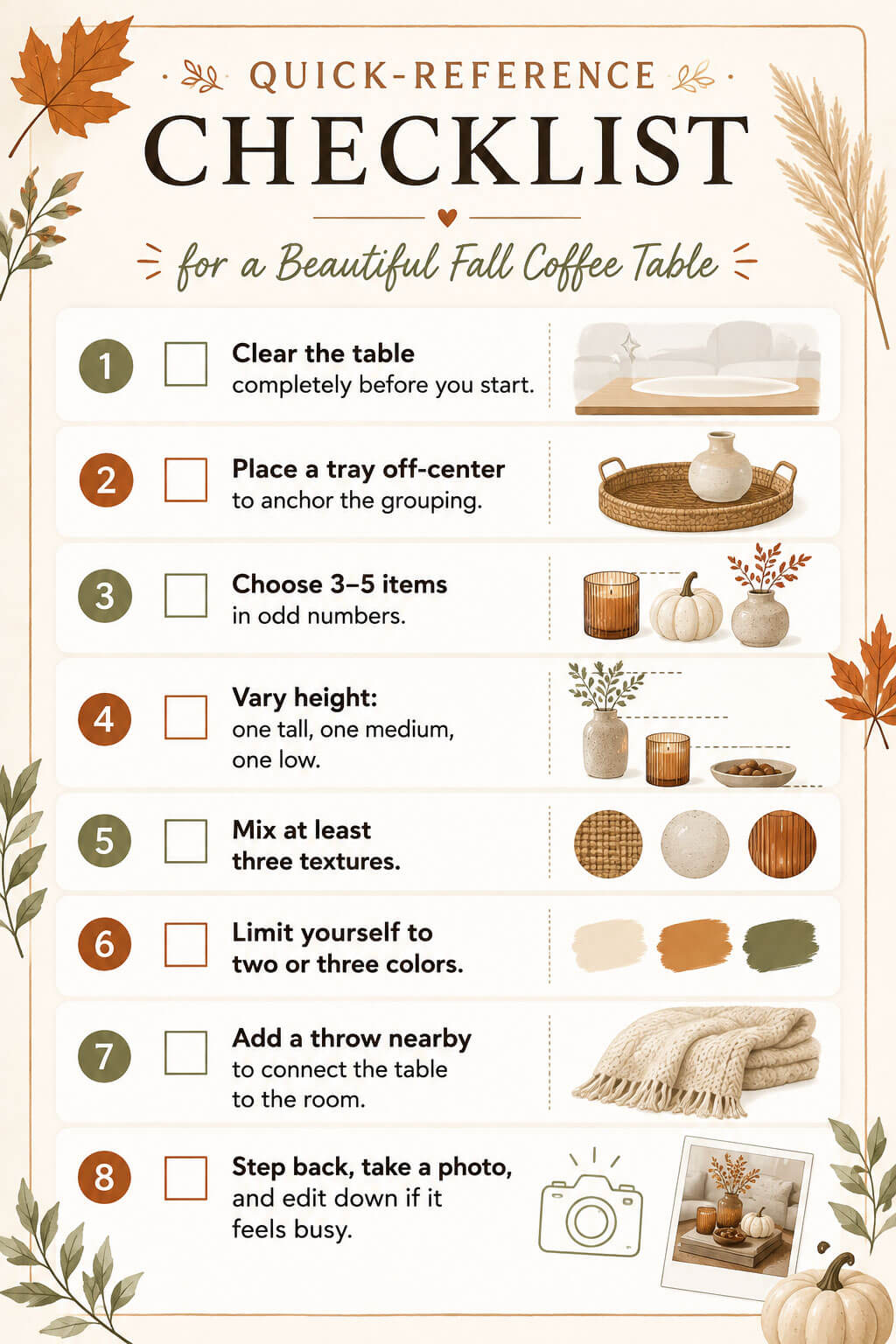
Keep this list handy the next time you sit down to refresh your table for the season:
|
1. |
Clear the table completely before you start. |
|
2. |
Place a tray off-center to anchor the grouping. |
|
3. |
Choose 3–5 items in odd numbers. |
|
4. |
Vary height: one tall, one medium, one low. |
|
5. |
Mix at least three textures. |
|
6. |
Limit yourself to two or three colors. |
|
7. |
Add a throw nearby to connect the table to the room. |
|
8. |
Step back, take a photo, and edit down if it feels busy. |
Frequently Asked Questions
How many items should be on a fall coffee table?
Most designers keep it to one grouping of three to five objects, plus maybe one additional item like a book stack. More than that tends to tip into clutter, especially on a smaller table.
What colors work best for fall coffee table decor?
A tight palette of two or three tones works best — think rust, cream, and walnut brown, or olive, amber, and charcoal. Picking a full rainbow of “autumn colors” is one of the fastest ways to make a table look busy.
Should I use real or faux pumpkins?
Both work well; it’s really a matter of style and maintenance. Real mini pumpkins add an organic, seasonal feel but need replacing every few weeks. Faux or ceramic pumpkins in muted, neutral tones can stay out all season and photograph just as well.
How often should I restyle my coffee table?
A light refresh every season keeps a living room feeling current without much effort. Within the fall season itself, most people don’t need to change anything until it’s time to transition toward winter decor.
What’s the easiest way to make my table feel more “designer”?
Start with a tray, keep your color palette to two or three tones, and vary the height of your objects. Those three moves alone account for most of the difference between a styled table and a cluttered one.
The takeaway: Styling a fall coffee table isn’t about buying more — it’s about editing well. A tray, a tight color story, varied height, mixed texture, and the discipline to stop adding once it looks finished will get you a coffee table that feels genuinely designer, season after season.