
Moka Pot: How to Make Great Coffee with It!
If you have an iconic, retro-style coffee maker in your kitchen — something that looks like it could’ve come straight off your grandma’s shelf — chances are you’ve already met the moka pot. It’s typically made from stainless steel or aluminum. For decades, it has fueled morning caffeine routines all around the world. Brewing coffee in a moka pot is a true ritual, a nostalgic experience. When used properly, it produces a rich, full-bodied, and intensely aromatic cup of coffee.
What Is a Moka Pot? – A Brief History
The moka pot — known internationally by that very name — is one of the most recognizable and iconic coffee makers in Europe. It was invented by Alfonso Bialetti in 1933 in Italy. He created a simple yet brilliant device that completely transformed home coffee brewing. This was the first version of the Moka Express.
His goal was to make it possible to brew strong, aromatic coffee at home — similar to what you’d get in a café — without the need for expensive equipment.
The classic octagonal design created by Alfonso Bialetti has since become a true design icon, and generations have grown up with a moka pot sitting on the stovetop. In many families, it’s more than just a kitchen tool — it carries sentimental value, tied to morning rituals, conversations, and shared moments.
The Hungarian name “kotyogós” (roughly meaning “gurgling pot”) isn’t a coincidence. It comes from the distinctive bubbling sound you hear at the end of brewing. That sound signals that most of the water has passed through the coffee grounds and the brewing process is nearly complete.
The Structure and Parts of a Moka Pot
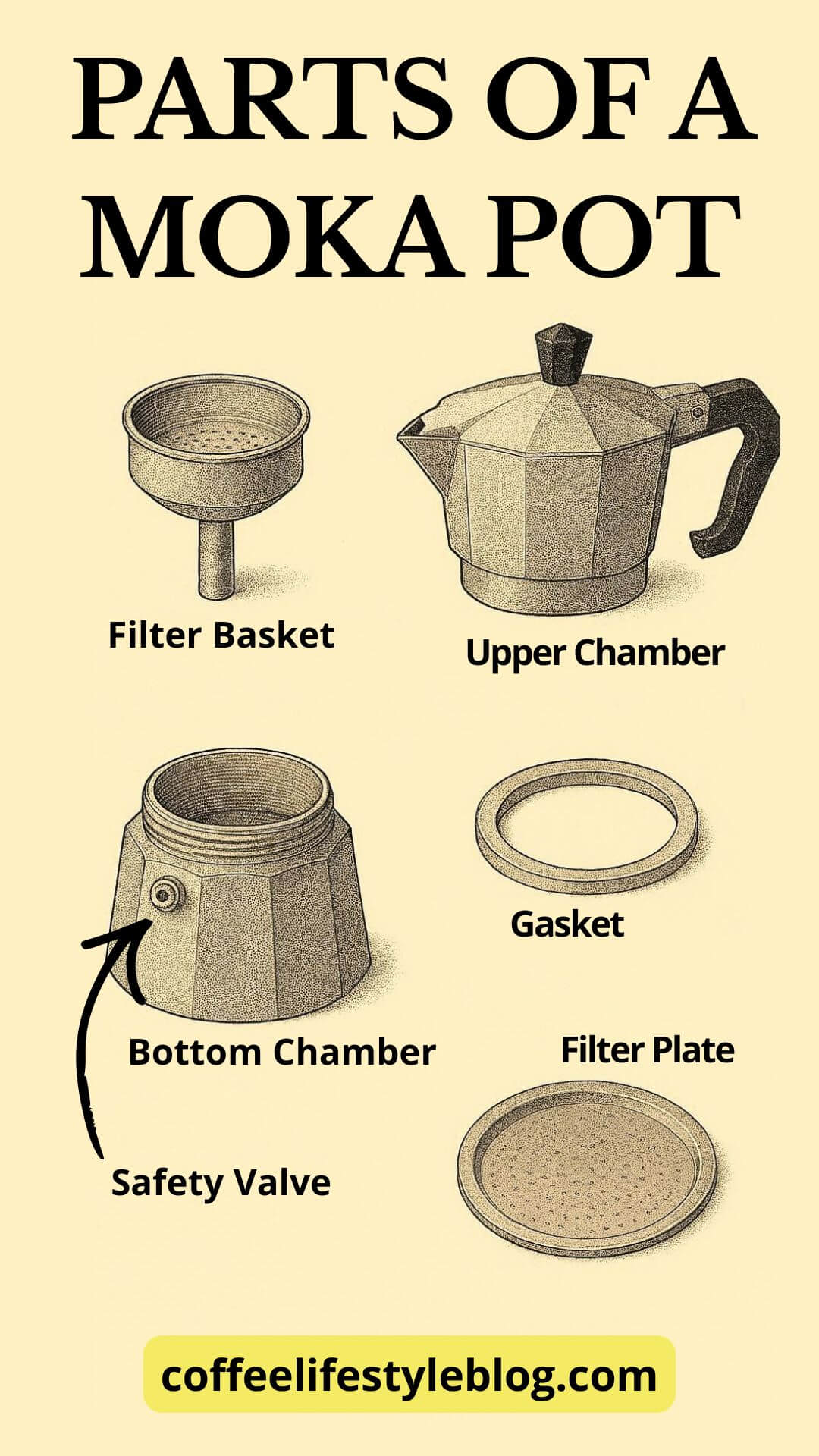
At first glance, a moka pot may look like a very simple device, but in reality, every small component plays an important role. The classic moka pot consists of three main sections that work together to transform water and ground coffee into a bold, flavorful brew.
Bottom Chamber (Water Reservoir)
The bottom chamber is where you add the water, which heats up on the stovetop. As the temperature rises, steam forms and pressure begins pushing the hot water upward.
This is also where you’ll find the safety valve, which prevents excessive pressure from building up. That’s why it’s important never to fill the water above the valve.
This section is typically made of aluminum or stainless steel and sits directly on the heat source, meaning it greatly affects how quickly and evenly the coffee brews.
Filter Basket (Funnel)
The filter basket sits between the bottom and top chambers and holds the ground coffee. Its shape is designed to guide the hot water evenly through the grounds, extracting as much flavor and aroma as possible.
It’s important not to tamp the coffee in a moka pot, since it doesn’t use a pump like an espresso machine. If the grounds are packed too tightly, water will struggle to pass through, which can lead to bitter, over-extracted flavors.
Upper Chamber (Collection Chamber)
The brewed coffee collects in the upper chamber after the water passes through the grounds. This is where you see that iconic moment when the coffee slowly bubbles up through the center column.
The top chamber doesn’t receive direct heat, making it the ideal place for the finished coffee. The moka pot also has a lid. Keeping it open while brewing helps you monitor the process and remove it from the heat at the right time. Plus, it’s pretty satisfying to watch the coffee first appear and gently “spurt” out.
Rubber Gasket and Metal Filter Plate
Between the upper and lower chambers sits the rubber gasket, which creates an airtight seal. Without it, proper pressure couldn’t build up, and the coffee wouldn’t brew correctly.
Behind the gasket is the metal filter plate, which prevents fine coffee particles from ending up in your cup. Both parts wear out over time, so it’s worth checking them regularly and replacing them when needed. Surprisingly, a fresh gasket can make a noticeable difference in the flavor of your coffee.
How Does It Work Exactly?
The moka pot works on a simple yet fascinating physical principle. When you begin heating the water in the bottom chamber, its temperature rises and steam starts to form. As the steam builds, pressure gradually increases. Since the lower chamber is sealed, the pressure has only one direction to go — upward, through the coffee grounds.
This pressure forces the hot water up through the ground coffee in the filter basket, extracting its aromas, oils, and flavor compounds along the way. The result is a concentrated, full-bodied brew that travels up through the central column and collects in the upper chamber, ready to drink.
The familiar “gurgling” sound at the end of the process happens when most of the water has already passed through and steam begins pushing up the remaining liquid in short bursts. It’s also your cue to remove the moka pot from the heat — this helps prevent overheating and keeps bitter flavors from developing.
Moka Pot Coffee vs. Espresso – What’s the Difference?
Although many people think of moka pot coffee as “home espresso,” it’s technically not true espresso. Espresso machines operate at around 9 bars of pressure, while a moka pot generates much less — typically about 1.5 to 2 bars. Because of this, moka pot coffee doesn’t produce the thick crema you get with espresso, and the extraction process is different as well.
That said, moka pot coffee is still intense, bold, and full-bodied. It’s much stronger and more concentrated than drip coffee, and it comes closer to the espresso experience than most other traditional home brewing methods. For this reason, many people love using it as a base for milk drinks like cappuccinos or latte-style beverages.
How to Make Moka Pot Coffee Step by Step
Now for the most important part: brewing the coffee itself. A moka pot isn’t complicated, but small details make all the difference between a smooth, aromatic cup and one that tastes bitter. If you follow the steps below, you’ll likely notice the difference from your very first cup.
Step 1: Rinse the Moka Pot
Before every brew, quickly rinse the moka pot with warm water. Don’t overthink it — but leftover coffee oils from yesterday can definitely affect the flavor.
Important: don’t use soap! If you use a sponge, stick to the soft side.
Step 2: Fill the Water Chamber
Pour hot water — not cold — into the bottom chamber. This not only speeds up the process but also helps prevent excessive heating, which can lead to bitterness.
The water level should always stay just below the safety valve. This is essential for both flavor and safety.
Important: it will work with cold water too, but because it takes longer to heat up, the coffee is more likely to overheat and develop a bitter taste.
Step 3: Add the Ground Coffee
Fill the filter basket evenly with ground coffee, then gently level off the top. There’s no need—and you shouldn’t—tamp it down. A moka pot isn’t an espresso machine; the water passes through at lower pressure and needs some space.
If the grounds are packed too tightly, the water will struggle to flow through, resulting in an overly strong, bitter brew.
Step 4: Screw It Together Properly
Attach the top chamber and screw it on firmly, but don’t force it.
It’s also a good idea to quickly check the rubber gasket. If it’s worn out or cracked, both the pressure and the flavor will suffer.
Step 5: Brew Over Medium Heat
Moka pots reward patience. Place it on the stove over medium heat.
Keep the lid open and watch as the coffee slowly and steadily rises into the upper chamber. It’s one of the most satisfying moments of the entire process.
Step 6: Remove It at the Right Time
If the coffee starts splattering too much, you can close the lid. When the gurgling turns into a softer sputtering sound and then begins to fade, your coffee is essentially ready. That’s when you should remove it from the heat.
Important: if you leave it on the stove too long, the last drops will taste more bitter than aromatic.
Step 7: Pour and Enjoy
Moka pot coffee is best enjoyed fresh, so serve it immediately.
If you really want to elevate the experience, use a preheated cup — this keeps your coffee from cooling down before the first sip.
Making Moka Pot Coffee – With Video
What Materials Are Moka Pots Made Of — and Which One Should You Choose?
When choosing a moka pot, one of the most important factors is the material it’s made from. This affects not only the look and price, but also how the pot heats up, the flavor of your coffee, its durability, and even which type of stovetop you can use it on.
Classic moka pots are primarily made from two materials:
aluminum and stainless steel. While they may look similar at first glance, the brewing experience — and the results — can be surprisingly different.
Aluminum Moka Pots
Aluminum moka pots represent the original, traditional direction. Aesthetically, they carry that classic Italian vibe. The first moka pots created by Alfonso Bialetti were made from aluminum, which is why for many people this is the “real” moka pot experience.
One of aluminum’s biggest advantages is its excellent heat conductivity. Water heats up quickly, brewing time is shorter, and less energy is needed to make coffee. This makes it especially practical during busy mornings. It’s also lighter than stainless steel and usually more affordable.
What Should You Watch Out For?
Aluminum is a more sensitive material. It can react with coffee’s natural acidity, especially if:
- you use it over very high heat,
- you don’t clean it properly,
- you wash it with dish soap or in the dishwasher.
Over time, this may cause discoloration and, in rare cases, a slight metallic aftertaste. From a health perspective, opinions are mixed about aluminum cookware. Personally, I’d say if your coffee is reacting with the material, that’s a warning sign.
Additional downsides:
- Aluminum moka pots are not compatible with induction cooktops.
- They scratch more easily.
- Over many years, they can warp if regularly overheated.
Stainless Steel Moka Pots
Stainless steel moka pots represent the more modern, premium option. They’re often chosen by people who are more experienced with coffee brewing or who are thinking long term.
Most stainless steel moka pots are compatible with induction cooktops, which is an important factor in many households today. In addition:
One of steel’s greatest strengths is its stability and durability. It doesn’t react with coffee’s acidity, which helps preserve a cleaner, more balanced flavor.
- They’re more scratch-resistant.
- They handle high heat better.
- They’re easier to clean.
- Many models are technically dishwasher-safe (although hand washing is still recommended).
In terms of appearance, they have a sleeker, more professional look, which fits especially well in modern kitchens.
What Are the Trade-Offs?
Stainless steel moka pots are heavier. Water heats up more slowly because steel is a poorer heat conductor than aluminum. They’re also typically more expensive — especially high-quality models.
Which One Should You Choose Overall?
| Type | Price | Durability | Flavor Stability | Induction Compatible | Ease of Use |
|---|---|---|---|---|---|
| Aluminum moka pot | ⭐⭐⭐⭐ | ⭐⭐ | ⭐⭐ | ❌ | ⭐⭐⭐⭐ |
| Stainless steel moka pot | ⭐⭐ | ⭐⭐⭐⭐ | ⭐⭐⭐⭐ | ✅ | ⭐⭐⭐ |
What Coffee Should You Use for a Moka Pot?
A moka pot uses a unique brewing method — it’s not as gentle as drip coffee, and it doesn’t use the high pressure of espresso. That’s why choosing the right coffee is especially important. Even if your technique is perfect, the wrong type of coffee or grind size can lead to disappointing results.
For a moka pot, medium-fine grind is ideal. This grind size sits somewhere between espresso and drip.
If the Grind Is Too Coarse:
- Water passes through too quickly.
- Not enough flavor is extracted.
- The coffee tastes thin, watery, and flat.
- It may even have a tea-like quality.
If the Grind Is Too Fine:
- The grounds can clog the filter.
- Water struggles to pass through.
- Over-extraction occurs.
- The coffee can taste bitter or burnt.
- In extreme cases, the moka pot may start sputtering aggressively.
One of the most common mistakes with moka pots is using espresso grind, which is usually too fine for this method.
Golden rule: If the coffee rises slowly and steadily, without excessive splattering or aggressive gurgling, your grind size is probably just right.
Conclusion
The moka pot has stayed with us for decades because it brings a touch of the past into a modern world. It’s a simple device, yet it can produce surprisingly bold, complex coffee — without complicated techniques or expensive equipment.
It takes up little space, works quickly, and delivers an intense, aromatic brew that’s perfect for a calm morning or a short afternoon break. Over time, using it becomes a ritual: heating the water, smelling the coffee, hearing that first gentle gurgle.
A moka pot isn’t just a coffee maker. It’s a small slice of Italian café culture that you can recreate anywhere, anytime. And maybe that’s exactly why we still love it so much.