Storing Coffee at Home: How to Keep It Fresh Every Time!
Whether you’re a beginner coffee lover or a true coffee connoisseur, proper coffee storage is essential if you want your morning cup to stay rich, aromatic, and enjoyable. Most people pay close attention to the type of coffee they buy and the machine they brew it with — yet one crucial step often gets overlooked: storing coffee the right way.
In this detailed guide, you’ll learn:
- Why coffee is so sensitive to environmental factors
- How to store coffee at home to keep it fresh longer
- The most common mistakes people make when storing coffee
- How long coffee actually stays fresh
- What types of storage containers work best
Let’s dive in!
Why Proper Coffee Storage Matters
Coffee — whether whole beans or ground — is a natural, delicate product that can quickly lose its flavor and aroma if not stored correctly. Coffee beans have a complex composition, packed with volatile oils and aromatic compounds that break down rapidly when exposed to air, moisture, light, and heat.
If stored improperly, the following can happen:
- The pleasant aromas fade away
- Oxidation can lead to a bitter, metallic taste
- Coffee can absorb surrounding odors
- Mold or rancidity may develop
- The caffeine content won’t decrease, but the overall experience will suffer significantly
Fresh coffee is a lot like fresh bread — if you don’t take care of it, it goes bad quickly.
Coffee’s Biggest Enemies During Storage

1. Air (Oxidation)
Exposure to oxygen triggers oxidation, causing coffee to lose both its aroma and quality. One of the biggest mistakes you can make is leaving the bag open or storing coffee in a non-airtight container.
2. Moisture
Roasted coffee is naturally dry. When exposed to moisture, it can start to mold or turn rancid. Never store coffee in a humid environment (like the fridge!).
3. Heat
Heat speeds up chemical reactions — including oxidation. A warm kitchen counter, the top of an oven, or a sunny windowsill are all poor choices for storing coffee.
4. Light
Light — especially direct sunlight — breaks down the oils in coffee. So even if it looks nice, storing coffee in a glass container in a sunny spot is not a good idea.
5. Odors
Coffee is highly absorbent when it comes to smells. If not sealed properly, it can take on surrounding odors like spices, onions, or garlic — not exactly what you want in your morning cup.
How to Store Coffee Properly
1. Use an airtight container
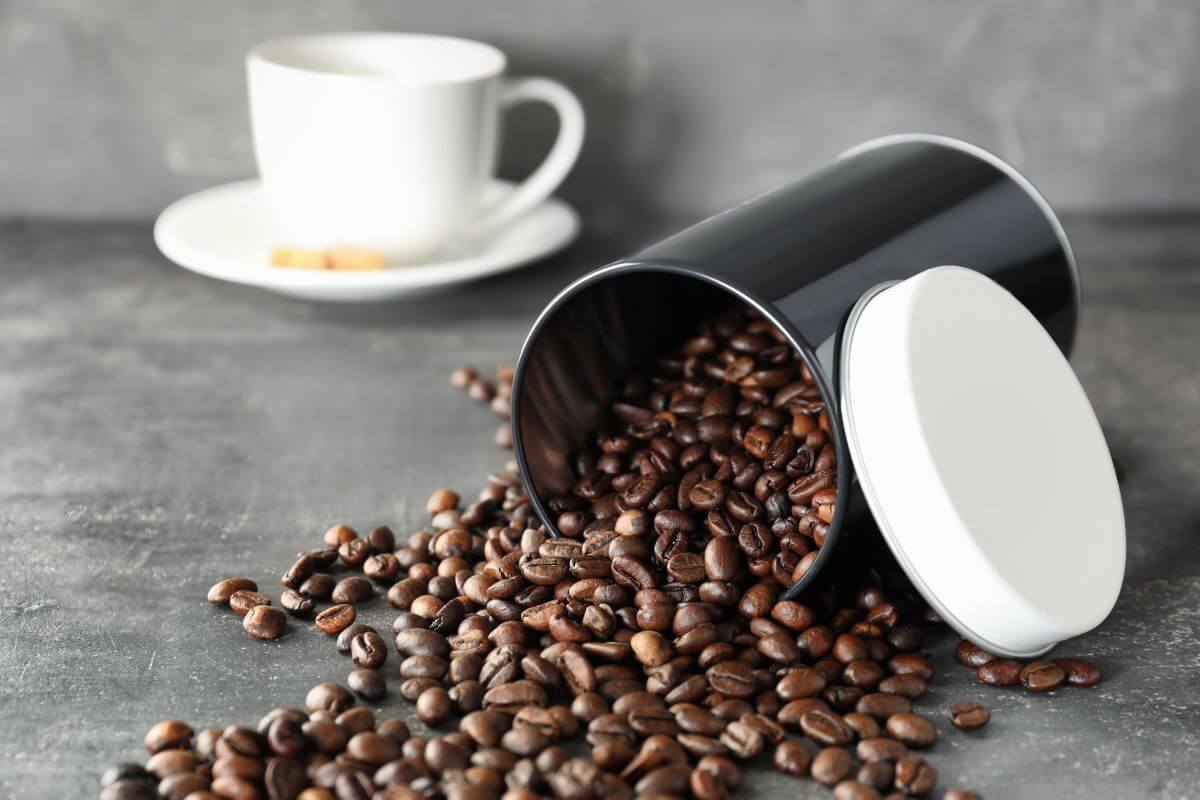
The most important rule: always store your coffee in an airtight container, such as:
- A metal or ceramic canister with a silicone seal
- A specialized vacuum coffee container
- Dark-colored glass (only if stored in a dark place)
Avoid cheap plastic containers — they don’t seal well and can let odors in.
2. Keep it in a cool, dry, dark place
The ideal spot is a pantry or a closed kitchen cabinet — away from the stove, oven, and sink. Avoid exposing your coffee to direct sunlight, heat, or humidity.
3. Don’t store coffee in the fridge (and only freeze it with care)
While it may seem like a good idea, storing coffee in the fridge is actually one of the biggest mistakes:
- Fridges are humid
- Coffee absorbs odors from other foods
- Taking it in and out causes condensation
Exception: If you buy coffee in large quantities, you can freeze it in small portions (e.g., 3.5 oz / 100 g bags), vacuum-sealed. Once thawed, store it at room temperature and use it within a week.
4. Grind only what you need
Ground coffee loses its aroma much faster than whole beans. Whenever possible:
- Buy whole bean coffee
- Grind only what you need right before brewing
- Use a home coffee grinder (manual or electric)
What About Vacuum-Sealed Coffee? – Clearing Up a Common Myth
Many people believe that vacuum sealing is the best way to keep coffee fresh for a long time. That’s partly true — but not in the way most people think.
The downsides of vacuum-sealed ground coffee:
- Before vacuum sealing, coffee needs to be degassed, since freshly roasted beans release carbon dioxide that would otherwise inflate the package
- Because of this, coffee is often packaged days or even weeks after roasting, meaning it has already started to lose freshness by the time it’s sealed
- Vacuum sealing doesn’t stop oxidation — it only slows it down, especially in ground coffee where the surface area is much larger
In short: vacuum-sealed coffee found on store shelves is often no longer truly fresh, even if it’s airtight.
A Better Option: Valve-Sealed Coffee Bags
High-quality roasters usually sell fresh coffee in bags with a one-way valve.
- This valve allows gases to escape without letting air in
- It makes it possible to package coffee shortly after roasting
- As a result, the coffee retains its aroma for a longer time
What About Home Vacuum Containers?
Vacuum coffee canisters for home use can be helpful — but only if you fill them with freshly roasted coffee. They:
- Minimize exposure to air
- Work best with fresh beans
- Can’t make up for a lack of freshness from the start
In other words, they help preserve quality — but they can’t create it.
How Long Can You Store Coffee?
The answer depends on the form of coffee you’re storing.
Whole Bean Coffee
- Unopened (factory-sealed): about 3–6 months from the roast date
- After opening, stored properly: stays truly aromatic for about 3–4 weeks
Ground Coffee
- Unopened: about 2–3 months
- After opening: noticeable loss of aroma can occur within 1–2 weeks
Instant Coffee
- Has a much longer shelf life — up to 2 years — but its quality gradually declines
Tip: Always check the roast date (when available), not just the expiration date. Coffee tastes best when consumed within 7–30 days of roasting.
What Kind of Container Should You Use?
Below is a quick overview of recommended coffee storage containers. Each option has its own pros and cons, so choose based on your needs and preferences.
| Container Type | Pros | Cons |
|---|---|---|
| Vacuum container | Keeps coffee fresh longer | More expensive |
| Dark glass, airtight | Stylish, protects from light | Can be heavy |
| Ceramic container | Blocks out light | Can be fragile |
| Metal container | Durable and airtight | Can absorb heat |
| Original bag with valve | Convenient | Only works well if properly resealed |
How Not to Store Coffee – Common Mistakes
- Leaving it in an open bag on the kitchen counter – exposes it to every enemy at once
- Storing it in the fridge – moisture and odors will ruin it
- Keeping it in a clear jar in direct sunlight (I used to make this mistake too.) – almost guarantees flavor loss
- Placing it near spices – it will absorb those smells
- Buying in bulk and opening everything at once – you won’t be able to keep it fresh
A Simple Coffee Storage Routine for Coffee Lovers
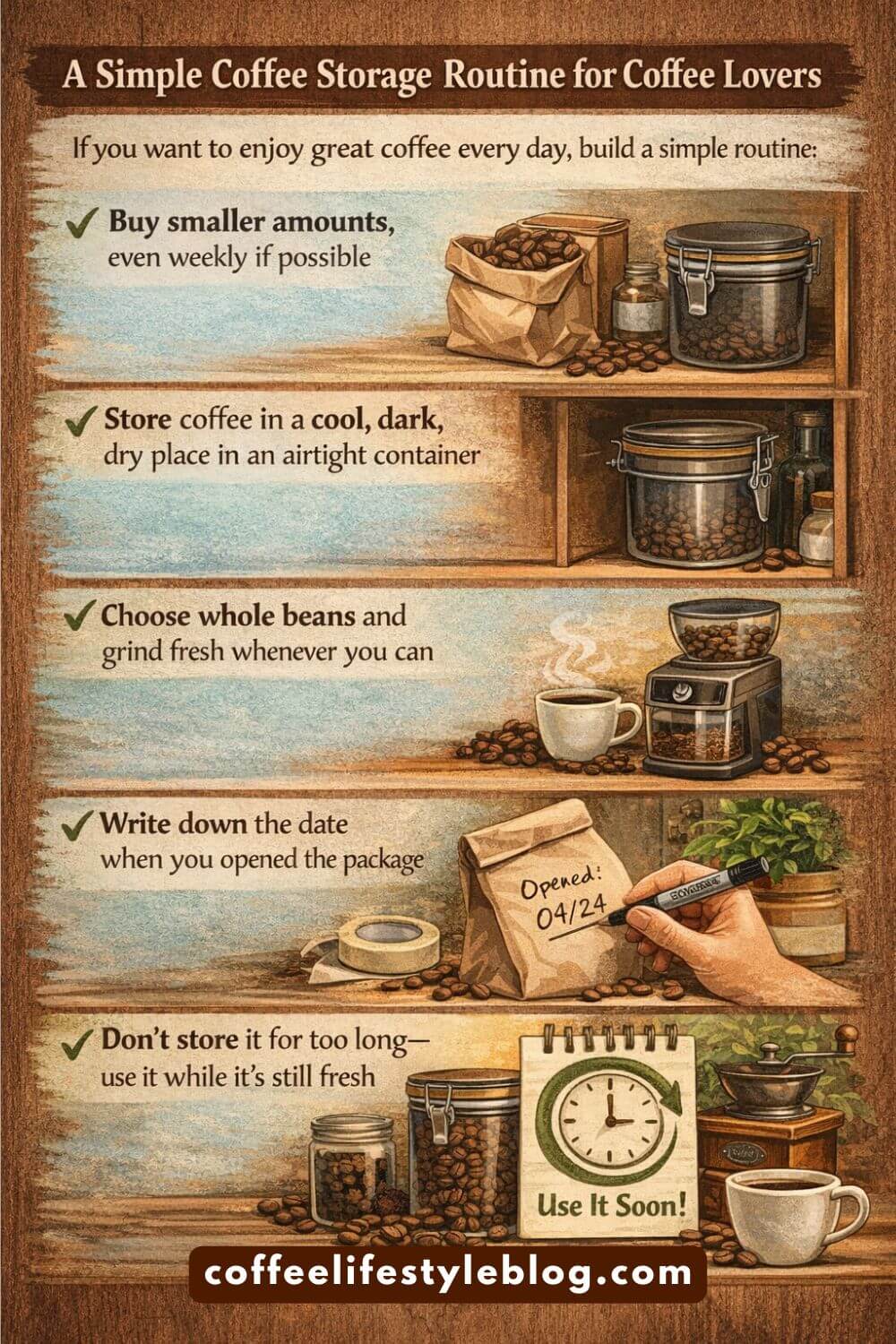
If you want to enjoy great coffee every day, build a simple routine:
- Buy smaller amounts, even weekly if possible
- Store coffee in a cool, dark, dry place in an airtight container
- Choose whole beans and grind fresh whenever you can
- Write down the date when you opened the package
- Don’t store it for too long — use it while it’s still fresh
Summary: How to Keep Your Coffee Fresh and Delicious
Storing coffee properly isn’t complicated, but it does require a bit of awareness. Keep these key points in mind:
✅ Freshness is one of the most important ingredients of great coffee
✅ Store it airtight in a cool, dark place
✅ Avoid the fridge and direct sunlight
✅ Grind fresh whenever possible
✅ Use a high-quality storage container
Well-stored coffee isn’t just more flavorful — it’s also more economical, since you’re not wasting those precious aromas. Take care of your coffee, and every cup will be a better experience.
If you enjoyed this article, feel free to share it with fellow coffee lovers — and don’t forget to check out more posts on the blog!