The Characteristics of Robusta Coffee
Robusta coffee (Coffea canephora) makes up about 30–40% of global coffee production, making it the second most common coffee variety after arabica. It’s popular for its affordability and high caffeine content, but there’s a lot more to it than just that. Compared to arabica, robusta is a hardier, more resistant plant that can grow in a wider range of climates. That’s why you’ll find robusta coffee in most instant coffees and in many lower-cost blends.
While robusta is less aromatic than arabica, it’s often blended with arabica coffee beans to create a smoother flavor profile. Despite its somewhat bitter taste, robusta still has a loyal following. Pure robusta coffee beans are rarely used alone, but they play a vital role in the coffee world.
The Origins of Robusta Coffee
Robusta coffee originally comes from West and Central Africa, especially from regions that are now the Democratic Republic of Congo, Ivory Coast, and Uganda. It was discovered in the late 19th century and quickly gained popularity thanks to its resilience and higher yields.
Today, Vietnam grows the majority of the world’s robusta. In fact, Vietnam is one of the largest coffee exporters globally, mainly because of its robusta coffee production. The country accounts for about 14% of the global coffee market. (Source: Coffee Obsession – Anette Moldvaer)
Key Characteristics of Robusta Coffee
Robusta plants differ from arabica in several ways:
- Chromosomes: 22
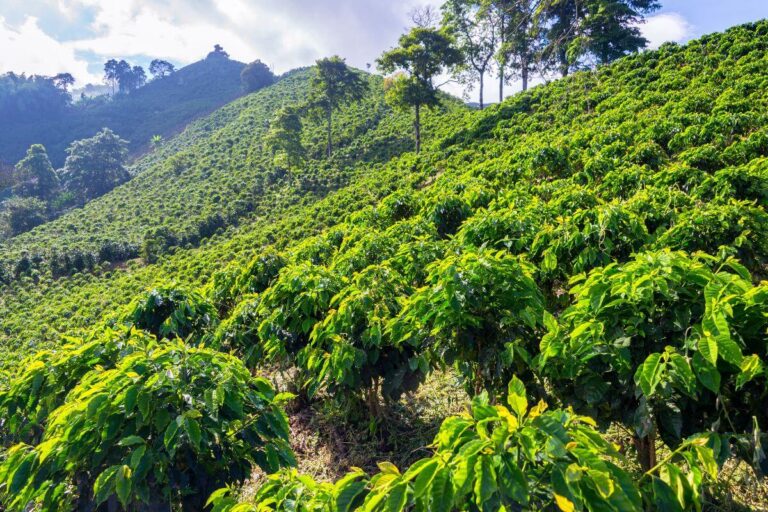
- Growing needs: Robusta is less demanding and more resistant to soil conditions, pests, and diseases. It also thrives in higher temperatures and humidity.
- Ideal temperature: 68–86 °F (20–30 °C)
- Altitude: Best grown at 650–3,000 ft (200–900 m) above sea level, which is much lower than arabica.
- Rainfall: Requires 80–120 inches (2000–3000 mm) annually because of its shallow roots.
- Flowering: Blooms irregularly, which makes harvesting trickier.
- Plant height: Can grow up to 30–40 ft (10–12 m), though usually pruned shorter in cultivation.
- Harvesting: The cherries don’t fall off naturally, so hand-picking often requires ladders. Each cluster carries about 40–50 coffee cherries.
The Composition of Robusta Coffee Beans
Robusta coffee beans have a different chemical makeup than arabica beans:
- Oil content: 10–12% – lower oil leads to a thicker crema on top of espresso.
- Sugar content: 3–7%
- Caffeine content: 1.7–4% – much higher than arabica’s 0.8–1.5%.
Because of this, robusta delivers a stronger stimulating effect. However, the high caffeine also results in a more bitter, earthy flavor that some people find too harsh. That’s why robusta coffee is often blended with arabica.
Flavor Profile and Uses
Robusta coffee is known for its bold, earthy, and bitter taste. It’s less complex than arabica and contains more tannins, which contribute to its stronger bite.
Common uses of robusta coffee beans include:
- Instant coffee
- Lower-cost blends
- Espresso blends (for body and crema)
- Italian-style coffee, where robusta is mixed with arabica to achieve the right intensity and texture
Robusta vs. Arabica Coffee
| Characteristic | Robusta | Arabica |
|---|---|---|
| Caffeine content | 1.7–4% | 0.8–1.5% |
| Flavor | Bitter, earthy, strong | Smooth, complex, fruity |
| Altitude | 200–900 m | 1000–2000 m |
| Price | Lower | Higher |
| Resistance | Hardy | More disease-prone |
| Yield | Higher | Lower |
How to Tell the Difference Between Arabica and Robusta Beans

If you’re buying whole beans, here’s how to recognize robusta coffee beans:
- Shape: Arabica beans are longer and flatter, while robusta beans are smaller and rounder.
- Center crease: Arabica beans have a curved crease, while robusta’s is straight.
- Color: Robusta beans are usually darker, with a greenish-brown raw appearance.
- Surface: Arabica beans are smoother, while robusta beans are more textured.
These visual cues are especially useful when buying unroasted coffee beans or identifying blends.
Health Aspects of Robusta Coffee
Thanks to its higher caffeine content, robusta coffee gives a stronger energy boost than arabica. That makes it a favorite for people who want a powerful morning cup. However, it’s not ideal for those with sensitive stomachs or caffeine sensitivity.
Benefits of robusta coffee:
- Strong wake-up effect
- Improves focus and concentration
- Contains antioxidants
Drawbacks:
- More bitter taste
- Can trigger higher stomach acid production
Fun Facts About Robusta Coffee
- Kopi Luwak, one of the world’s most expensive coffees, is often made from robusta beans that pass through the digestive tract of the Indonesian civet cat.
- Robusta’s ability to create a rich crema makes it a favorite in espresso blends.
- In Vietnam, robusta is used in the famous egg coffee – a rich drink made with condensed milk and whipped egg yolk.
Which Coffee Should You Choose?
If you want a cheaper, stronger, and more energizing coffee, robusta may be the right choice. But if you prefer a smoother, fruitier, and less acidic cup, arabica – or an arabica-robusta blend – will likely suit you better.
Experimenting is key. Roast level, grind size, brewing method, and even water quality all shape the final taste of your coffee.
Conclusion
Robusta coffee isn’t just a budget option – it’s a fascinating and versatile variety with its own bold character. While it may not be as nuanced as arabica, robusta coffee beans add strength, crema, and energy to blends and brewing methods around the world.
If you love exploring coffee, robusta deserves a spot on your tasting list. Who knows – it might just become your new favorite coffee.