Vietnamese Coffee – Guide and Recipes
Walk through any street in Hanoi at six in the morning and you’ll see tiny plastic stools lined up along the sidewalk, each one occupied by someone cradling a small glass while the world slowly wakes up. Vietnamese coffee is not simply a beverage — it is a ritual, a social glue, a daily meditation. And in recent years, it has quietly become one of the most talked-about coffee experiences in the world.
Vietnam is the second-largest coffee producer on the planet, trailing only Brazil. Most of its output is robusta — a bolder, more caffeinated, earthier bean than the arabica that dominates Western specialty coffee. Robusta’s higher caffeine and chlorogenic acid content make it the perfect partner for sweetened condensed milk, the ingredient that defines the flavor of Vietnamese coffee for millions of people.
Understanding Vietnamese coffee means understanding a few core preparations — the classic hot drip (cà phê nóng), the iconic iced version (cà phê sữa đá), the luscious egg coffee (cà phê trứng), and the increasingly popular coconut coffee (cà phê cốt dừa). Each has its own personality, its own moment, and its own devoted following.
“Vietnamese coffee is patience made delicious. The slow drip of the phin filter is not a flaw in the system — it is the system.”
The Bean, the Roast, and the Phin
To make authentic Vietnamese coffee at home, you need to start with the right ingredients and tools. While any strong dark-roasted coffee can approximate the flavor, nothing replicates it quite like the real thing.
Robusta beans
The backbone of Vietnamese coffee is Coffea canephora, commonly known as robusta. Compared to arabica, robusta has nearly twice the caffeine, significantly less sugar, and a chocolatey, slightly woody, almost rubbery bitterness that many people find overwhelming on its own — but revelatory paired with condensed milk. Popular Vietnamese brands available internationally include Trung Nguyên, Highlands Coffee, and Vinacafé. Trung Nguyên’s Creative blends (numbered 1 through 5) are an excellent starting point.
The phin filter
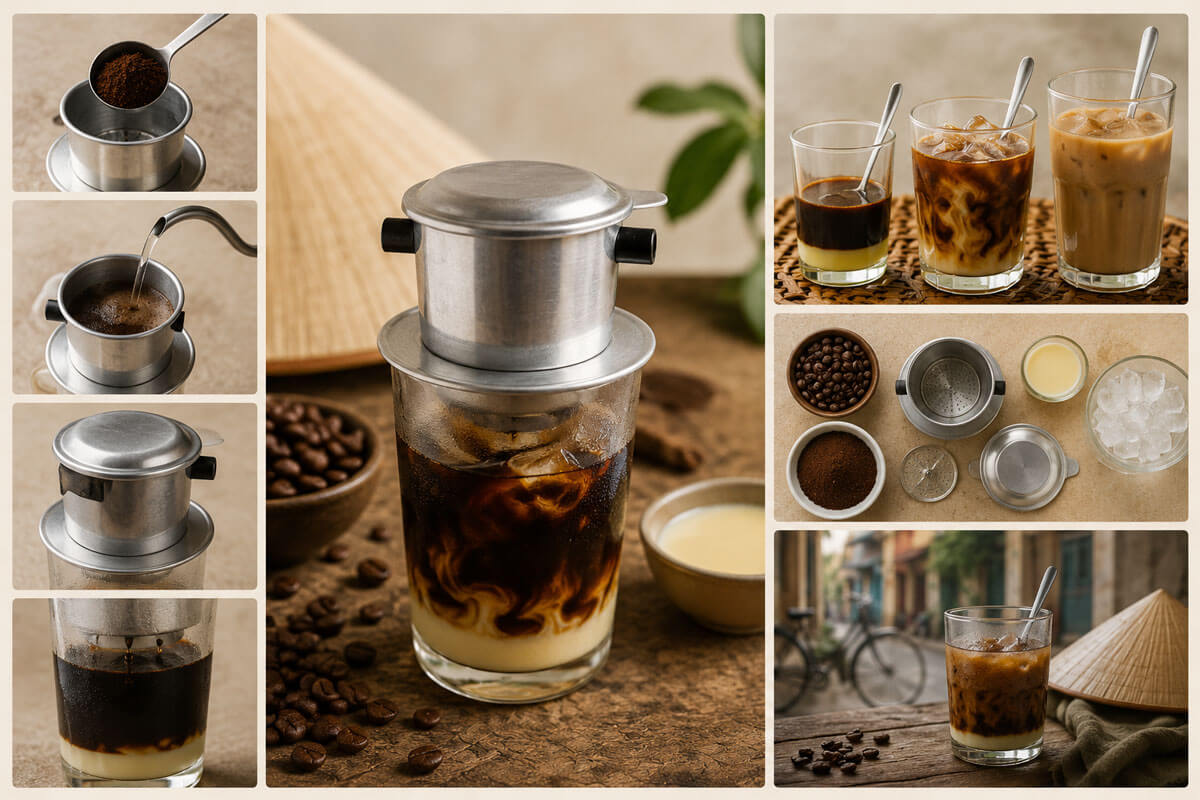
The phin (pronounced “fin”) is a small, simple, inexpensive single-serve aluminum or stainless steel drip filter. It consists of four pieces: a perforated base plate, a brewing chamber, a gravity press (or screw-in lid that tamps the grounds), and a lid that doubles as a saucer. Coffee brews through the grounds drop by drop, taking anywhere from 4 to 8 minutes. The result is a concentrated, syrupy shot — closer to a strong espresso in intensity than a typical drip coffee.
Phins are widely available online and in Asian grocery stores for $5–$15. If you don’t have one yet, a Moka pot or even a French press with a 1:8 coffee-to-water ratio can produce an acceptable substitute.
Sweetened condensed milk
This is non-negotiable. Not regular milk, not cream, not evaporated milk. Sweetened condensed milk — thick, caramel-adjacent, intensely sweet — is what gives Vietnamese iced coffee its signature flavor. The Longevity Brand (Ông Thọ) is the most traditional choice in Vietnam; Nestlé’s Eagle Brand works perfectly well in the West.
Vietnamese Coffee Variations
The Vietnamese coffee repertoire has expanded dramatically, especially in recent years as third-wave cafés across Hanoi and Ho Chi Minh City have experimented with local ingredients. Here are the essential styles you should know.

Cà Phê Đen (Black Coffee)
Drip coffee with no milk, served hot or iced. The purest way to appreciate the bold, chocolatey character of Vietnamese robusta.
Cà Phê Sữa Nóng (Hot with Milk)
The classic hot version: condensed milk at the bottom, phin-dripped coffee poured over the top, stirred together. Comfort in a glass.
Cà Phê Sữa Đá (Iced)
Vietnam’s most famous export. Condensed milk, strong coffee, crushed ice. The combination is intoxicating, especially in humid heat.
Cà Phê Trứng (Egg Coffee)
A Hanoi original from the 1940s. Whipped egg yolks, condensed milk, and a little sugar form a creamy, custard-like foam over black coffee.
Cà Phê Cốt Dừa (Coconut Coffee)
Blended or layered with coconut cream and condensed milk. Tropical, rich, and remarkably refreshing. Often served frozen or over crushed ice.
Cà Phê Muối (Salt Coffee)
A specialty of Huế: a pinch of sea salt in the creamy topping balances the sweetness and amplifies the coffee’s depth. Surprisingly addictive.
How to Make Vietnamese Coffee: The Classic Recipe
Below is the fundamental recipe for cà phê sữa đá — Vietnamese iced coffee with condensed milk. Once you’ve mastered this, every other variation follows naturally.
Ingredients
- 2–3 tbsp (14–20g) coarse-ground Vietnamese robusta coffee
- 3–4 oz (90–120ml) hot water (just off the boil, ~200°F/93°C)
- 2 tbsp sweetened condensed milk (adjust to taste)
- Generous cup of ice
Method
- Spoon condensed milk into your glass.
- Set the phin base plate over the glass.
- Add ground coffee to the chamber; press the gravity filter down gently (don’t over-tamp).
- Add a splash of hot water to bloom the grounds for 30 seconds.
- Fill the chamber with remaining hot water; place the lid on top.
- Wait 4–7 minutes for the drip to complete.
- Stir well to combine coffee and condensed milk.
- Pour over a glass packed with ice. Enjoy immediately.
💡 For hot coffee (cà phê sữa nóng), skip the ice and use 2 oz of water for a more concentrated brew. Stir and drink slowly.
Vietnamese Egg Coffee Recipe
Egg coffee (cà phê trứng) was invented in the 1940s by Nguyễn Văn Giang at Café Giang in Hanoi during a time when fresh milk was scarce. The whipped egg topping substituted for cream, and it became a beloved institution. Here’s how to make it at home:
Ingredients
- 2 fresh egg yolks
- 3 tbsp sweetened condensed milk
- 1 tsp sugar
- 2 oz strongly brewed Vietnamese coffee (hot)
Method
- Using a hand mixer or whisk
- Beat the egg yolks, condensed milk, and sugar on high speed for 3–5 minutes until the mixture is pale, thick, and ribbony — similar to a zabaglione.
- Brew your coffee in the phin and pour it into a small warm glass.
- Spoon or pour the egg foam generously over the top.
- Do not stir before drinking — part of the experience is tasting the foam and coffee separately before letting them blend.
Safety Note: Egg coffee uses raw egg yolks. Use the freshest eggs possible, ideally pasteurized. Some versions are served with the glass set in warm water to gently cook the yolks slightly, which also keeps the drink warm longer.
Vietnamese Coconut Coffee Recipe
Coconut coffee gained popularity in the 2010s and has since become a staple in Vietnamese cafés worldwide. To make it at home: combine 3 oz of chilled strong brewed coffee, 2 tbsp condensed milk, and 4 tbsp full-fat coconut cream in a blender with a cup of ice. Blend until smooth and frosty. Pour into a tall glass and optionally top with a drizzle of extra condensed milk. For a layered version, pour cold brewed coffee over ice first, then spoon the whipped coconut cream on top.
Quick-Reference Summary Table
Use the table below as a handy reference for all core Vietnamese coffee styles, their key characteristics, and what you need to make each one.
Vietnamese Coffee Styles at a Glance
| Style | Vietnamese Name | Key Ingredient | Serve Temp | Difficulty | Taste Profile |
|---|---|---|---|---|---|
| Black Drip Coffee | Cà Phê Đen | Robusta + water | Hot or iced | ⭐ Easy | Bold, bitter, earthy |
| Iced Milk Coffee | Cà Phê Sữa Đá | Condensed milk + ice | Cold | ⭐ Easy | Sweet, rich, chocolatey |
| Hot Milk Coffee | Cà Phê Sữa Nóng | Condensed milk | Hot | ⭐ Easy | Sweet, smooth, warming |
| Egg Coffee | Cà Phê Trứng | Egg yolks + condensed milk | Hot | ⭐⭐ Medium | Custardy, creamy, decadent |
| Coconut Coffee | Cà Phê Cốt Dừa | Coconut cream | Cold / blended | ⭐⭐ Medium | Tropical, sweet, silky |
| Salt Coffee | Cà Phê Muối | Sea salt + cream | Hot or cold | ⭐⭐ Medium | Savory-sweet, complex |
| Yogurt Coffee | Cà Phê Sữa Chua | Frozen yogurt | Cold | ⭐⭐ Medium | Tangy, sweet, refreshing |
Brewing Parameters & Best Practices
| Parameter | Recommended for Vietnamese Coffee |
|---|---|
| Bean type | Robusta (100%) or robusta-arabica blend |
| Roast level | Dark roast (often butter or chicory-roasted in Vietnam) |
| Grind size | Medium-coarse (coarser than espresso, finer than French press) |
| Coffee-to-water ratio | ~14–20g coffee per 90–120ml water |
| Water temperature | 195–205°F / 90–96°C (just off boil) |
| Brew time | 4–7 minutes through phin filter |
| Condensed milk | 1.5–3 tbsp depending on sweetness preference |
Common Mistakes When Making Vietnamese Coffee
Vietnamese coffee is simple in concept but easy to get wrong. These are the most frequent errors home brewers make — and how to fix them.
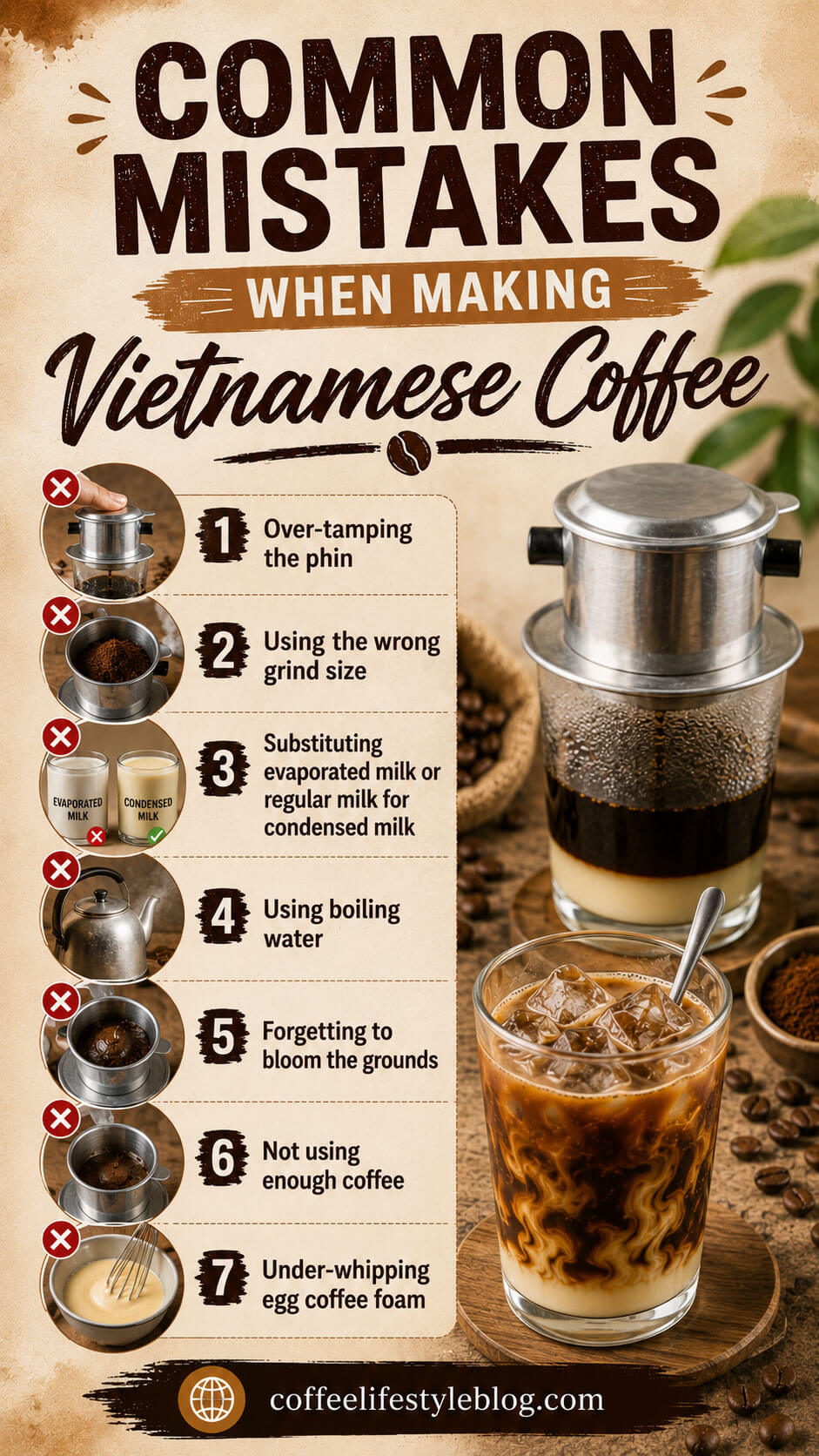
Over-tamping the phin
Pressing the gravity filter down too hard compacts the grounds and slows the drip to a near-halt — sometimes stopping it entirely. The press should sit on the grounds with gentle contact, not be screwed or pressed down forcefully. If your phin takes more than 10 minutes to drip through, the grind is too fine or the tamp is too tight.
Using the wrong grind size
Espresso-fine grinds clog the phin; coarse French-press grinds drip too fast and produce a watery, under-extracted brew. Aim for a medium-coarse grind — similar to coarse sea salt. If buying pre-ground coffee, look for products labeled specifically for phin brewing.
Substituting evaporated milk or regular milk for condensed milk
Regular milk will give you a weaker, less sweet, thinner drink. Condensed milk’s thickness and caramelized sweetness is chemically and flavor-functionally different. There is simply no good swap. If you’re watching sugar, reduce the amount of condensed milk rather than replacing it.
Using boiling water
Water at a full rolling boil (212°F/100°C) will scorch the grounds and produce a harsh, astringent cup. Let the kettle rest for 30–60 seconds after boiling, or target 195–205°F with a thermometer. This is especially important with robusta, which can turn aggressively bitter when overheated.
Forgetting to bloom the grounds
Adding a small amount of water (just enough to wet the grounds) and waiting 30 seconds before filling the chamber lets CO₂ escape from freshly roasted beans. Skipping this can lead to uneven extraction. It’s a small step that meaningfully improves the final cup.
Not using enough coffee
Vietnamese coffee is meant to be strong and concentrated. Many first-timers use only a tablespoon of grounds and end up with a pale, weak cup that tastes nothing like what they had at a restaurant. Use 14–20 grams (2–3 generous tablespoons) per serving.
Under-whipping egg coffee foam
The egg yolk mixture for cà phê trứng must be whipped to a thick, pale, ribbony consistency. Under-whipped foam will be thin and eggy-tasting rather than the custardy, meringue-like cloud it should be. Don’t stop until the whisk leaves trails that hold their shape for several seconds.
Frequently Asked Questions
Can I make Vietnamese coffee without a phin filter?
Yes. A Moka pot is the closest approximation — use it with a dark-roasted robusta grind and dilute the output slightly. A French press also works: use a coarser grind, steep for 4 minutes, press, and pour. You can also use an AeroPress with a fine-medium grind for a quick, concentrated cup. The flavor won’t be identical, but all of these methods produce a strong, full-bodied coffee that pairs well with condensed milk.
What coffee brand is best for Vietnamese coffee at home?
Trung Nguyên is the gold standard and is widely available online. Their “Creative” blends range from mild (No. 1) to intensely bold (No. 5). For those who prefer a single-origin robusta, Da Lat-grown beans from Vietnamese specialty roasters are increasingly available globally. Café Du Monde (a chicory-blended coffee from New Orleans) is a popular Western substitute that mimics some of the earthy depth of Vietnamese robusta.
Is Vietnamese coffee stronger than regular coffee?
In terms of caffeine, yes — robusta beans contain roughly 2.7% caffeine by weight versus arabica’s 1.5%. Combined with the high coffee-to-water ratio used in phin brewing, a single serving of Vietnamese coffee typically contains more caffeine than a standard 8oz cup of drip coffee. It is, however, served in a smaller volume, so the experience is more like a shot of espresso than a full mug.
How do I make Vietnamese iced coffee less sweet?
Simply reduce the amount of condensed milk — start with one tablespoon instead of two or three and taste as you go. You can also try black iced coffee (cà phê đen đá) with no condensed milk at all. Some people use a small amount of regular sugar or simple syrup, which lets you control sweetness precisely without adding dairy fat.
Can I make Vietnamese coffee with arabica beans?
You can, though the result will taste noticeably different — lighter, lower in tannins, and less chocolatey. If you prefer arabica, go for a dark roast to maximize body and minimize brightness. A blend of 70% arabica and 30% robusta is actually used by some Vietnamese brands and can give you the best of both worlds: arabica’s complexity with robusta’s punch.
How long does brewed Vietnamese coffee keep?
Brewed black Vietnamese coffee keeps well in the refrigerator for up to 5 days in a sealed container — making it excellent for cold brew-style batch preparation. Once mixed with condensed milk, consume it the same day for the best flavor. Egg coffee should always be consumed immediately and cannot be stored.
Is egg coffee safe to drink?
Traditional egg coffee uses raw or very lightly cooked egg yolks, which carries a small risk of salmonella. To minimize this risk, use the freshest eggs available, preferably pasteurized. A common preparation method is to set the finished drink in a shallow bowl of hot water for a few minutes, which slightly cooks the yolk. Immunocompromised individuals, pregnant people, and young children should exercise caution or use fully pasteurized egg products.