Coffee-Producing Countries in Central America: A Statistical Overview
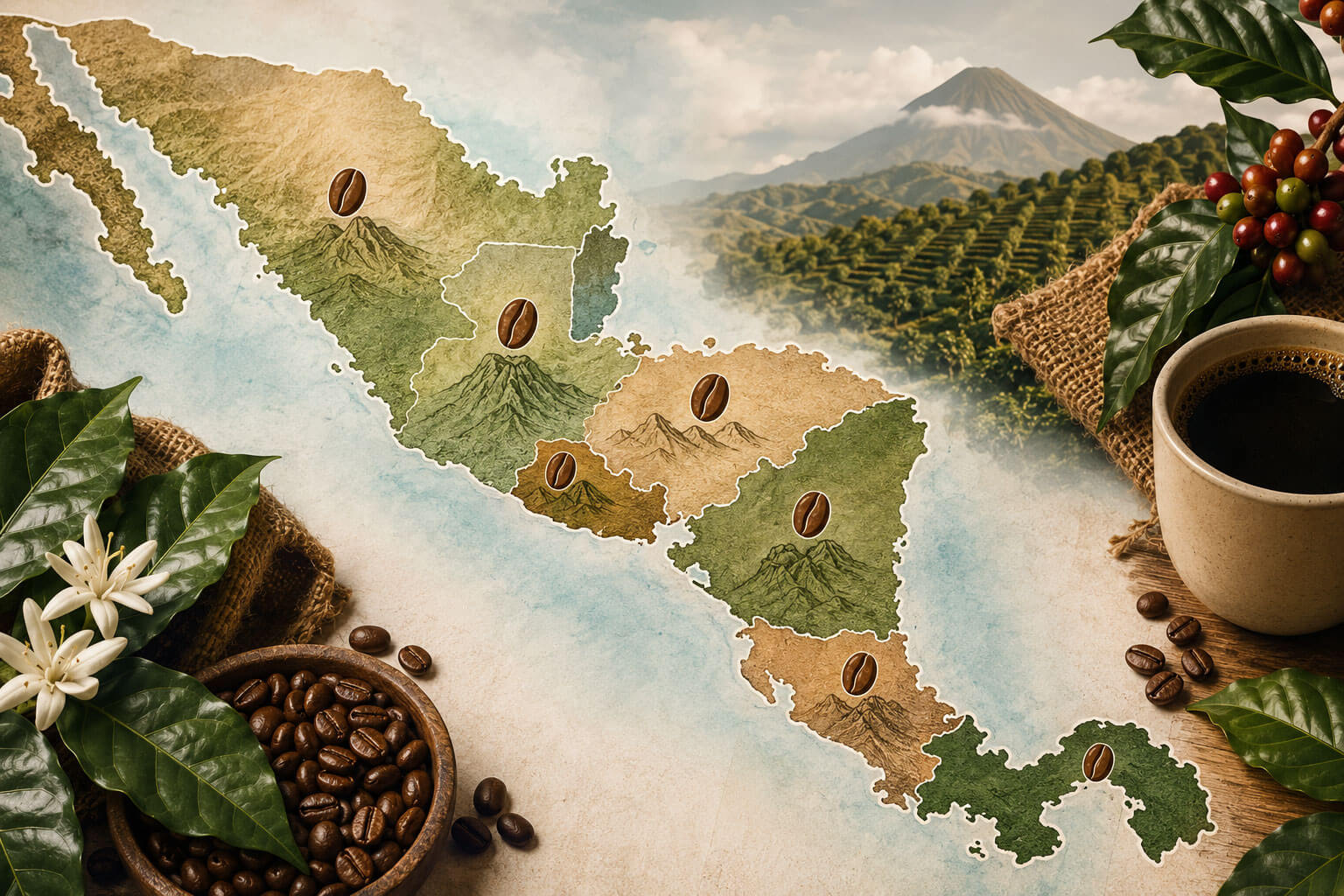
Central America is a small strip of land wedged between two oceans, yet it punches far above its weight in the global coffee trade. From the volcanic highlands of Guatemala to the cloud forests of Costa Rica, this region is home to some of the most respected coffee-producing countries in the world. Despite their modest size compared to giants like Brazil or Vietnam, these nations consistently rank among the top coffee exporters globally, prized for their high-altitude arabica beans and distinctive regional flavor profiles.
In this article, we take a data-driven look at the coffee-producing countries in Central America, examining current production volumes, world rankings, dominant coffee varieties, and the trends shaping the region’s coffee future. All figures reflect the most recent estimates from the U.S. Department of Agriculture (USDA) and national coffee institutes, updated for the 2025/26 marketing year.
Why Central America Matters in the Global Coffee Market
Central America and Mexico together are expected to produce roughly 17.6 to 17.7 million 60-kilogram bags of coffee in the 2025/26 marketing year, according to USDA estimates. That represents about 10% of total world coffee production, which is forecast to hit an all-time high of 178.8 million bags globally this cycle.
What makes this region so important isn’t sheer volume — it’s quality. At least 95% of the coffee grown in Central America is arabica, the variety prized for its smoother, more aromatic cup profile compared to robusta. The region’s volcanic soils, high elevations, and distinct wet-dry seasons create ideal microclimates for growing specialty-grade arabica, which is why Central American beans are a staple in specialty coffee shops around the world.
The coffee sector is also a major economic and social pillar for these countries. Combined, Central America’s coffee industry provides an estimated 1.2 million direct jobs, supporting smallholder farmers, cooperatives, and export businesses across six major coffee-producing countries: Guatemala, Honduras, Nicaragua, Costa Rica, El Salvador, and Panama, alongside neighboring Mexico.
Let’s break down the statistics for each of the leading coffee-producing countries in Central America.
Honduras: The Region’s Coffee Powerhouse
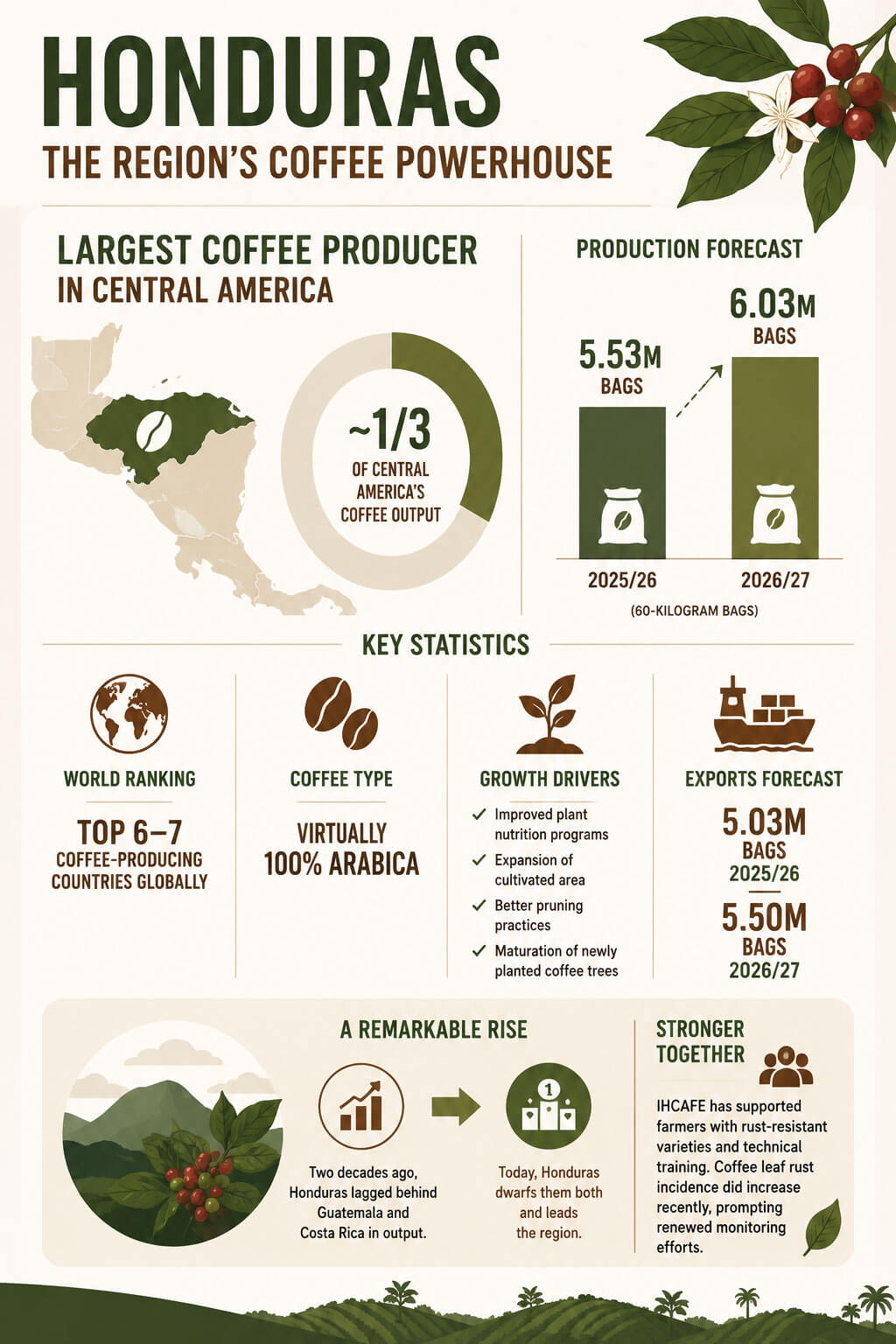
Honduras is now the largest coffee producer in Central America, a position it has held for over a decade. For the 2025/26 marketing year, USDA forecasts put Honduran production at approximately 5.53 million 60-kilogram bags, with projections climbing to 6.03 million bags in 2026/27. That single country now accounts for roughly one-third of the entire region’s coffee output.
Key statistics for Honduras:
- World ranking: Typically among the top 6-7 coffee-producing countries globally
- Coffee type: Virtually 100% arabica
- Growth drivers: Improved plant nutrition programs, expansion of cultivated area, better pruning practices, and the maturation of newly planted coffee trees
- Exports: Forecast to reach 5.03 million bags in 2025/26, rising to 5.5 million bags the following year
Honduras’ rise has been remarkable. Two decades ago it lagged behind Guatemala and Costa Rica in output; today it dwarfs them both. The Honduran Coffee Institute (IHCAFE) has played a central role in this transformation, supporting farmers with rust-resistant varieties and technical training — though coffee leaf rust incidence did increase in the most recent season, prompting renewed monitoring efforts.
Mexico: A Steady, Diversifying Giant
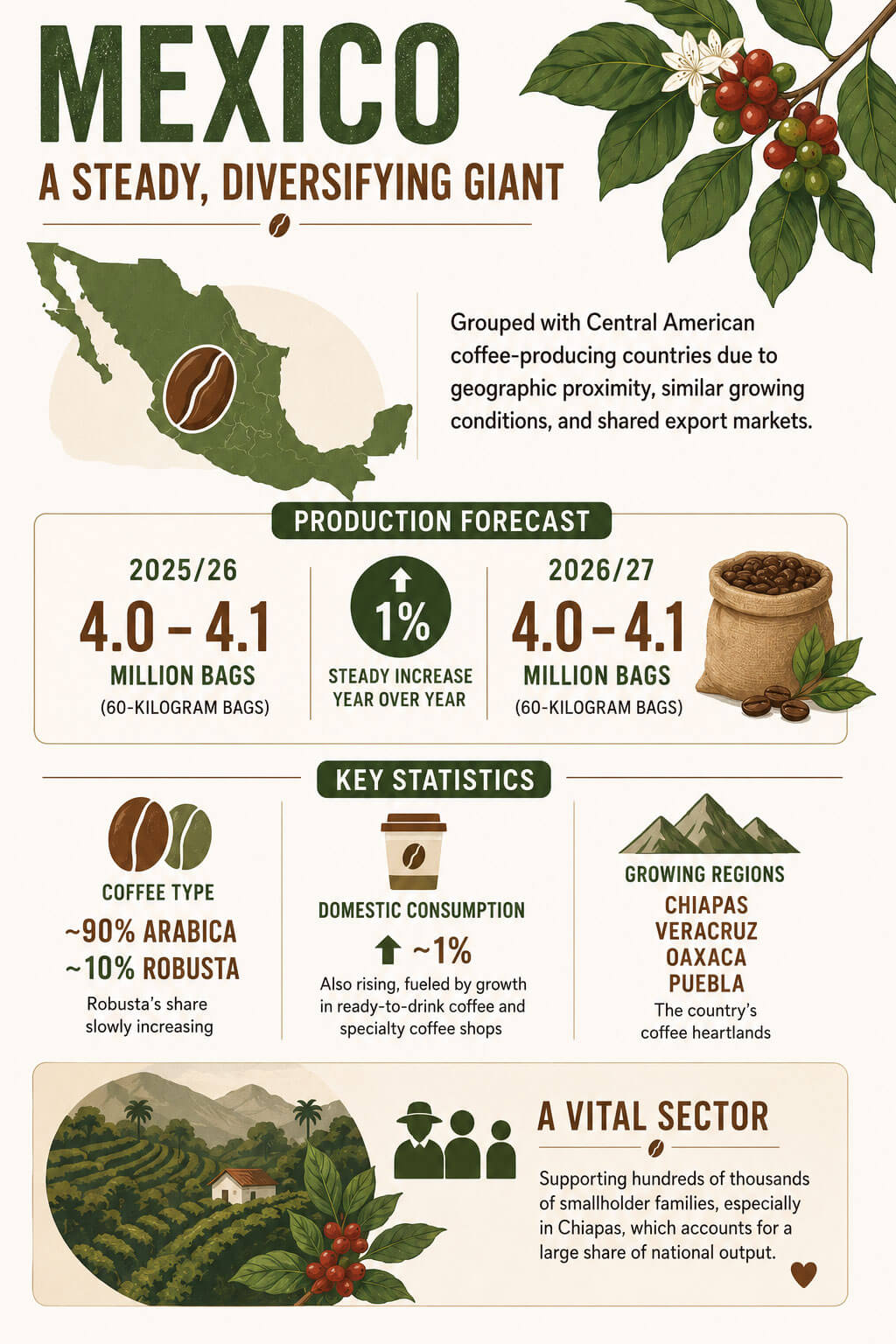
Although technically part of North America, Mexico is almost always grouped with Central American coffee-producing countries in trade statistics because of its geographic proximity, similar growing conditions, and shared export markets.
Mexico’s coffee production is forecast at around 4.0 to 4.1 million 60-kilogram bags for the 2025/26 and 2026/27 marketing years, a modest but steady 1% increase year over year. This growth is being driven partly by expanding robusta acreage — a notable shift, since Mexican coffee has historically been almost entirely arabica.
Key statistics for Mexico:
- Coffee type: Roughly 90% arabica, 10% robusta, with robusta’s share slowly increasing
- Domestic consumption: Also rising by about 1%, fueled by growth in ready-to-drink coffee and specialty coffee shops
- Growing regions: Chiapas, Veracruz, Oaxaca, and Puebla are the country’s coffee heartlands
Mexico’s coffee sector remains vital to hundreds of thousands of smallholder families, particularly in Chiapas, which alone accounts for a large share of national output.
Guatemala: The World’s Fourth-Largest Arabica Producer
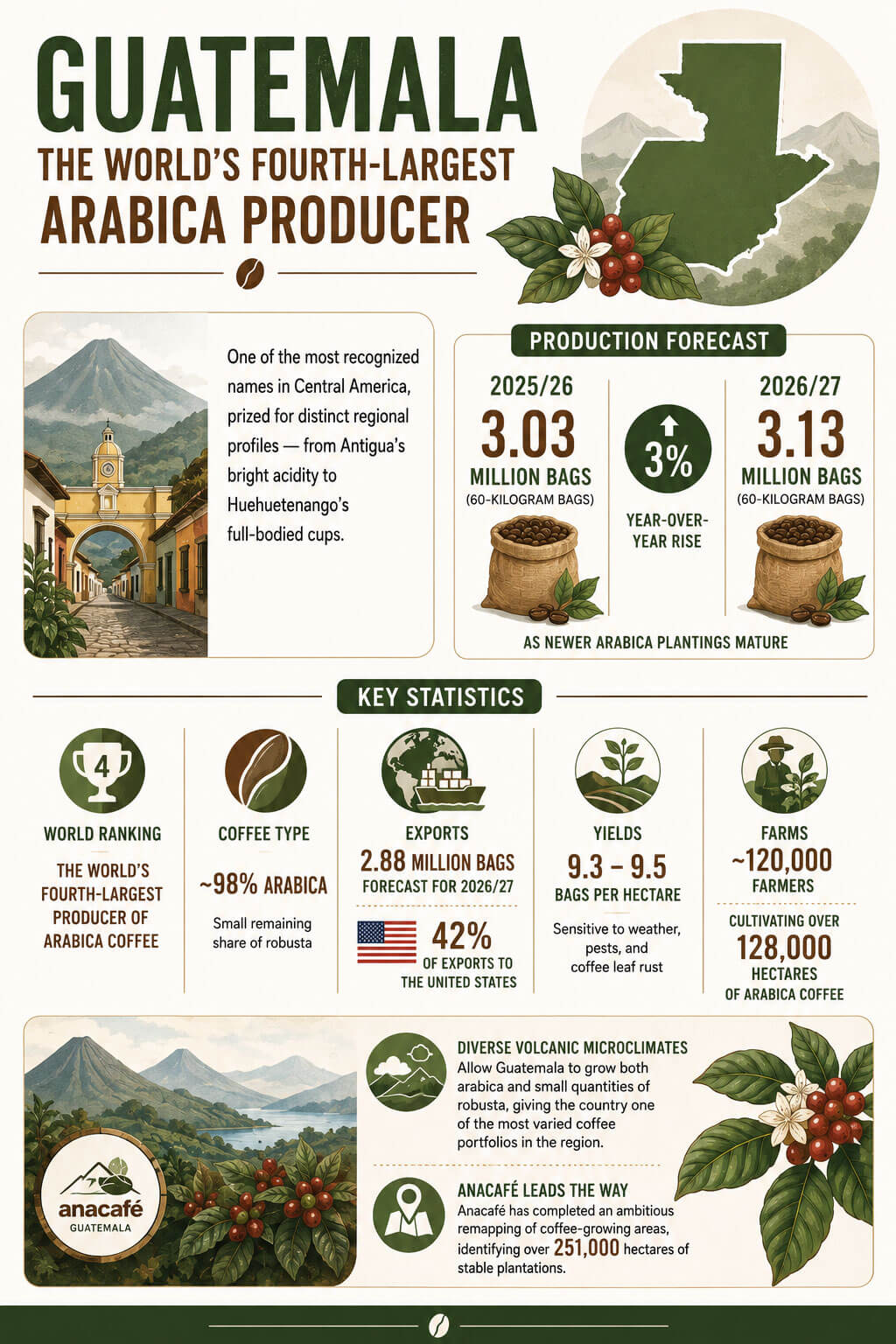
Guatemala remains one of the most recognized names among coffee-producing countries in Central America, prized internationally for its distinct regional profiles — from the bright acidity of Antigua to the full-bodied cups of Huehuetenango.
For the 2025/26 marketing year, USDA forecasts Guatemalan production at roughly 3.03 million 60-kilogram bags, with an increase to about 3.13 million bags projected for 2026/27 — a 3% year-over-year rise as newer arabica plantings mature.
Key statistics for Guatemala:
- World ranking: The world’s fourth-largest producer of arabica coffee
- Coffee type: About 98% arabica, with a small remaining share of robusta
- Exports: Forecast to reach 2.88 million bags in 2026/27; the United States remains Guatemala’s top export market, absorbing 42% of total exports
- Yields: Roughly 9.3 to 9.5 bags per hectare, though sensitive to weather, pests, and coffee leaf rust
- Farms: An estimated 120,000 farmers cultivate more than 128,000 hectares of arabica coffee
Guatemala’s diverse volcanic microclimates allow it to grow both arabica and small quantities of robusta, giving the country one of the most varied coffee portfolios in the region. The national coffee association, Anacafé, has also completed an ambitious remapping of the country’s coffee-growing areas, identifying over 251,000 hectares of stable plantations.
Nicaragua: Consistent Growth on Improved Yields
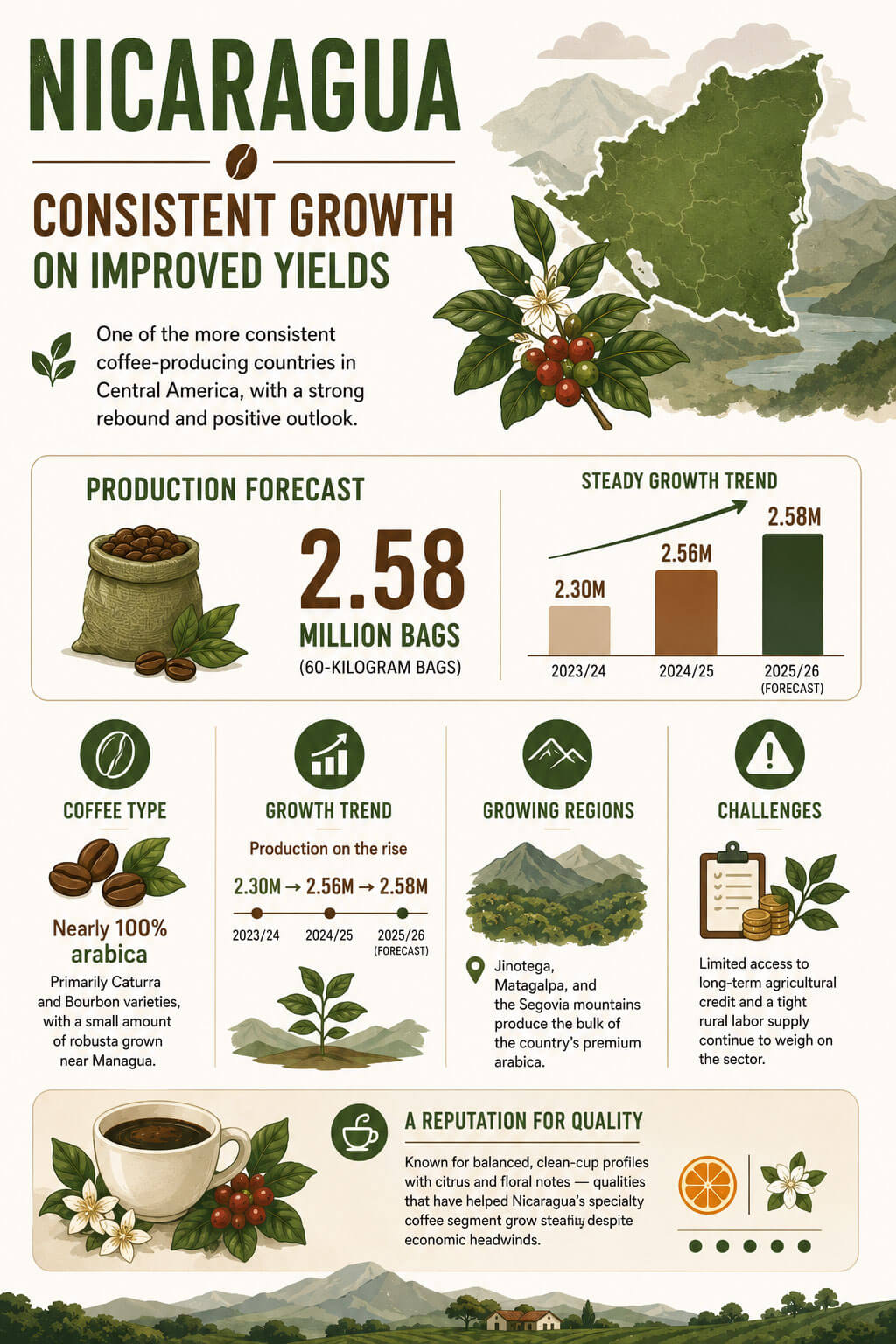
Nicaragua has quietly become one of the more consistent coffee-producing countries in Central America, with production forecast at 2.58 million 60-kilogram bags for the 2025/26 marketing year — a notable rebound after weather-related setbacks in prior seasons.
Key statistics for Nicaragua:
- Coffee type: Nearly 100% arabica, primarily Caturra and Bourbon varieties, with a small amount of robusta grown near Managua
- Growth trend: Production rose from about 2.3 million bags in 2023/24 to 2.56 million in 2024/25, and is expected to climb further in 2025/26
- Growing regions: Jinotega, Matagalpa, and the Segovia mountains produce the bulk of the country’s premium arabica
- Challenges: Limited access to long-term agricultural credit and a tight rural labor supply continue to weigh on the sector
Nicaraguan coffee has built a strong reputation for balanced, clean-cup profiles with citrus and floral notes — qualities that have helped the country’s specialty coffee segment grow steadily despite broader economic headwinds.
Costa Rica: Small Volume, Outsized Reputation
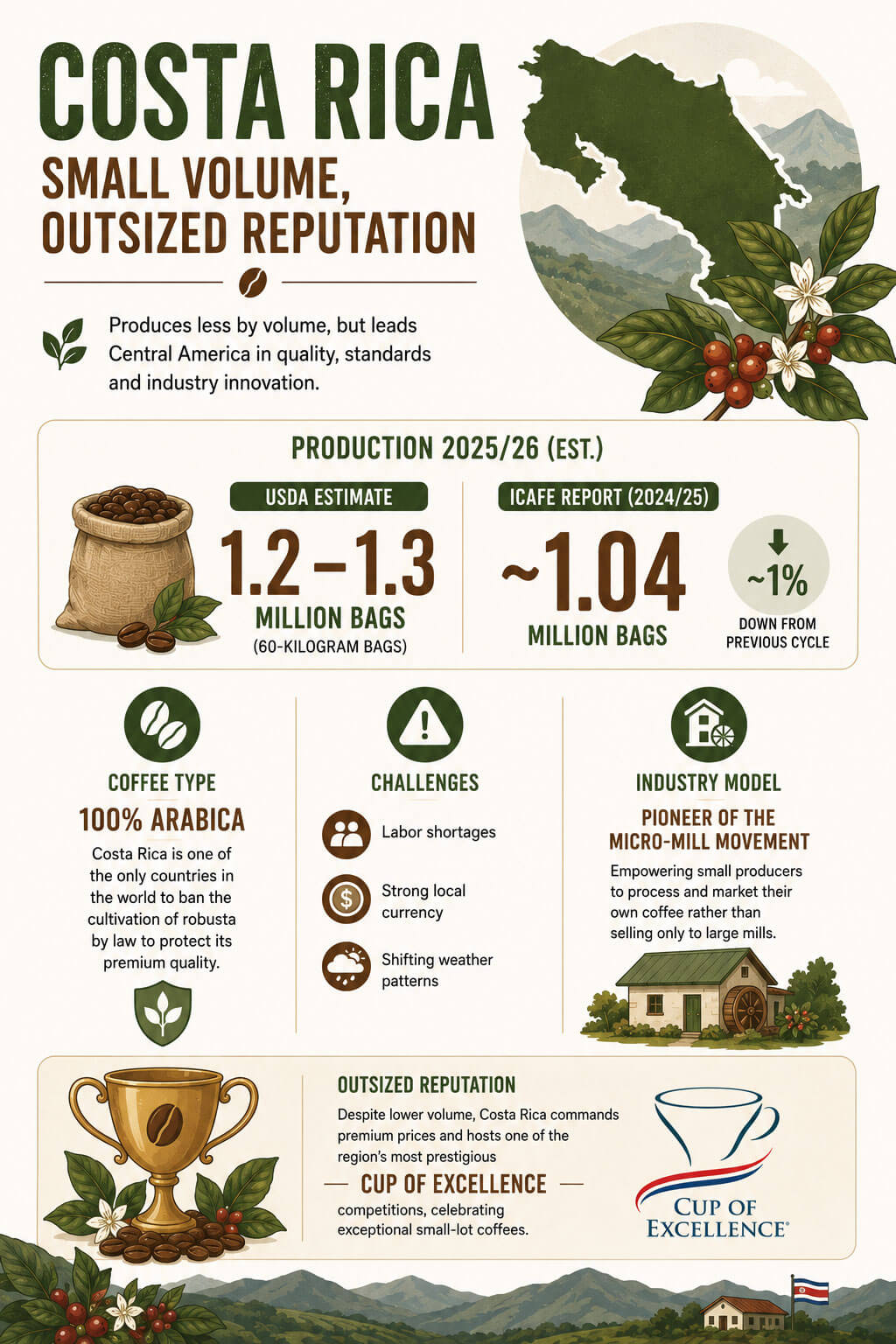
Costa Rica produces far less coffee by volume than its northern neighbors, but it remains one of the most influential coffee-producing countries in Central America in terms of quality standards and industry innovation.
USDA estimates put Costa Rican production at approximately 1.2 to 1.3 million 60-kilogram bags for the 2025/26 marketing year, while the Costa Rican Coffee Institute (ICAFE) reports a slightly lower figure of around 1.04 million bags for 2024/25 — about 1% down from the previous cycle.
Key statistics for Costa Rica:
- Coffee type: 100% arabica — Costa Rica is one of the only countries in the world to have banned the cultivation of robusta by law, a policy aimed at protecting its premium quality reputation
- Challenges: Labor shortages, a relatively strong local currency, and shifting weather patterns are all pressuring output
- Industry model: Costa Rica pioneered the micro-mill movement, empowering small producers to process and market their own coffee rather than selling only to large mills
Despite its smaller volume, Costa Rica continues to command premium prices internationally and hosts one of the region’s most prestigious Cup of Excellence competitions, which rewards exceptional small-lot coffees.
El Salvador: Heirloom Varieties in a Small Package
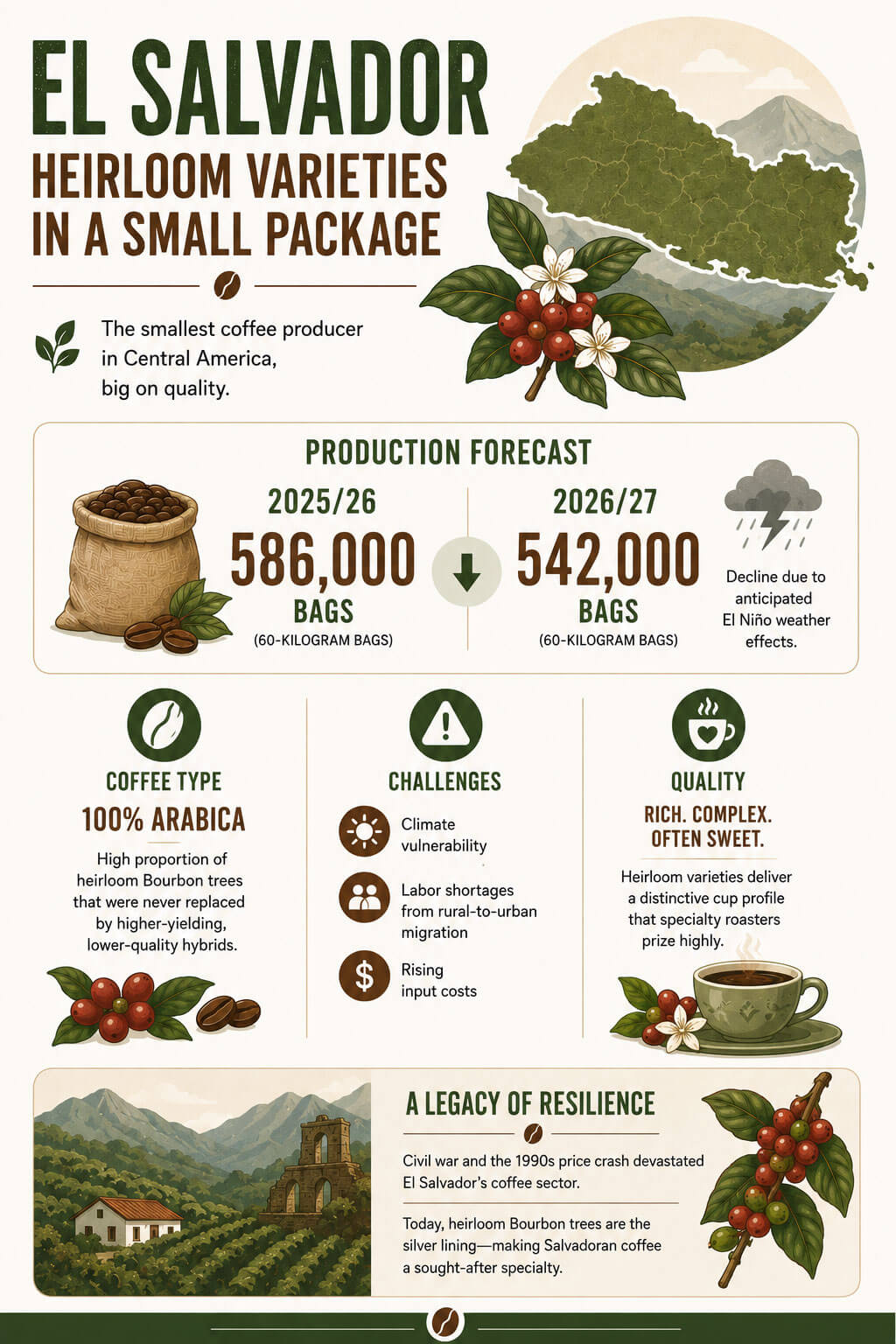
El Salvador is the smallest of the traditional coffee-producing countries in Central America by volume, with production forecast at just 586,000 60-kilogram bags for 2025/26 — and a further decline to around 542,000 bags projected for 2026/27, largely due to anticipated El Niño weather effects.
Key statistics for El Salvador:
- Coffee type: 100% arabica, with a notably high proportion of heirloom Bourbon trees that were never replaced by higher-yielding, lower-quality hybrids
- Challenges: Climate vulnerability, labor shortages driven by rural-to-urban migration, and rising input costs
- Quality: El Salvador’s heirloom varieties give its coffee a rich, complex, often sweet cup profile that specialty roasters prize highly
The legacy of El Salvador’s civil war and the 1990s commodity price crash devastated much of the country’s coffee infrastructure, but the surviving heirloom Bourbon trees have become something of a silver lining — positioning Salvadoran coffee as a sought-after specialty product today.
Panama: The World’s Most Expensive Coffee
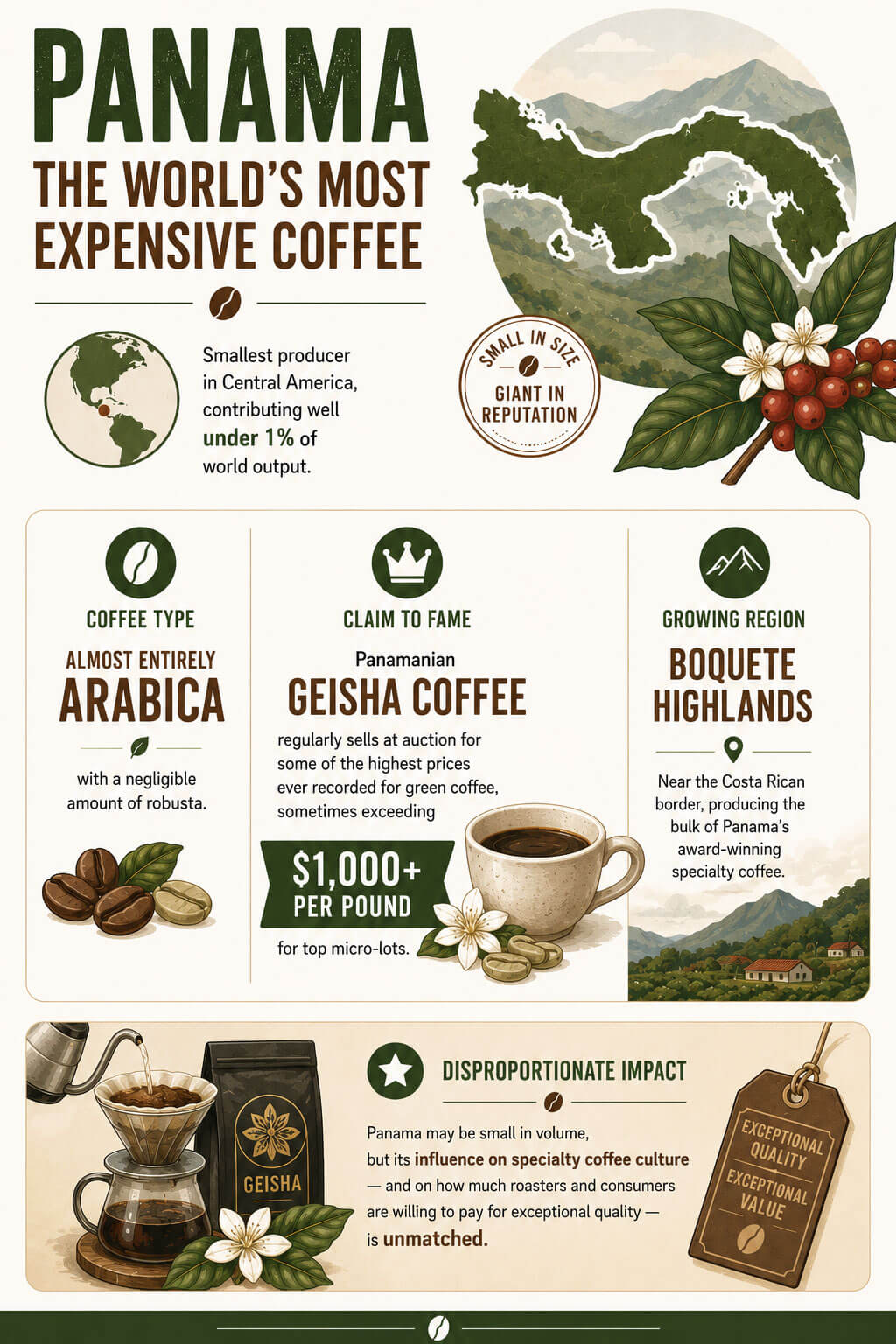
Panama is the smallest producer among the major coffee-producing countries in Central America, contributing well under 1% of world output. Yet it holds an outsized place in coffee culture thanks to one single variety: Geisha (also spelled Gesha).
Key statistics for Panama:
- Coffee type: Almost entirely arabica, with a negligible amount of robusta
- Claim to fame: Panamanian Geisha coffee regularly sells at auction for some of the highest prices ever recorded for green coffee, sometimes exceeding $1,000 per pound for top micro-lots
- Growing region: The Boquete highlands, near the Costa Rican border, produce the bulk of the country’s award-winning specialty coffee
While Panama will never compete on volume with Honduras or Mexico, its influence on specialty coffee culture — and on how much roasters and consumers are willing to pay for exceptional quality — is disproportionate to its size.
Central America’s Coffee-Producing Countries: A Quick Comparison
| Country | Est. Production 2025/26 (60-kg bags) | Dominant Coffee Type | Notable Trait |
|---|---|---|---|
| Honduras | ~5.53 million | ~100% arabica | Largest producer in the region |
| Mexico | ~4.0-4.1 million | ~90% arabica / 10% robusta | Growing robusta acreage |
| Guatemala | ~3.0-3.1 million | ~98% arabica | World’s 4th-largest arabica producer |
| Nicaragua | ~2.58 million | Nearly 100% arabica | Fast-rebounding yields |
| Costa Rica | ~1.2-1.3 million | 100% arabica | Robusta cultivation banned by law |
| El Salvador | ~586,000 | 100% arabica | Rare heirloom Bourbon varieties |
| Panama | Well under 200,000 | Almost 100% arabica | Home of record-priced Geisha coffee |
Figures are USDA marketing-year estimates and are subject to revision as harvest data is finalized.
Trends Shaping the Future of Coffee-Producing Countries in Central America
Several forces are currently reshaping the outlook for coffee-producing countries in Central America:
Climate variability remains the single biggest threat. Coffee leaf rust outbreaks, unpredictable rainy seasons, and the risk of El Niño-related disruptions continue to affect yields across the region, particularly in El Salvador and Guatemala.
Labor shortages are a growing concern almost everywhere in the region. Rural-to-urban migration and cross-border labor migration to the United States have made it harder for farms to find workers for pruning, harvesting, and processing — driving up wage costs.
Regulatory compliance is another emerging pressure point. The European Union Deforestation Regulation (EUDR) requires exporters to prove their coffee was not grown on recently deforested land, and Central American producers are investing heavily in traceability systems to keep access to this key market.
On the positive side, farm restoration and rehabilitation programs are underway across nearly all six major coffee-producing countries in the region, aimed at replacing aging trees with rust-resistant, higher-yielding varieties. Combined with elevated global coffee prices — which have improved farmers’ ability to invest in fertilizer and disease control — the medium-term outlook for the region’s coffee sector is cautiously optimistic.
Final Thoughts
The coffee-producing countries in Central America may be small on a map, but their impact on the global coffee industry is anything but. From Honduras’s rapid rise to regional dominance, to Guatemala’s storied volcanic terroirs, to Panama’s record-breaking Geisha lots, this region offers an extraordinary range of coffee experiences from a remarkably compact geographic area.
As climate pressures, labor challenges, and new regulations reshape the landscape, the region’s coffee-producing countries continue to adapt — investing in sustainable farming, quality improvements, and traceability to protect their hard-earned reputation as a source of some of the world’s finest arabica coffee. For coffee lovers and industry buyers alike, keeping an eye on these statistics offers a valuable window into where the specialty coffee world is headed next.
Sources
- USDA Foreign Agricultural Service, Coffee: World Markets and Trade — global and regional production, export, and consumption estimates
- USDA Foreign Agricultural Service, Guatemala: Coffee Annual — Guatemala production forecasts, exports, yields
- USDA Foreign Agricultural Service, El Salvador: Coffee Annual — El Salvador production and sector challenges
- USDA Foreign Agricultural Service, Nicaragua Coffee Annual report (FAS/Managua) — Nicaragua production and outlook, via apps.fas.usda.gov
- Central America’s Producers Show Resilience and Fortitude, Tea & Coffee Trade Journal — regional job figures, Costa Rica (ICAFE) production data, Guatemala farmer/hectare statistics
- Global Coffee Outlook: Honduras and Mexico Grow While India Weathers Volatility, Coffee Geography Magazine — Honduras and Mexico production forecasts
- Central America’s Coffee Belt Enters a Critical Season, StoneX Group — regional climate, labor, and EUDR challenges
- USDA Sees World Coffee Production for 2025/26 at an All-Time High, Comunicaffe International — world and regional production totals
- USDA: World Coffee Production, Exports and Consumption Set to Reach All-Time Highs During CY 2026/27, Comunicaffe International — 2026/27 regional forecasts
- Guatemala Coffee Report: Production Up as Arabica Plantings Mature, Daily Coffee News — Guatemala yield and disease data
- A Beginner’s Guide to Central America’s Acclaimed Coffee Regions, Forbes — Honduras, Nicaragua, and El Salvador heirloom variety background
Production figures are expressed in 60-kilogram bags, the standard unit used by the USDA and the International Coffee Organization (ICO), and reflect marketing-year estimates that may be revised as final harvest data becomes available.