
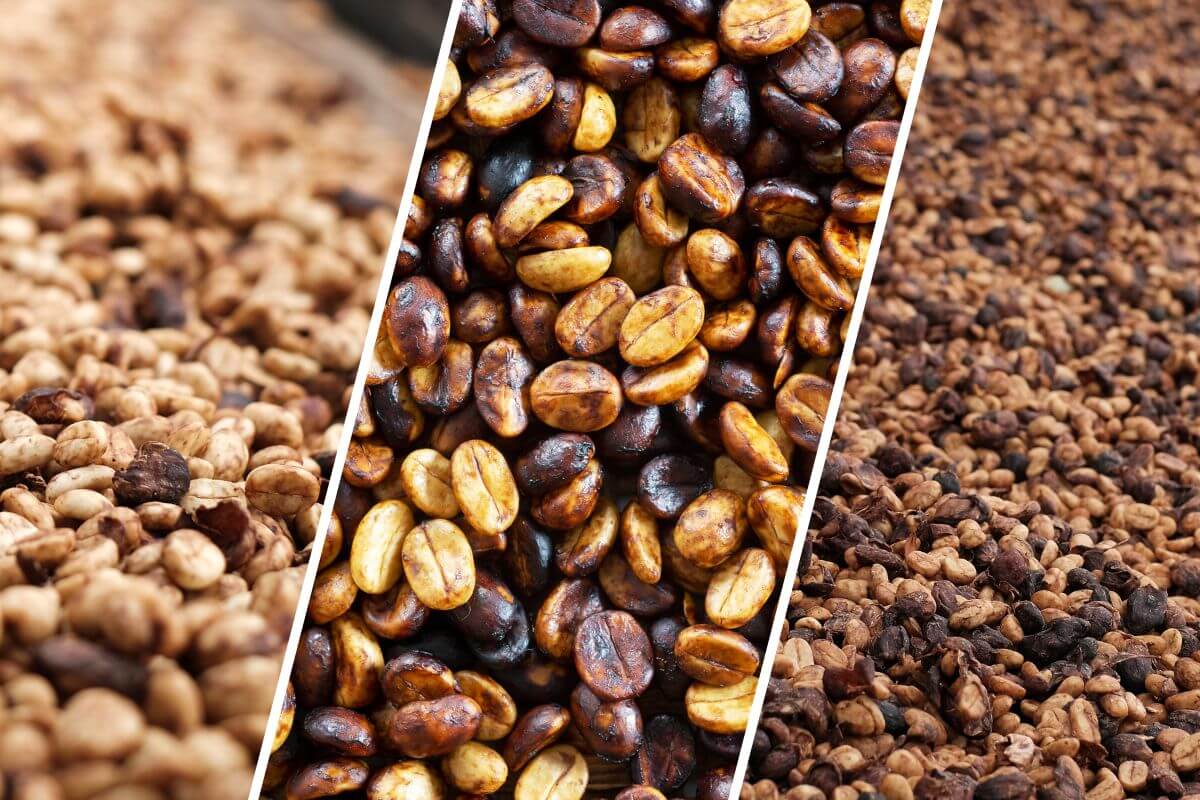
Honey Process Coffee: What It Is and How It Works
Somewhere between washed and natural lies a method that turns sticky fruit mucilage into sweetness in the cup. Here’s exactly how honey process coffee is made, what it tastes like, and how to choose a good one.
If you’ve scanned a bag of specialty coffee and seen “yellow honey” or “red honey” printed under the roast date, you’ve already met one of the most interesting ideas in modern coffee production. Honey process coffee is not flavored, not sweetened, and has nothing to do with bees. It’s a drying method, and it produces some of the most distinctive, syrupy, fruit-forward cups you can brew at home.
This guide breaks down what honey process coffee actually is, how it’s made from cherry to parchment, why it comes in colors like white, yellow, red, and black, and how it stacks up against the two processing methods that came before it: washed and natural. By the end, you’ll know exactly what to look for on a bag, and what to expect in the cup.
What Is Honey Process Coffee?
Honey process coffee is coffee that’s dried with some or all of the sticky fruit mucilage still attached to the parchment layer around the bean, instead of being fully washed clean or dried inside the whole cherry. Coffee cherries are made up of skin, pulp, a layer of sticky mucilage, a parchment shell, and finally the green coffee bean itself. What a producer chooses to remove, and what they choose to leave behind before drying, is what defines washed, natural, and honey processing.
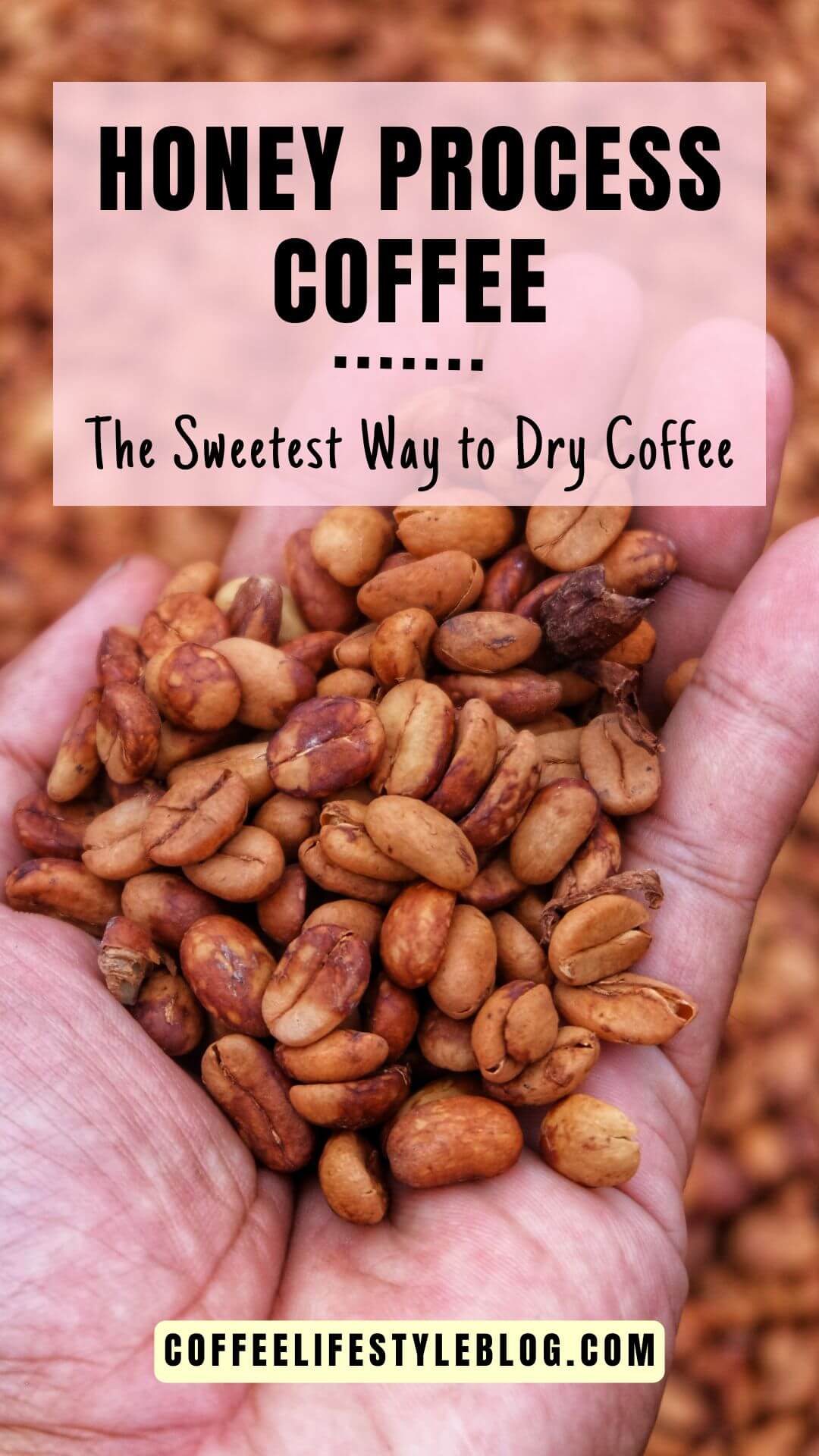
In the honey method, the outer skin and most of the pulp are mechanically removed right after harvest, but the mucilage, the thin, gel-like layer packed with natural sugars, is deliberately left on. That mucilage-coated parchment is then spread out to dry, usually on raised beds, where it turns tacky and amber-colored, almost like handling actual honey. That texture is where the name comes from. No honey, and no bees, are ever part of the process.
Worth trying
Curious what it actually tastes like? Search for honey process coffee beans from Costa Rica or Honduras on Amazon and brew a side-by-side cup against your usual washed coffee. The difference in sweetness is obvious within the first sip.
How Honey Process Coffee Is Made
The steps below outline the general path from ripe cherry to export-ready green coffee. Small farms and larger wet mills vary in their exact equipment, but the sequence is fairly consistent across origins.
- Selective harvest. Only ripe, red cherries are picked, since underripe or overripe fruit throws off sugar content and drying behavior.
- De-pulping. A de-pulping machine strips away the outer skin and most of the fruit pulp within hours of picking, before fermentation can start.
- Mucilage decision. Unlike washed coffee, the sticky mucilage layer is not removed by fermentation and washing. The producer decides how much of it to leave on, which determines whether the lot becomes yellow, red, or black honey.
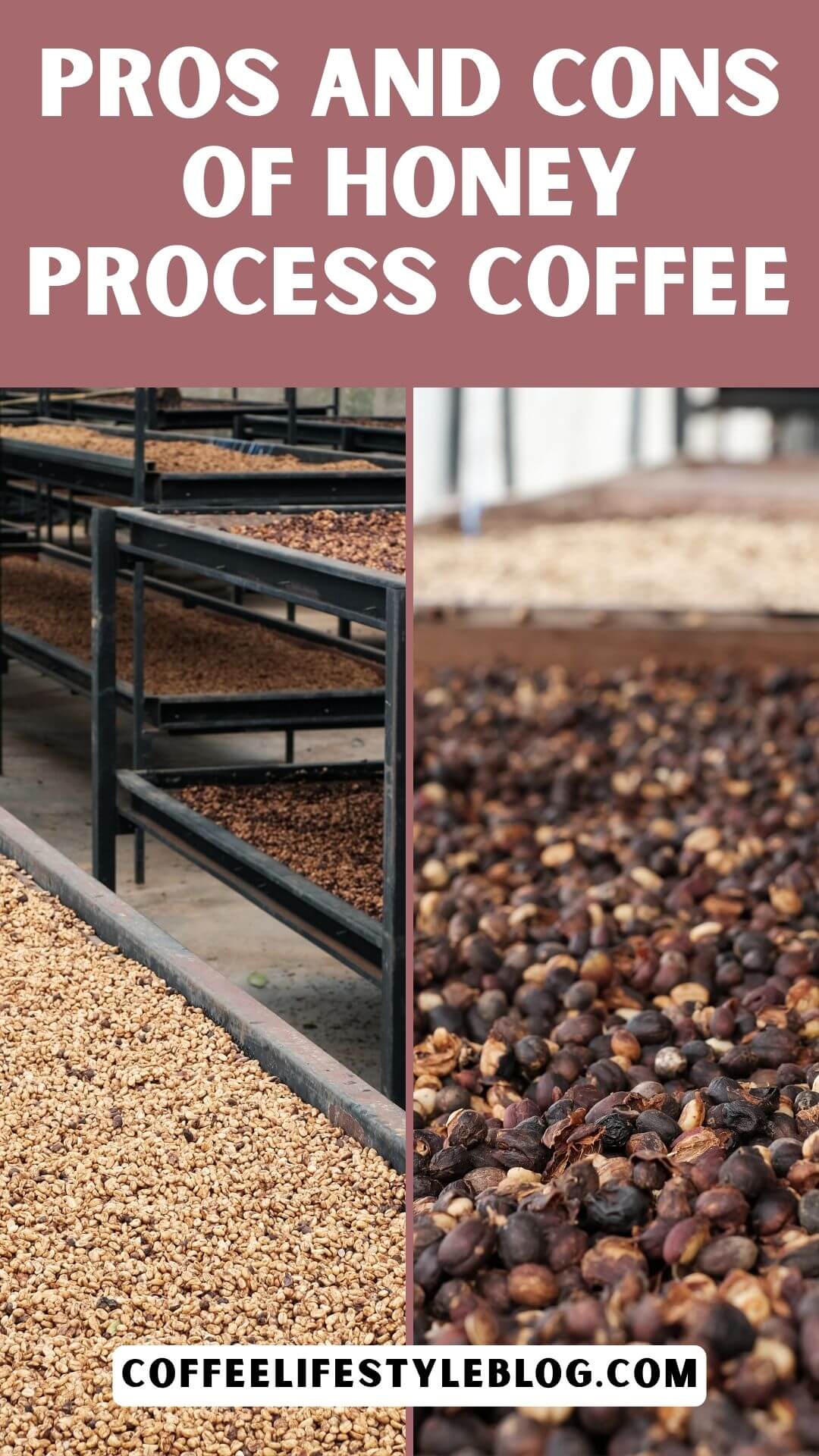
- Patio or raised-bed drying. The mucilage-covered parchment is spread thin on raised mesh beds or patios and dried in the sun, typically for 8 to 20 days depending on the honey type and climate.
- Regular raking. Workers rake and turn the drying beans several times a day so they dry evenly and don’t ferment unevenly or grow mold in the sticky layer.
- Resting and milling. Once the moisture content hits roughly 10 to 12 percent, the parchment coffee rests, then is hulled to remove the dried, now-brittle mucilage and parchment, revealing the green bean underneath.
Because there’s no wash step and no long fermentation tank, honey process coffee sits in a middle zone: it gets more sugar contact than washed coffee, but far more careful, monitored drying than a fully natural coffee dried inside its whole fruit.
White, Yellow, Red, and Black: The Honey Color Spectrum
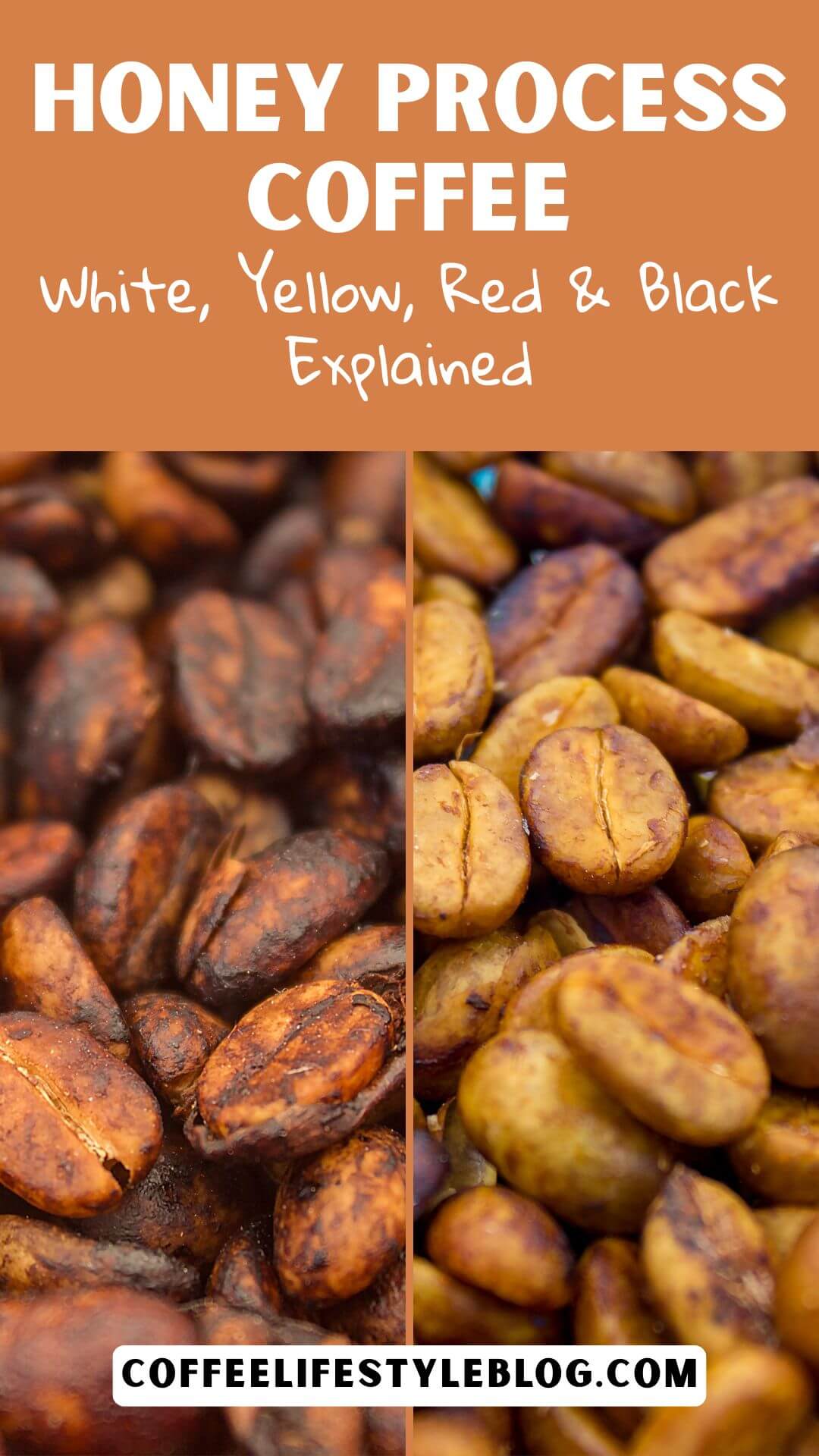
One of the more confusing parts of buying honey process coffee is the color naming. The color doesn’t refer to the bean itself, it refers to how much mucilage was left on and how the drying was managed. As a general rule, the more mucilage retained and the slower and shadier the drying, the darker the honey grade, the sweeter and heavier the cup, and the higher the risk of defects.
- White honey: Almost all mucilage is removed before drying, closest in style to a washed coffee. Cleanest cup, mildest sweetness of the honey range.
- Yellow honey: A moderate amount of mucilage stays on. Beans dry fast, usually in full sun with frequent raking. Balanced sweetness with good clarity, the most common honey style you’ll find.
- Red honey: More mucilage is retained and drying happens with partial shade or slower airflow, extending drying time. Rounder body, deeper sweetness, more red-fruit character.
- Black honey: Nearly all the mucilage stays on, and drying is slow, often shaded or in a greenhouse-style structure, taking two to three weeks. Produces the most intense, syrupy, wine-like cups, but is also the hardest lot to dry without spoilage.
None of these labels are strictly regulated, so one farm’s “red honey” might resemble another farm’s “black honey.” Treat the color as a helpful signal of intensity, not a fixed technical standard.
See the Difference: Washed vs. Honey vs. Natural
Interactive Process Comparison
Tap a method to compare drying time, sweetness, body, and risk. Honey process has its own sub-scale for white, yellow, red, and black. Drying time is shown in actual days; the other four are relative intensity scores on a 1–10 scale, so bar length always tracks the number next to it.
Honey Process vs. Washed Process
Washed coffee is the benchmark most specialty drinkers compare everything else to. In washing, cherries are de-pulped, then the mucilage is broken down in fermentation tanks and rinsed away with water before drying, leaving bare parchment. That gives washed coffee its signature clarity: bright acidity, well-defined flavor notes, and a lighter body, because fruit sugars never really touch the bean during drying.
Honey process coffee skips the fermentation tank and the wash step entirely. The mucilage stays in direct contact with the parchment while it dries in the sun, so sugars slowly migrate into the bean. The result is a noticeably sweeter, rounder cup with softer acidity than washed coffee, though it comes with a longer, more labor-intensive drying period and a higher chance of uneven drying or mold if the beds aren’t raked often enough.
Honey Process vs. Natural Process
Natural (dry) process goes even further than honey: the whole cherry, skin, pulp, mucilage, and all, is dried intact around the bean, usually taking three to five weeks. That prolonged fruit contact produces the boldest, sweetest, most jammy and fermented cups in coffee, with flavors that can taste like dried fruit, wine, or even funky, barnyard notes when done well.
Honey process coffee sits deliberately between washed and natural. It borrows the sweetness and body that come from sugar contact during drying, without going as far as full-cherry drying, which shortens drying time and lowers, but doesn’t eliminate, the risk of fermentation defects. Think of honey processing as a dial, not a switch, between the clean precision of washed coffee and the maximalist fruit bomb of natural coffee.
| Attribute | Washed | Honey | Natural |
|---|---|---|---|
| Drying time | 7–15 days | 8–20 days | 20–35 days |
| Fruit contact | None (rinsed off) | Mucilage only | Whole cherry |
| Typical acidity | Bright, high | Medium, soft | Low, mellow |
| Typical sweetness | Moderate | High | Very high |
| Flavor clarity | Very clean | Clean-to-fruity | Fruity, complex |
| Risk of defects | Lowest | Moderate | Highest |
| Water usage | High | Low | Lowest |
What Does Honey Process Coffee Taste Like?
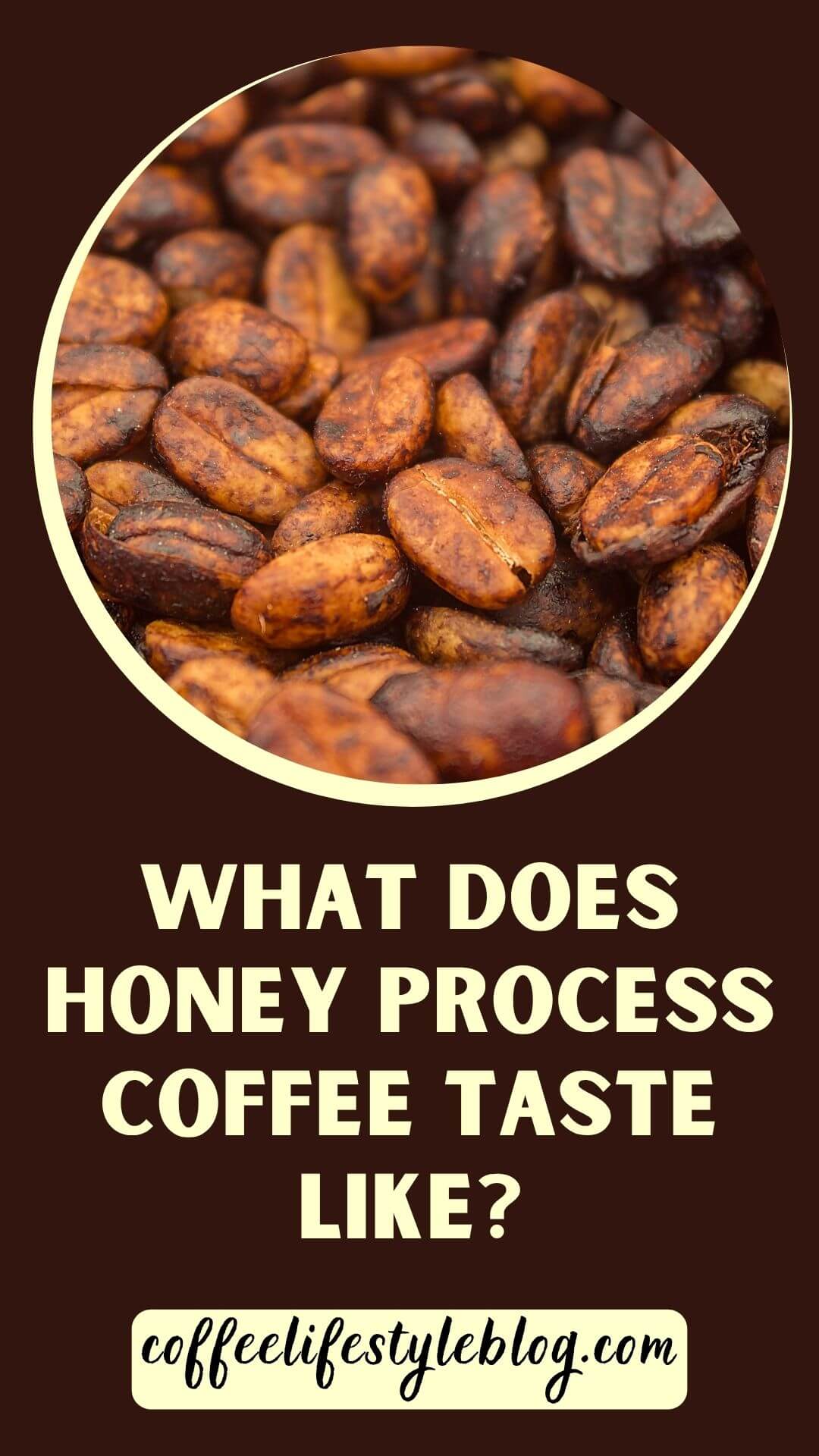
Expect a cup that leans into sweetness and body more than sharp acidity. Common tasting notes for honey process coffee include caramel, brown sugar, dried apricot, red apple, and light florals, with a syrupy, almost velvety mouthfeel. Yellow and white honey lots tend to stay closer to washed coffee, with cleaner citrus and stone-fruit notes. Red and black honey lots push toward the natural end, with berry, dried fruit, and sometimes a light wine-like character.
Because sweetness is the defining trait, honey process coffee tends to shine as a black filter coffee or pour-over rather than getting buried under milk. If you already gravitate toward medium roasts with caramel or dried-fruit notes, this is very likely a process style you’ll enjoy.
Pros and Cons of Honey Process Coffee
Advantages
- Naturally sweeter and heavier body than washed coffee, without full fruit fermentation
- Uses far less water than washed processing, which matters in dry-climate farms
- Faster and more controllable than natural drying, reducing labor and defect risk
- A wide flavor range (white to black honey) lets producers fine-tune the cup
- Distinctive enough to stand out on a shelf, appealing to curious specialty drinkers
Drawbacks
- Requires more skilled labor than washed coffee, since beds need frequent raking and monitoring
- Higher risk of mold or uneven fermentation than washed coffee, especially with red and black honey
- Quality varies a lot between producers, since “honey” isn’t a strictly regulated term
- Can be pricier than washed coffee due to the extra drying labor involved
- Less acidity and clarity than washed coffee, which isn’t ideal if you prefer bright, crisp cups
Where Honey Process Coffee Comes From
Costa Rica is widely credited with popularizing modern honey processing in the 2000s, largely as a water-saving alternative to washed coffee, and it remains the country most associated with the method and its color-coded grading. El Salvador, Honduras, Guatemala, Nicaragua, and Brazil have also built strong honey process programs, each with slightly different climate and drying conditions that shape the final cup. Outside Central and South America, some farms in East Africa and Southeast Asia have experimented with honey processing as well, though washed and natural still dominate in those regions.
Try a Costa Rican lot
A great starting point is a single-origin Costa Rica honey process coffee, since it’s where the modern method was refined and where roasters most reliably label the honey color grade on the bag.
How to Brew Honey Process Coffee
Because honey process coffee carries extra sweetness and body, small brewing adjustments help it shine rather than tasting muddled.
- Grind slightly coarser than you would for a washed coffee in the same brewer, since the added body can turn overly heavy or bitter if extraction runs too long.
- Favor pour-over or drip methods to keep the cup clean while still capturing the syrupy sweetness; French press can sometimes feel too heavy with darker honey lots.
- Brew slightly cooler, around 195–200°F (90–93°C), to avoid over-extracting the sugars into bitterness.
- Taste black first before adding milk, since the natural sweetness often means you’ll want less sugar than usual.
How to Choose a Good Honey Process Coffee
Look for a bag that names the specific honey color (white, yellow, red, or black) rather than just “honey processed,” since that tells you roughly how bold to expect the cup to be. A visible origin, farm or cooperative name, and a recent roast date are all good signs of a producer who’s proud of, and careful with, their process. If you’re new to the category, start with a yellow honey, the most balanced and widely available style, before working toward the more intense red and black honey lots.
Shop by color
Once you know your preference, you can search more specifically, for example yellow honey process coffee for a balanced everyday cup, or red honey process coffee if you want the boldest, most syrupy option available.
Frequently Asked Questions
Is honey process coffee sweeter than regular coffee?
Yes, generally. Because sugar-rich mucilage stays in contact with the bean during drying, honey process coffee tends to taste noticeably sweeter and rounder than washed coffee, though less sweet and fruit-forward than a fully natural coffee.
Is honey process coffee more expensive?
Often, yes. The extra labor of raking and monitoring drying beds for one to three weeks, along with more careful quality control, tends to push honey process lots slightly above washed coffee in price, though it’s usually still less than the rarest natural or experimental lots.
Can beginners brew honey process coffee at home?
Absolutely. It works well in any standard drip machine, pour-over, or even a basic French press. Starting with a yellow honey lot, the most balanced style, is the easiest way to get a feel for the category before trying red or black honey.
Is honey process coffee vegan?
Yes. No honey, bee products, or animal ingredients are used at any stage. The name refers only to the sticky texture of the drying mucilage, not the ingredient.
How long does honey process coffee stay fresh?
Roughly the same as any specialty coffee: 2 to 4 weeks past the roast date for peak flavor when stored in an airtight container away from light and heat, regardless of processing method.
The Bottom Line
Honey process coffee earns its place in specialty coffee by threading a needle: it delivers more sweetness and body than washed coffee, more consistency and clarity than natural coffee, and it does so using less water than traditional washing. Whether you land on a delicate white honey or a bold, syrupy black honey, understanding the color scale and the process behind it will help you pick a bag that actually matches the cup you’re hoping for, and appreciate exactly what makes it different the next time you take a sip. Processing methods and flavor outcomes vary by farm, climate, and harvest year; treat the metrics above as general tendencies rather than fixed values for every lot.