Book Review: How to Make the Best Coffee at Home
If you want to make café-quality coffee at home, James Hoffmann’s How to Make the Best Coffee at Home is a great place to start. The world-renowned coffee expert explains in a clear, approachable way how to get the most out of your coffee — from choosing the right beans to dialing in your grind and mastering different brewing methods. This book isn’t just for beginners; even experienced coffee lovers will find practical tips to take their daily cup to the next level.
James Hoffmann, the author of the book
James Hoffmann is a well-known name among coffee professionals and in the specialty coffee world. He’s a world-renowned barista, author, and YouTuber. His YouTube channel has over 2 million subscribers and plays a major role in shaping modern coffee culture. He has written several books, including the one featured in this article. He has been competing in barista competitions since 2005, and in 2007 he won first place at the World Barista Championship in Tokyo.
In the UK, he is widely regarded as a pioneer of the third wave coffee movement — and for good reason. He shares the joy and science of coffee in a way that’s both easy to understand and grounded in deep expertise.
First impression: Classic look, modern content
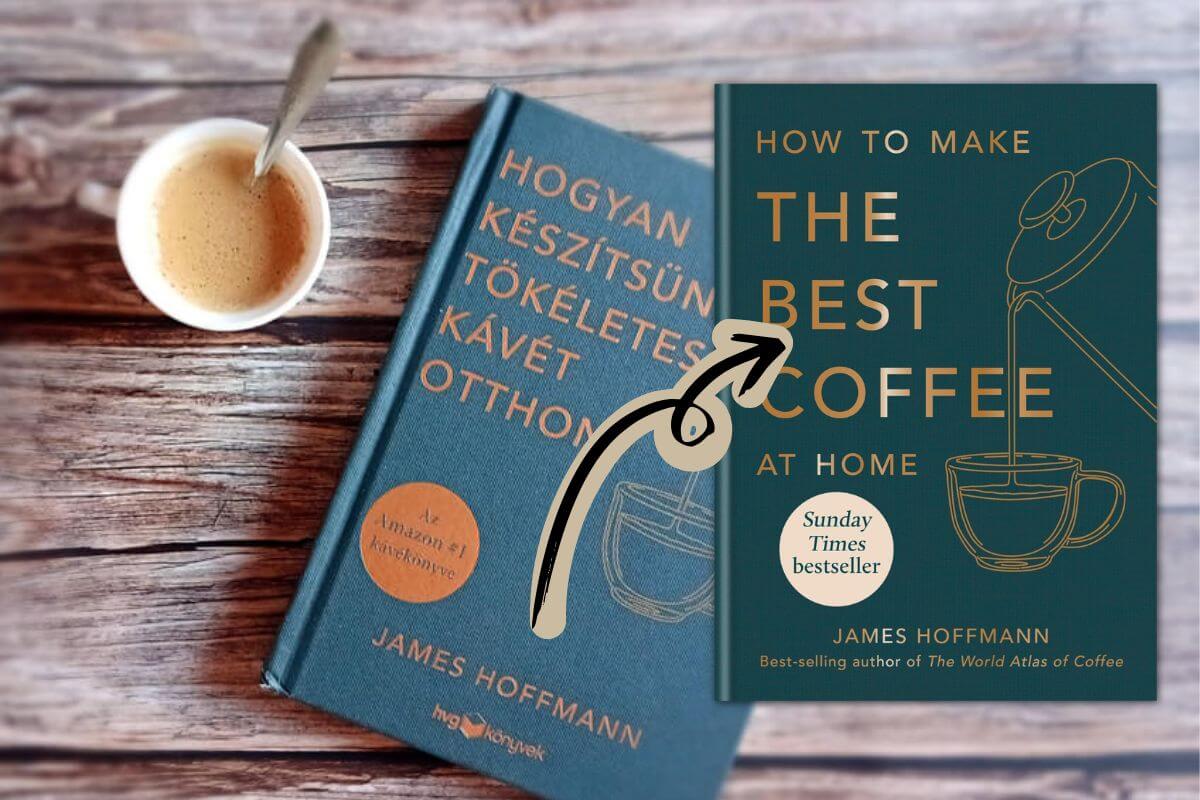
The appearance of How to Make the Best Coffee at Home has a timeless feel to it. The 2022 edition features a clean, green-toned hardcover design with subtle, elegant typography. It feels more like a refined, classic reference book than a typical modern release. The overall aesthetic is clearly focused on simplicity and understated elegance.
In my case, I have this book in Hungarian, and the Hungarian edition was published the year after the original release. I received this essential, highly informative book through a collaboration, which made it possible for me to explore it in depth and share my insights with readers.
One small downside: after a few uses, the corners of the spine may start to show slight wear. It’s nothing major, but worth mentioning — especially if you’re planning to use the book regularly over the long term.
In terms of size, it’s a compact hardcover format (slightly larger than a typical A5). It contains over 220 pages of content focused on making great coffee at home. The book is richly illustrated, with plenty of photos, and printed on thick, matte paper.
Can you really learn to make the perfect coffee at home from this book?
Maybe not on the first try — but with a bit of practice, you absolutely can. To get there, you first need to understand coffee itself. Of course, “perfect coffee” means something slightly different to everyone. With the help of How to Make the Best Coffee at Home, you’ll get clear guidance on how to improve your own cup and how to recognize the flavor notes that match your personal taste.
People often ask me: if I run a coffee blog, do I know which coffee is the best? Honestly, there’s no universal answer. It depends on whether you prefer bold, dark, slightly smoky coffees or lighter, more caramel-like flavor profiles.
This is where many coffee drinkers get stuck. They see labels like Arabica or Robusta on the bag, but have no idea what kind of flavor to expect. The book helps with that too. It teaches you how to read coffee packaging, understand roast information, and identify the types of coffee that best suit your own preferences.
What can you learn from the book?
The book is organized into six main chapters.
Chapter 1: How to buy good coffee
The first chapter helps you choose truly high-quality coffee. You’ll learn why the roast date matters, how storage affects flavor, and what the differences are between roast levels. James Hoffmann not only helps you navigate the often confusing world of store-bought coffee, but also explains key concepts like post-harvest processing methods (such as natural/dry and washed), coffee varieties, and flavor notes. You’ll find out what to look for on a coffee bag if you want a great cup — and how to read details about origin, character, and quality.
Chapter 2: Essential equipment
In the second chapter, Hoffmann walks you through the most important tools for making coffee at home. You’ll learn that water isn’t just a filler — it’s a key factor in how your coffee tastes, so its quality really matters. He also highlights the importance of using a scale, which helps you achieve consistent ratios and avoid brews that are too strong or too weak.
The coffee grinder gets special attention as well, since freshly ground coffee tastes far better than pre-ground options. Hoffmann offers practical advice on choosing the right grinder and also covers useful accessories like airtight storage containers and servers that can make your home coffee setup more convenient and more professional.
Chapter 3: Tasting
The third chapter focuses on tasting — how to recognize and interpret the flavor notes in coffee. Hoffmann encourages you not just to drink your coffee, but to pay attention to its aromas and aftertaste. You’ll learn that much of what we perceive as flavor actually comes from our sense of smell, thanks to the close connection between taste and aroma.
He also recommends practical methods like comparative tasting — trying different coffees side by side — which makes it much easier to identify what you’re tasting and what you truly enjoy. This chapter is especially valuable if you’ve been choosing coffee based on intuition and want to become a more mindful, perceptive taster.
Chapter 4: How to make great coffee
The fourth chapter moves into practice: how to actually make great coffee in everyday life. Hoffmann starts with the fundamentals, explaining that extraction — the process of dissolving flavors from the coffee — is what ultimately determines the taste in your cup. He clearly breaks down how grind size, water temperature, and brew time affect whether your coffee turns out too sour, too bitter, or nicely balanced.
He also addresses common mistakes that can ruin home-brewed coffee — and shows you how to fix them. Toward the end, he explains how to get the most out of the equipment you already have, whether it’s a moka pot, a filter setup, or a coffee machine. This makes the chapter especially useful if you’re not ready to invest in new gear but still want better results.
Chapter 5: Iced coffee and cold brew
The fifth chapter explores the world of iced coffee and cold brew. Hoffmann shows that these drinks aren’t just refreshing summer options — they’re fully valid brewing methods that highlight different aspects of coffee flavor compared to hot brewing.
You’ll learn about the two main approaches to iced coffee: brewing hot coffee and cooling it over ice, and cold brew, which is extracted slowly using cold water. The book helps you understand when to use each method, how time, temperature, and grind size affect the final result, and what ratios and tools work best. This chapter is perfect if you want to expand your home coffee routine with refreshing options.
Chapter 6: The secret to great espresso
The final chapter dives into espresso — a style many consider the peak of coffee making, but also one of the most challenging to master at home. Hoffmann guides you step by step through the fundamentals, from ideal ratios and recipes to dialing in your grinder.
You’ll learn how water temperature, pressure, and machine design influence flavor, and what to look for if you’re thinking about buying an espresso machine. The chapter also includes practical tips for pulling your first good shot, steaming milk, and making popular espresso-based drinks like cappuccinos and flat whites at home. This section is especially helpful if you don’t just want to enjoy espresso, but truly learn how to make it well.
Final thoughts
Overall, How to Make the Best Coffee at Home by James Hoffmann is a real gem for any coffee lover, whether you’re a beginner or more experienced. If you want to better understand coffee, make more informed choices, and enjoy café-quality cups at home, this book is an excellent companion. With practical advice, detailed explanations, and an inspiring approach, it helps turn coffee making from a daily routine into something you genuinely enjoy and care about.
If you’d like to discover more coffee books, check out my summary of Coffee Obsession, which is also packed with useful insights.