Homemade Coffee Syrup Recipes
If you’ve ever stood in the flavored-syrup aisle wondering why a tiny bottle costs so much — or squinted at the ingredient label wondering what half those words even mean — you’re going to love this list. Homemade coffee syrups are cheaper, fresher, and endlessly customizable, and once you make your first batch, you’ll never go back to store-bought again.
This is a running collection of homemade coffee syrup recipes, each one linking out to a full, detailed recipe post where you’ll find exact measurements, step-by-step instructions, storage tips, and creative ways to use it. Think of this page as your syrup menu — browse the flavors below, click through to the one that catches your eye, and get the full recipe.
New flavors get added to this list regularly, so bookmark this page (or pin it!) and check back whenever you’re craving something new to stir into your morning cup.
Why Make Coffee Syrup at Home?
Before we get to the list, here’s why homemade coffee syrup is worth the (very little) extra effort:
- You control the ingredients. No high-fructose corn syrup, no artificial flavoring, no preservatives you can’t pronounce.
- It’s significantly cheaper. A bottle of flavored syrup at the store can run you $8–10 for a few ounces. At home, you can make a much larger batch for a fraction of that cost.
- You control the sweetness and intensity. Like your coffee less sweet, or want a stronger flavor punch? Homemade syrup lets you adjust to your exact taste.
- It’s incredibly versatile. Coffee is just the beginning — these syrups work beautifully in lattes, cocktails, baking, drizzled over desserts, and mixed into sparkling water.
Most homemade coffee syrups follow the same basic method: a simple syrup base (sugar and water) infused or flavored with your chosen ingredient, then strained and bottled. Once you understand the basic technique, you can make almost any flavor you can dream up.
How to Use This List
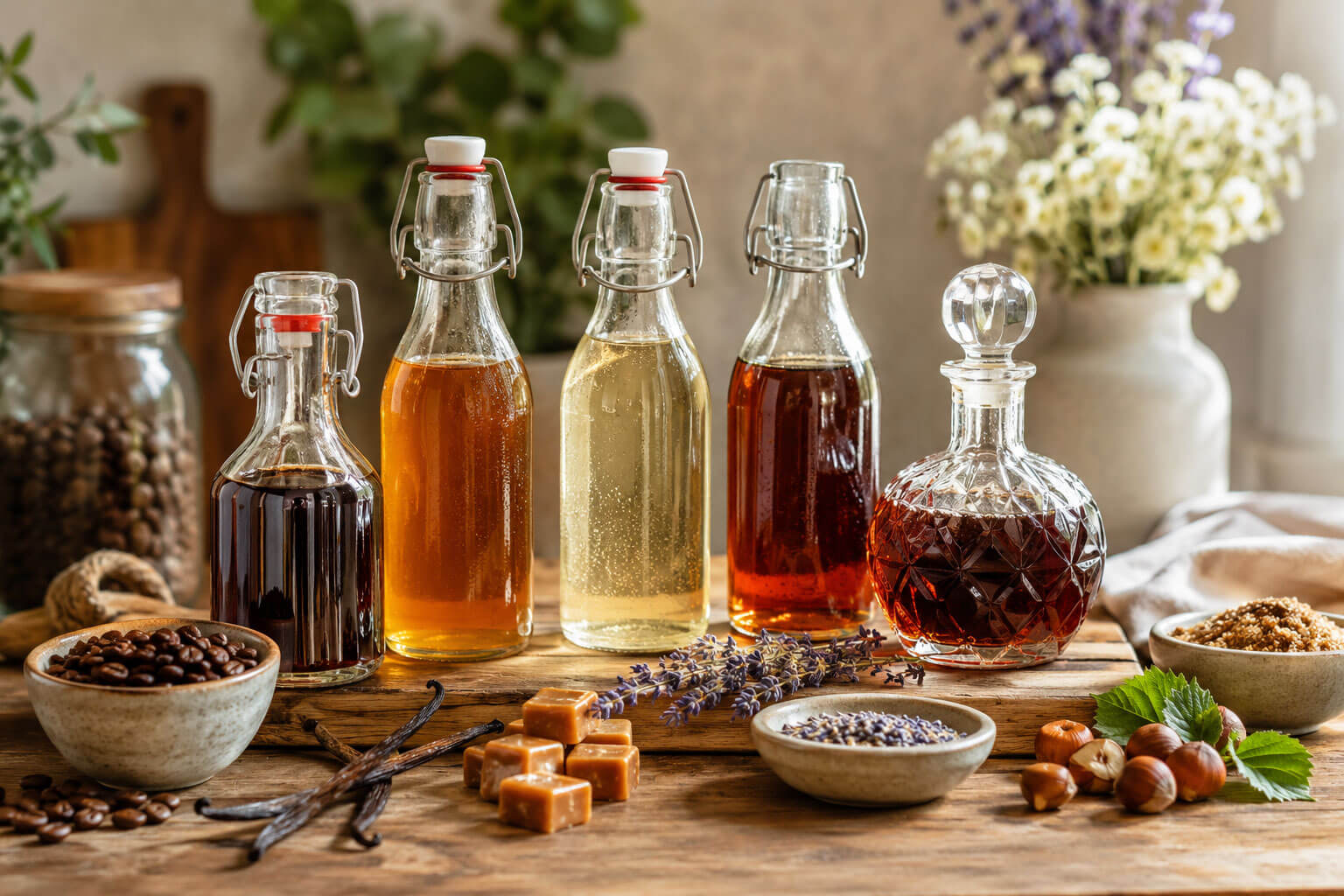
Each syrup below includes a short description of its flavor profile and best uses, along with a link to the full, in-depth recipe. That’s where you’ll find the complete ingredient list, exact ratios, cooking method, and tips for getting the best results — this page is just your jumping-off point.
1. Vanilla Syrup
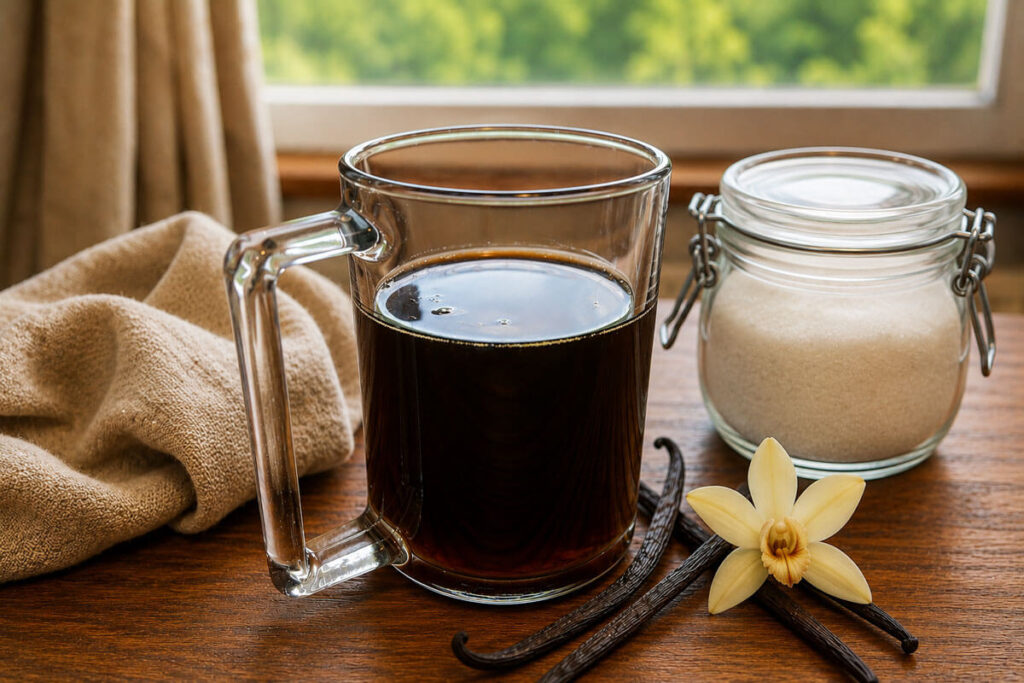
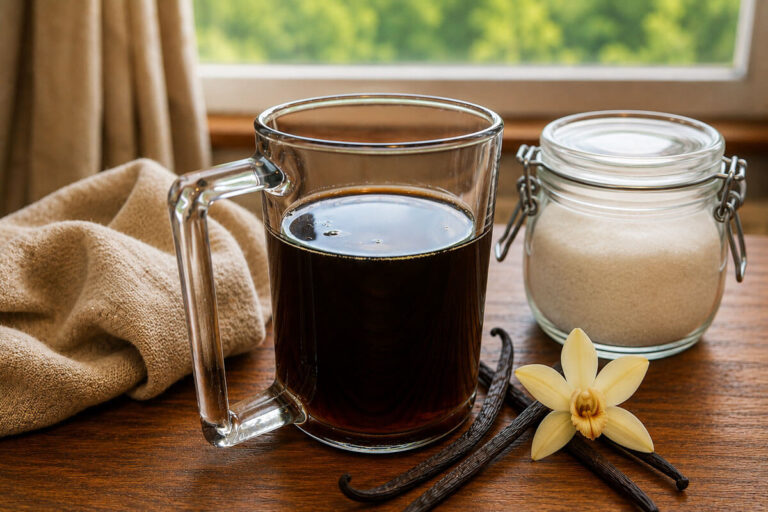
Vanilla syrup is the quintessential coffee shop flavor, and for good reason — it’s warm, sweet, and comforting without overpowering your coffee’s natural flavor. It’s the syrup most people reach for first because it pairs with literally everything: hot coffee, iced coffee, lattes, cold brew, even hot chocolate and baking projects.
A good homemade vanilla syrup relies on real vanilla (bean, extract, or both) rather than the artificial vanillin flavoring used in a lot of mass-produced syrups, which is why homemade versions tend to taste so much richer and more authentic. It’s also one of the easiest syrups to make, which makes it the perfect starting point if you’re new to homemade coffee syrups.
Best for: vanilla lattes, sweetening cold brew, drizzling over pancakes or oatmeal, homemade coffee creamer.
👉 Get the full step-by-step recipe here: Homemade Vanilla Syrup Recipe
2. Caramel Syrup
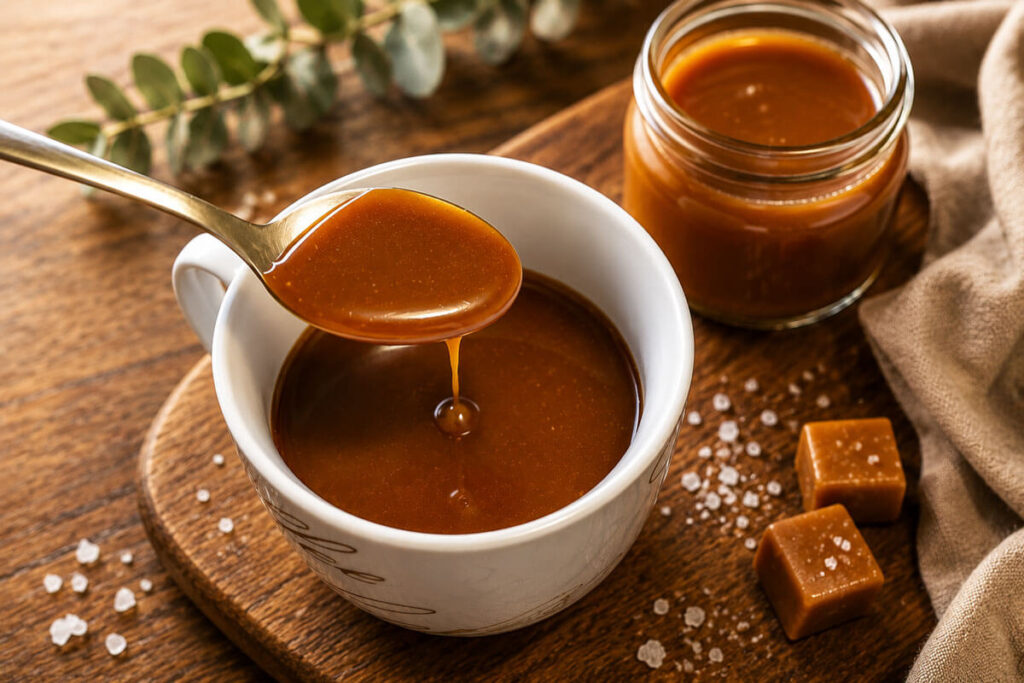
Rich, buttery, and deeply sweet, caramel syrup brings that indulgent coffee-shop-treat feeling straight to your kitchen counter. Unlike vanilla, caramel syrup involves actually caramelizing sugar, which gives it a deeper, more complex flavor than simply dissolving sugar in water — think toffee and brown butter notes rather than plain sweetness.
This one has a bit more of a “technique” to it than vanilla syrup does, since caramelizing sugar requires attention and timing, but the payoff is a syrup that tastes far closer to a genuine salted caramel than anything you’ll find in a bottle at the grocery store.
Best for: caramel macchiatos, iced caramel lattes, drizzling over desserts, stirring into hot chocolate.
👉 Get the full step-by-step recipe here: Homemade Caramel Syrup Recipe
3. Lavender Syrup
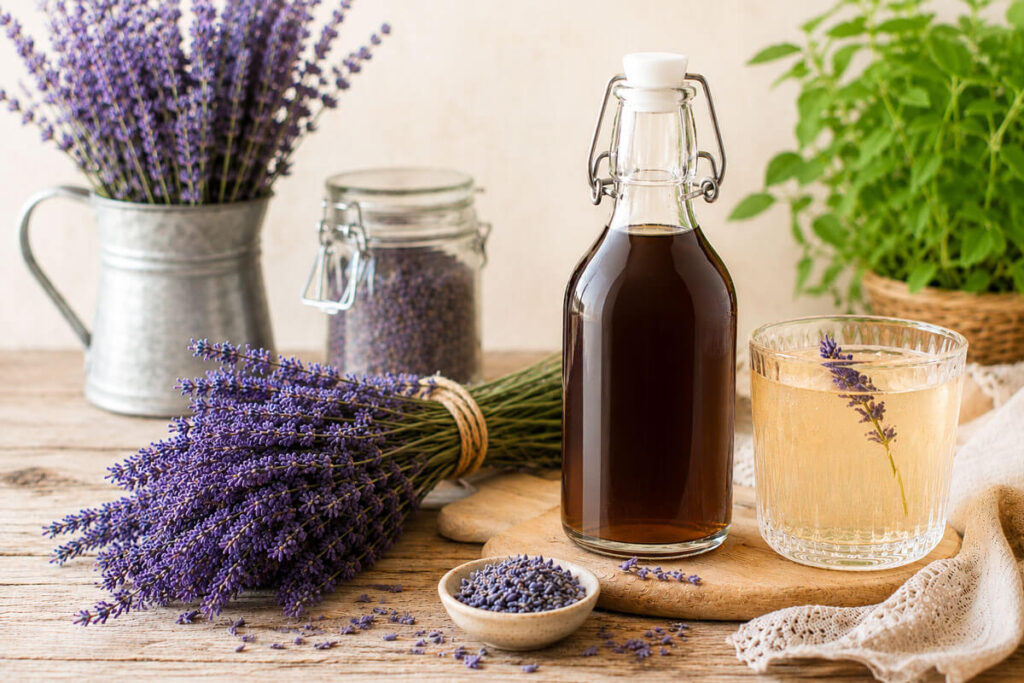
If you want your coffee routine to feel a little more special, lavender syrup is where it’s at. It’s floral, slightly herbal, and unexpectedly soothing — a flavor you’ll typically only find at specialty coffee shops, if you can find it at all. Lavender syrup has become hugely popular for lavender lattes, and it’s easy to see why: the floral notes pair surprisingly well with espresso’s bitterness.
Making it at home involves gently infusing culinary-grade lavender buds into your syrup base, which lets you control exactly how strong or subtle the floral flavor comes through — a real advantage over store-bought versions, which are often either too faint or overwhelmingly perfume-like.
Best for: lavender lattes, iced lavender coffee, lemonade, cocktails, and even drizzling over vanilla ice cream.
👉 Get the full step-by-step recipe here: Homemade Lavender Syrup Recipe
Tips for Making Any Coffee Syrup at Home
While each syrup has its own specific recipe (linked above), a few universal tips will help no matter which flavor you’re making:
- Use filtered water if you can — it makes a noticeable difference in the final taste, especially for delicate flavors like lavender.
- Let it cool completely before bottling. Bottling a hot syrup can create condensation inside the container, which shortens its shelf life.
- Store in a glass bottle or jar with a tight-fitting lid. Glass doesn’t absorb odors or flavors the way plastic can.
- Refrigerate your syrups. Homemade syrups don’t contain the preservatives that store-bought versions do, so they typically last a few weeks in the fridge rather than months in the pantry.
- Label and date your bottles. It’s easy to forget which flavor is which once they’re all lined up in the fridge door — and dating them helps you keep track of freshness.
Creative Ways to Use Coffee Syrups (Beyond Coffee)
One of the best things about making a batch of homemade syrup is that your coffee is just the beginning. Try using any of the syrups above in:
- Iced tea or lemonade for a floral or sweet twist
- Cocktails and mocktails — vanilla and caramel syrup both shine in whiskey-based drinks
- Sparkling water for an easy homemade “flavored soda”
- Baking — swap into recipes calling for simple syrup or flavored extracts
- Yogurt, oatmeal, or pancakes as a naturally flavored drizzle
- Homemade coffee creamer — mix with milk or cream for an instant flavored creamer
Frequently Asked Questions
How long does homemade coffee syrup last?
Most homemade coffee syrups last about 2–4 weeks when stored in the refrigerator in a sealed glass container. Exact shelf life depends on the ingredients used, so always check the specific recipe for storage guidance.
How much syrup should I add to my coffee?
This depends entirely on personal taste and the strength of your syrup, but a good starting point for most homemade syrups is 1–2 tablespoons per cup of coffee. You can always adjust from there.
Can I make sugar-free coffee syrup?
Yes — many of these syrups can be adapted using sugar substitutes. Check each individual recipe for specific notes on substitutions.
Do I need special equipment to make coffee syrup at home?
Not at all. A saucepan, a fine-mesh strainer or cheesecloth, and a bottle or jar for storage are really all you need.
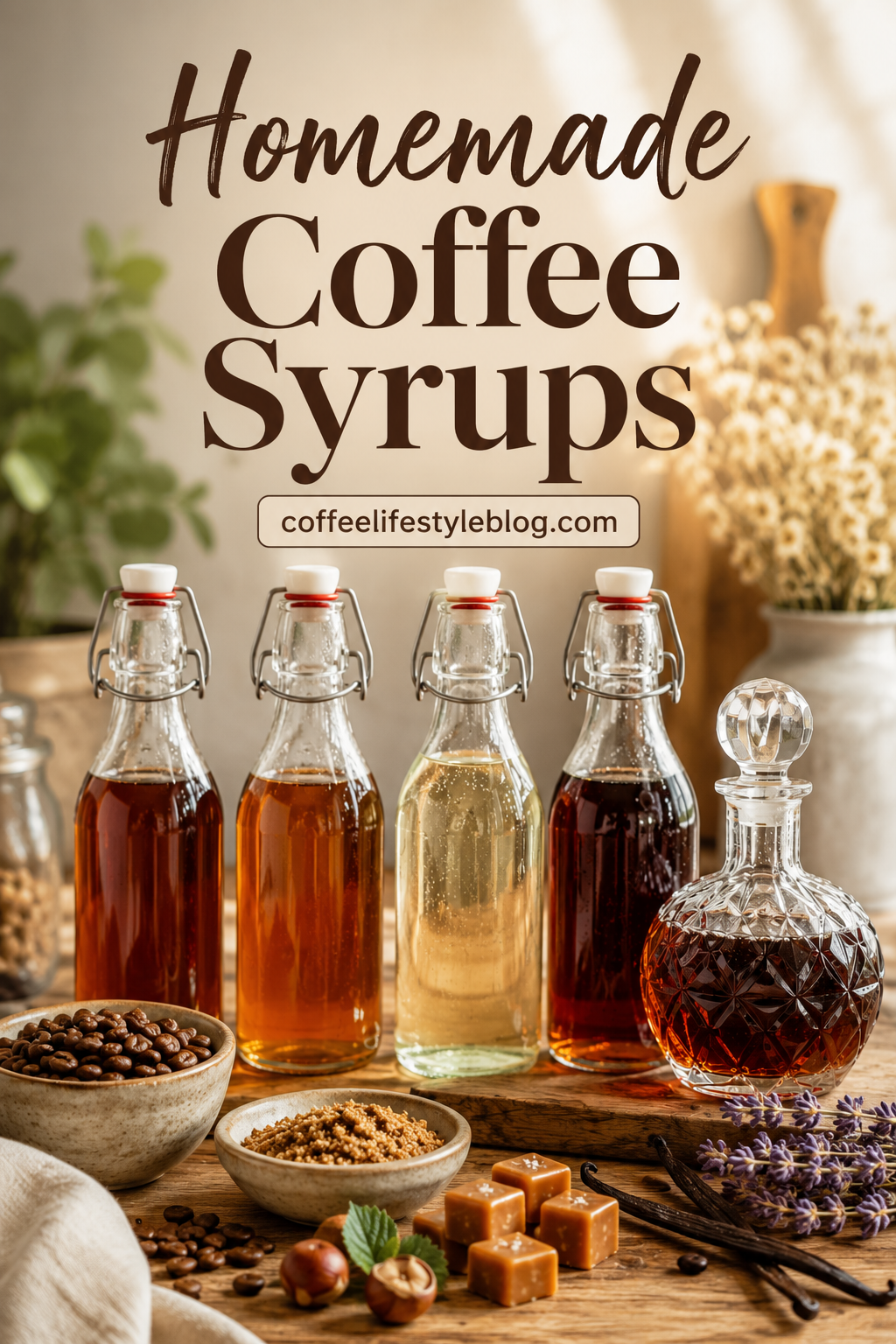
Save This List for Later
This collection of homemade coffee syrup recipes will keep growing, so pin this page to your favorite coffee or recipe board on Pinterest and come back anytime you’re ready to try a new flavor. Each recipe linked above walks you through everything you need — ingredients, exact measurements, and step-by-step instructions — to make coffee-shop-quality syrup right in your own kitchen.
Which flavor are you trying first?