Best Ways to Organize Coffee Syrups
A practical, no-clutter system for keeping every bottle of vanilla, caramel, and hazelnut exactly where you need it — at home or behind the counter.
If you’ve ever dug through a cabinet full of sticky, unlabeled bottles just to find the last inch of pumpkin spice syrup, you already know why coffee syrup organization matters more than it seems. A well-run coffee bar — whether it’s a countertop corner or a full espresso station — depends on being able to see, reach, and use the right syrup in seconds, not minutes. This guide walks through the most effective coffee bar syrup organization ideas, from simple shelf tricks to full labeling systems, so your setup stays functional, good-looking, and mess-free.
Why Organizing Coffee Syrups Actually Matters
Coffee syrups are deceptively hard to manage. Bottles come in different heights, shapes, and cap styles, they get sticky on the outside, and flavors multiply fast once you start experimenting with seasonal options. Without a system, syrups end up crammed into random cabinet corners, duplicate bottles get bought, and half-used bottles pass their best-by date before anyone notices.
A dedicated organization system solves three problems at once: it makes every flavor visible at a glance, protects the syrups from heat, light, and contamination, and speeds up the actual process of making a drink. For a home coffee bar, that means fewer wasted bottles and a counter that looks intentional rather than chaotic. For a café or commercial setup, it means faster service, more consistent pours, and less product loss.

Start by Auditing Your Syrup Collection
Before buying any racks or labels, pull every bottle out and take stock. Group them loosely by flavor, check expiration dates, and note which ones you reach for daily versus a few times a year. This quick audit does two things: it tells you how much storage capacity you actually need, and it reveals which syrups deserve prime real estate near the front of your setup.
Quick tip
Wipe down every bottle before you put it back. Dried syrup residue on caps and shoulders is the number one reason storage areas turn sticky and start attracting ants or dust.
Core Methods for Coffee Syrup Organization
Once you know what you’re working with, choose an organizing method — or combine a few. These are the approaches that consistently work best for both home and commercial coffee bars.

Group by Flavor Family
Cluster syrups into logical families: classic (vanilla, caramel, hazelnut), seasonal (pumpkin spice, peppermint, gingerbread), fruit and specialty (raspberry, lavender, cinnamon), and sugar-free versions. Keeping families together means you’re never scanning the entire shelf to find one bottle, and it makes seasonal rotation much easier since a whole group can be swapped in or out together.
Sort by Frequency of Use
Not every syrup deserves the same spot. Put your three or four most-used flavors at eye level and within arm’s reach of the espresso machine or coffee maker. Less frequently used or seasonal syrups can move to a lower shelf, a back row, or a labeled bin. This is one of the simplest coffee bar syrup organization ideas and often makes the biggest difference in daily speed.
Apply the FIFO Rotation Rule
FIFO — first in, first out — is standard practice in commercial kitchens, and it works just as well for a home syrup shelf. New bottles go to the back or bottom, older bottles move to the front or top, and the syrup closest to its use-by date always gets used first. This one habit prevents forgotten bottles from expiring quietly at the back of a cabinet.
Choose the Right Storage System
The physical container you use matters as much as the sorting logic. A few reliable options:
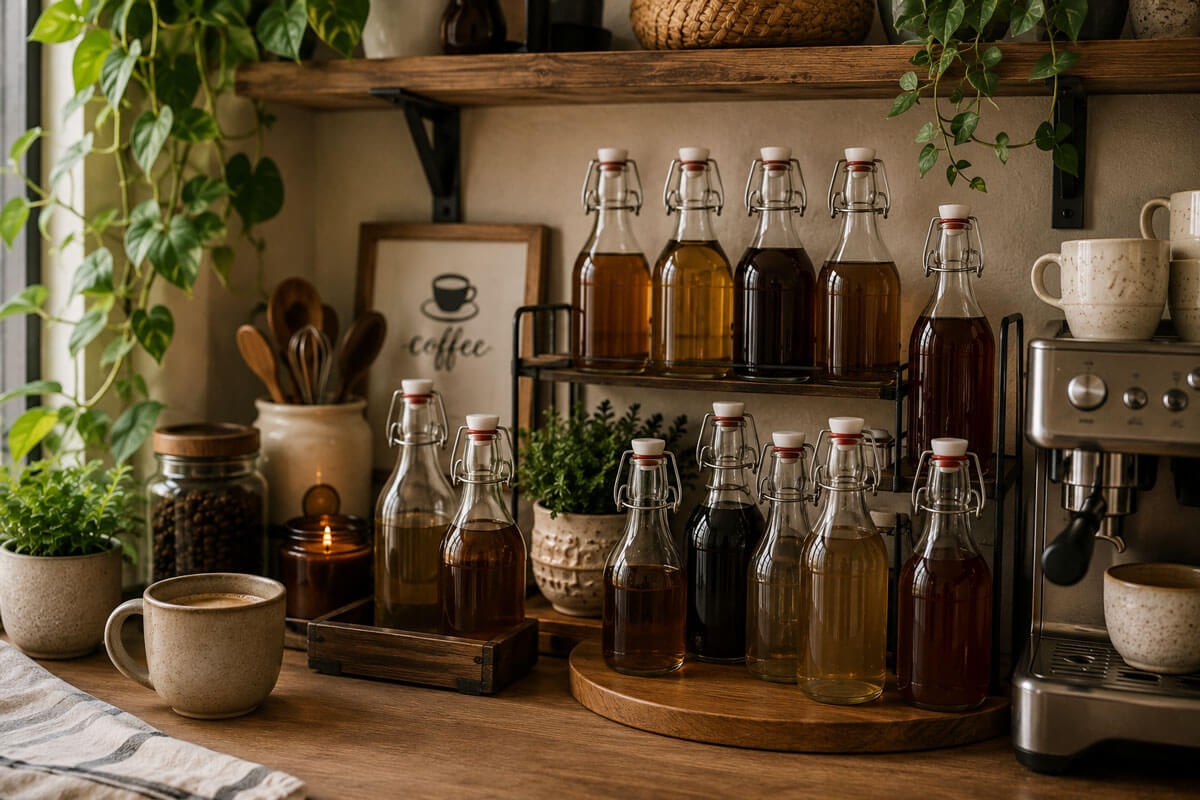
- Tiered shelf risers — stagger bottles in rows so every label is visible from the front, even in a deep cabinet.
- Lazy Susans — a rotating turntable is ideal for corner cabinets or a crowded counter, letting you spin to the flavor you need instead of reaching past six other bottles.
- Door-mounted racks — attach slim racks to the inside of a cabinet door to reclaim otherwise wasted space.
- Drawer inserts or bins — great for shorter syrup bottles or single-serving pump bottles, keeping them upright and separated.
- Wall-mounted syrup racks or shelves — a popular choice for visible, café-style setups where the syrups themselves become part of the counter decor.
Build a Simple Labeling System
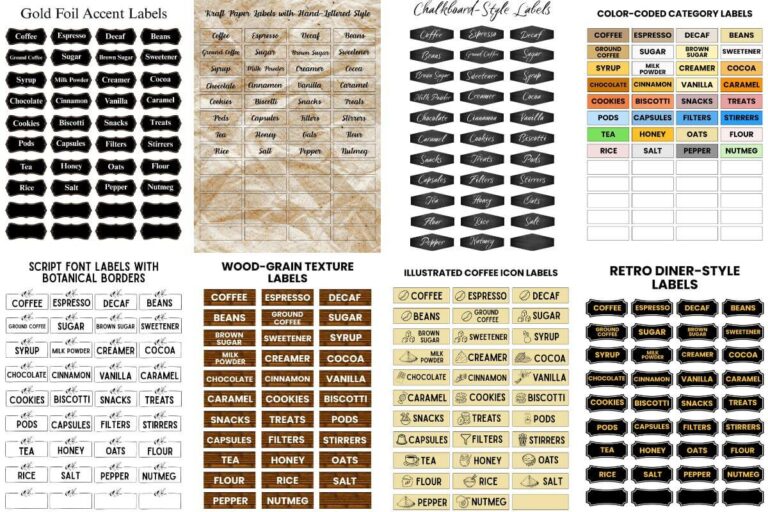
Labels aren’t just for looks — they’re what make a system actually work over time. Use a consistent label style (printed, chalkboard, or handwritten) that lists the flavor and, ideally, the date it was opened. Color-coded labels or dot stickers can further separate categories like sugar-free, seasonal, or house-made syrups at a glance, which is especially useful behind a busy counter.
Keep syrups upright
Storing bottles upright prevents cap leaks and keeps sticky residue away from shelves and other bottles.
Away from direct heat
Keep syrups out of direct sunlight and away from the espresso machine’s heat vents to preserve flavor longer.
Date every opened bottle
A simple “opened on” label makes FIFO rotation automatic instead of guesswork.
Wipe caps weekly
A quick wipe-down keeps pump tops from sticking and stops residue from building up on shelves.
Small Space Solutions for a Home Coffee Bar
Most home coffee bars don’t have the luxury of a full pantry wall, so the goal is to maximize vertical space and keep only what you use often within reach. A narrow bar cart with two or three tiers works well next to a coffee maker, giving syrups their own dedicated zone instead of competing with mugs and filters. Over-the-door racks, magnetic shelves, and stackable bins are especially useful in apartments or small kitchens where counter space is limited. If you only keep four or five syrups on hand, a simple tray or a small caddy near the coffee machine may be all the organization you need — the key is picking a spot and staying consistent.
Coffee Bar Syrup Organization Ideas for Cafés and Commercial Setups
In a commercial coffee bar, organization directly affects service speed, so the system needs to hold up under constant use. Many cafés mount syrups on a wall rack directly above or beside the espresso machine, arranged in the exact order baristas pour them during a shift. Pump-top bottles are standard in commercial settings because they allow for faster, more consistent measuring than free-pouring from a cap. Backup stock is typically stored separately in a labeled-shelf pantry, following the FIFO rotation as the front-of-counter bottles, so nothing gets buried and forgotten in a back room.
Color-coded caps or labels are especially valuable in a fast-paced environment, since baristas need to identify a flavor in a split second without reading a full label. Grouping by drink category — classic espresso flavors, seasonal specials, and sugar-free options — also speeds up training for new staff, since the layout itself teaches the menu.

Maintaining the System Long-Term
Any organization system falls apart without light, ongoing maintenance. Set a recurring reminder — weekly at a café, monthly at home — to wipe down bottles, check expiration dates, and reorder any labels that have worn off. When a new flavor arrives, take the extra thirty seconds to slot it into the right category rather than placing it wherever there’s an empty gap. Over time, this habit is what keeps a syrup shelf functional instead of slowly drifting back into clutter.
Frequently Asked Questions
How should I store coffee syrups once they’re opened?
Most commercial coffee syrups are shelf-stable and can stay at room temperature, away from direct sunlight and heat sources, once opened. Always check the manufacturer’s label, since some specialty or dairy-based syrups do require refrigeration after opening.
What’s the best way to label coffee syrup bottles?
A simple, consistent label showing the flavor name and the date opened works best. Color-coded stickers or dots are a fast add-on for separating categories like sugar-free or seasonal syrups, especially in a busy setup.
How many coffee syrups should a home coffee bar keep on hand?
Most home setups do well with four to eight flavors: a couple of classics, one or two seasonal options, and a sugar-free alternative. Keeping the count manageable makes any organization system easier to maintain.
Is a lazy Susan or a shelf riser better for syrup storage?
A lazy Susan works best for deep or corner cabinets where reaching to the back is difficult, while shelf risers are better for shallow shelves where you want every label visible at once. Many setups use both in different parts of the storage area.
What’s Your Ideal Coffee Syrup Organization System?
Answer four quick questions about your space and habits to get a personalized coffee syrup organization idea.